1

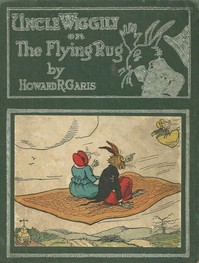
Uncle Wiggily on The Flying Rug; Or, The Great Adventure on a Windy March Day — Reading Companion
(0 User reviews)
803
Project Gutenberg
2020
Not confirmed
Dogs -- Juvenile fiction; Animals -- Juvenile fiction; Rabbits -- Juvenile fiction; Swine -- Juvenile fiction; Alligators -- Juvenile fiction; Uncle Wiggily (Fictitious character) -- Juvenile fiction
Readers of public-domain and historical texts
Project Gutenberg digital edition
en
Edition facts
Words
5,737
Reading time
25 min
Text sections
4
This digital edition of Uncle Wiggily on The Flying Rug; Or, The Great Adventure on a Windy March Day — Reading Companion is described by source-level measurements including 5,737 words, 25 min estimated reading time, and 4 detected text sections.
The text analysis averages about 16.0 words per sentence, while the detected sections provide another way to judge how the source is divided.
Project Gutenberg metadata also associates the work with “Dogs -- Juvenile fiction,” connecting these edition facts with the source record’s subject description.
Source:
Project Gutenberg record #61671
This editorial note examines the structure and recurring images in Howard R. Garis's Uncle Wiggily on the Flying Rug, focusing on the wind as a propulsive force, the rug as a vehicle, and the episodic movement between scenes in the opening story.
Read the complete public-domain text at its original source.
Read on Project GutenbergThe opening story of Uncle Wiggily on the Flying Rug begins with a simple domestic errand—Nurse Jane buying a new rug—that is immediately disrupted by the March wind. The wind is not merely a backdrop but an active agent: it fills Uncle Wiggily's tall hat “like a balloon,” lifts the bunny off his feet, and carries the rug aloft with Nurse Jane clinging to it. This swift escalation from ordinary to extraordinary sets the pattern for the adventure that follows.
The narrative moves in short, numbered paragraphs, each ending with a moment of suspense or a call to action. The structure relies on quick scene shifts and physical comedy, as characters are tossed, blown, and pulled through the air. The rug becomes a makeshift flying vehicle, and the wind dictates the journey's direction.
The Wind as a Character
The March wind is the true protagonist of the title story. It is described with active verbs: it “blew,” “filled,” “lifted,” and “raised.” Uncle Wiggily feels it on his “pink, twinkling nose,” a sensory detail that grounds the fantastical event in a rabbit’s perspective. The wind is not personified as a character with speech, but it behaves with intention—snatching hats, lifting rugs, and propelling the bunny and muskrat lady into the sky. This force drives every action; the characters react rather than initiate. The wind’s unpredictability creates the adventure’s rhythm, alternating between moments of peril and brief respites.
The Rug as a Vehicle and Symbol
The rug is introduced as a household object, but it quickly transforms into a flying conveyance. Its materiality is emphasized: Nurse Jane and Uncle Wiggily carry it, hold its corners, and cling to it as it rises. The rug is not magical; it is the wind that makes it fly. This distinguishes the story from tales of enchanted carpets. The rug remains a rug—woven, tangible, and subject to the wind’s whims. It serves as a platform for the adventure, but also as a source of comedy, as the characters struggle to maintain their grip. The rug’s ordinariness makes the extraordinary journey more relatable and humorous.
Movement Between Scenes
The narrative moves in short, episodic bursts. Each numbered paragraph ends with a cliffhanger or a shift in location. For example, after Uncle Wiggily lets go of his hat, the rug lifts Nurse Jane, and he must hop to catch it. The scenes are linked by the characters’ physical actions—grasping, pulling, leaning—rather than by dialogue or reflection. This creates a breathless pace, appropriate for a windy day adventure. The illustrations by Lang Campbell likely reinforce this movement, capturing mid-action poses. The story’s structure mirrors the wind’s capriciousness, with no time for extended description or introspection.
Recurring Details and Voice
Several details recur in the opening story: the wind’s effect on clothing (the hat, the rug), the characters’ cries for help, and the emphasis on holding on. Uncle Wiggily’s hat is a particular focus—it blows off, sails away, and is lost. This small object becomes a symbol of the loss of control. The narrative voice is direct and playful, with exclamations like “Just look!” and “My! how hard the wind blows!” The story addresses the reader as an observer, inviting them to visualize the action. The use of the muskrat lady housekeeper, Nurse Jane, adds a domestic counterpoint to the wild adventure, grounding the story in the familiar world of the hollow stump bungalow.
The story’s brevity and episodic structure make it ideal for reading aloud, with each numbered paragraph offering a natural pause. Readers may notice how the wind’s force dictates the narrative’s shape, turning a simple errand into a series of physical challenges. The adventure remains open-ended, as the excerpt ends mid-flight, leaving the resolution to the complete text.
I found myself thinking of that old wind-tossed rug, how it carried Uncle Wiggily from one small scrape to the next, and it reminded me of another boy’s journey, one where the mystery itself felt just as restless and unhurried. There’s a quiet comfort in those wandering plots. It drifted me to The Gray Shadow A Mystery Story For Boys — Reading Companion, which felt like a different kind of breeze—darker, but no less familiar.
There are no reviews for this eBook.
There are no comments for this eBook.
Reader reflection
Before you leave, reflect on the book
Use these questions to collect your thoughts before moving on.
Your progress
0
/
10
2
How did the book work for you overall?
3
Is this a title you would suggest to others?
4
How much effort did this book require?
5
How clearly were the main ideas presented?
6
What was the strongest part of the book?
7
Did the book give you something worth debating?
8
How well did it match your expectations?
9
Which lesson or insight stayed with you?
10