1

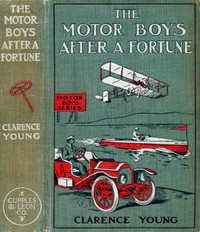
The Motor Boys After a Fortune; or, The Hut on Snake Island — Key Ideas to Explore
(0 User reviews)
365
Project Gutenberg
2014
Not confirmed
Rescues -- Juvenile fiction; Mystery and detective stories; Aeronautics -- Juvenile fiction; Colorado River (Colo.-Mexico) -- Juvenile fiction; Radium -- Juvenile fiction
Readers of public-domain and historical texts
Project Gutenberg digital edition
en
Edition facts
Words
55,977
Reading time
244 min
Text sections
32
Before opening The Motor Boys After a Fortune; or, The Hut on Snake Island — Key Ideas to Explore, the edition data offers a quick orientation: 55,977 words, 4 hr 4 min estimated reading time, and 32 detected text sections.
The text analysis averages about 13.1 words per sentence, while the detected sections provide another way to judge how the source is divided.
Project Gutenberg metadata also associates the work with “Rescues -- Juvenile fiction,” connecting these edition facts with the source record’s subject description.
Source:
Project Gutenberg record #47417
In this thirteenth Motor Boys volume, Jerry, Ned, and Bob pursue a radium treasure on Snake Island in the Grand Canyon, facing train wrecks, airship chases, and strange 'ghosts.' The catalog subjects—aeronautics, Colorado River, radium, rescues—are all present, but the excerpts show the story's focus is on immediate action and teamwork rather than detailed treasure hunting.
Read the complete public-domain text at its original source.
Read on Project GutenbergThe Motor Boys After a Fortune opens with a train wreck, not a treasure map. Jerry, Ned, and Bob are thrust into a rescue operation before any mention of radium or Snake Island. The brakeman hands them tools—a saw, an iron bar, an axe—and they chop through a sleeper car to free passengers. The scene is chaotic: fire glows from an express car, screams fill the air, and the boys work alongside adults without special status. This immediate plunge into danger sets the tone for a series that values quick action over elaborate plotting.
Rescue Before Riches
The catalog lists “Rescues -- Juvenile fiction” first, and the excerpts bear this out. In the opening chapter, the boys save a little girl named Gladys from a wrecked Limited train. Jerry taps on the glass, warns her to cover up, and breaks the pane. The rescue is described step by step: “A few taps with the axe served to shatter the pane,” then “Jerry and Ned carefully scraped away the jagged points of glass.” The girl’s father appears and thanks them, but the boys move on to help others. This is not a single heroic moment but part of a larger effort. The wreck scene occupies several pages, with the boys using tools, coordinating with a brakeman, and even a professor asking for work. The radium treasure, promised by the title, does not appear in these excerpts. Instead, the narrative emphasizes competence under pressure. The boys are not superhuman; they make mistakes, like Bob nearly swinging an axe carelessly, and Jerry corrects him: “Go easy there! You’ll do more harm than good.” This grounded portrayal suggests the series values practical problem-solving over fantastical feats.
Airships and Automobiles: The Catalog’s Promise
The catalog subjects include “Aeronautics -- Juvenile fiction” and the Colorado River, but the excerpts show only one airship reference: the frontispiece caption “Jerry sent the chaser directly at the Comet.” The Comet is likely an airship, given the series’ history (previous titles include The Motor Boys in the Clouds). However, the text excerpts focus on ground-level action: a train wreck, a dark woods, and a burning car. The Colorado River is mentioned only in the preface, where the author notes the boys “went after the radium treasure, on Snake Island, in the Grand Canyon of the Colorado.” The actual river journey is not excerpted. Similarly, “Mystery and detective stories” is a catalog subject, but the excerpts show no detective work—only direct rescue and response. The “strange ghosts” mentioned in the table of contents (Chapter XXIV) are not described in the provided text. Readers expecting a mystery may find the book more focused on physical adventure and travel. The catalog subjects are accurate but incomplete; the book’s core is action, not investigation.
The Thirteenth Book’s Self-Awareness
The preface directly addresses the reader about the book being the thirteenth in the series. The author writes, “I wonder if any of you are superstitious, or if you believe in ‘signs’?” He dismisses superstition but uses the number as a hook. This self-referential moment is rare in series fiction of this era. The preface also summarizes the plot: “Jerry, Ned and Bob, when they went after the radium treasure, on Snake Island, in the Grand Canyon of the Colorado, had a chance to believe in ‘signs’ if they were so inclined.” This suggests the story may incorporate supernatural or eerie elements (the “strange ghosts” from the table of contents), but the excerpts do not confirm this. The author’s tone is informal and friendly, calling the readers “Dear Boys” and framing the book as a lucky thirteenth volume. This meta-commentary gives the book a distinct character: it acknowledges its place in a series while promising something new. The radium treasure is mentioned, but the excerpts show no radium; the preface is the only source for that plot point. Readers should note that the book’s actual content may lean more on the adventure framework than the treasure hunt.
The Motor Boys After a Fortune is best approached as a fast-paced adventure serial where the journey matters more than the destination. The excerpts reveal a story built around immediate crises—wrecks, fires, and rescues—rather than the radium treasure promised in the title. The boys’ competence and teamwork are on display, but the deeper themes of mystery or exploration are only hinted at. Readers familiar with the series will find the familiar formula of travel and trouble; new readers may be surprised by the lack of focus on the titular fortune. The book rewards attention to small details, like the careful handling of a rescued child or the coordination among rescuers, rather than grand revelations.
I remember lying on a summer porch, the Grand Canyon heat pressing in, while Jerry and the boys untangled their airship from a cliff edge. That hurried, anxious teamwork reminded me of another afternoon, quieter, when I followed Patsy Carroll through her own storms, feeling the same steady hand on the tiller. Patsy Carroll Under Southern Skies — Key Ideas to Explore brought back that same comfort in companions who solve things together, without ever needing to say much about it.
There are no reviews for this eBook.
There are no comments for this eBook.
Reader reflection
What did you think of this book?
Answer a few questions and save a private reflection on this device.
Your progress
0
/
10
2
How much did you enjoy the reading experience?
3
Would you recommend this book to another reader?
4
Did the language feel accessible?
5
Would you start a conversation about this book?
6
Did any part of the book stay with you emotionally?
7
How distinctive were its ideas or approach?
8
What did you appreciate most?
9
Which lesson or insight stayed with you?
10