1

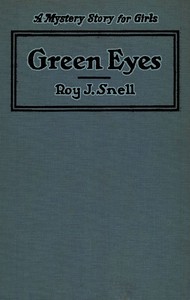
Green Eyes — Context and Discussion
(0 User reviews)
1937
Project Gutenberg
2014
Not confirmed
Treasure troves -- Juvenile fiction; Mystery and detective stories; Romanies -- Juvenile fiction; Women detectives -- Juvenile fiction; Huron, Lake (Mich. and Ont.) -- Description and travel -- Juvenile fiction
Readers of public-domain and historical texts
Project Gutenberg digital edition
en
Edition facts
Words
43,434
Reading time
189 min
Text sections
7
The catalog record for Green Eyes — Context and Discussion provides practical reading context through 43,434 words, 3 hr 9 min estimated reading time, and 7 detected text sections.
The text analysis averages about 10.9 words per sentence, while the detected sections provide another way to judge how the source is divided.
Project Gutenberg metadata also associates the work with “Treasure troves -- Juvenile fiction,” connecting these edition facts with the source record’s subject description.
Source:
Project Gutenberg record #45557
In this 1930 mystery, Florence Huyler and the French dancer Petite Jeanne encounter a lady detective, a stolen trunk, and three rubies on Lake Huron. The narrative contrasts city life with northern repose, weaving gypsy dances and speedboat chases into a girls' adventure story.
Read the complete public-domain text at its original source.
Read on Project GutenbergRoy J. Snell's Green Eyes opens not with a detective but with a rowboat on Morton's Bay, Lake Huron. The stillness is broken by a speed boat that "had stirred the waters and had sent deep ridges and furrows to lift and drop it, lift and drop it many times." The two occupants—Florence Huyler, a returning character from earlier Snell books, and Petite Jeanne, a blonde French girl—are seeking repose, yet the narrative immediately introduces motion and disturbance. The catalog lists "Women detectives" and "Treasure troves" as subjects, but the excerpts show that the detective figure, called "the lady cop," appears only later, and the treasure is specifically three rubies. The gypsy element surfaces through Petite Jeanne's dance and her references to a "gypsy secret," though the Romany catalog subject is not directly developed in the provided text.
Still Water and Speed Boats
The opening chapter establishes a tension between calm and intrusion. The rowboat is described as motionless, with "a bright half moon painted a path of silver over water as still as the night." Yet Florence is disturbed by a speed boat that circles and rocks them. This opposition recurs: Petite Jeanne later dances wildly in the rain, and Florence must call her back to prevent pneumonia. The setting—the upper waters of Lake Huron—is rendered in specific sensory details: the "blanket of gray" during a three-day rain, the piled dry wood, the fire burning brightly. Snell uses the landscape to frame the characters' moods, but the excerpts do not confirm that the lake itself becomes a site of mystery or detection.
The Lady Cop and the Three Rubies
Florence's fascination with "the lady cop" occupies a significant portion of the later excerpts. This detective is the daughter of a police captain killed in a raid; she vowed to take his place. She visits the cabin nightly, drinks coffee, and spins "weird tales of her adventures." The treasure in question is specified as three rubies, not a general treasure trove. The lady cop plans to wire for reinforcements and spring a trap. However, the excerpts do not reveal the outcome of this plan, nor do they show the rubies being recovered. The catalog subject "Women detectives" is thus accurate but limited: the lady cop is a secondary character whose backstory is given more weight than her investigative actions in the provided text.
Petite Jeanne: Dancer, Dreamer, or Sprite?
Petite Jeanne is introduced as a figure of stillness—"she sat bent over as if in sleep"—but quickly becomes the most animated character. She delivers a monologue on the sense of touch, then leaps into a "fantastic dance" that takes her out of the cabin into the rain. She calls herself a "sprite" and laughs off Florence's concern about pneumonia. Her dialogue contrasts the peace of nature with the "beautiful, rushing, throbbing life" of the city. She is also linked to the gypsy motif: she practices "some difficult step of the gypsy dance" with her dog Tico. Yet the excerpts do not confirm that she is a Romany character; the catalog subject "Romanies -- Juvenile fiction" may overstate her connection. Her role seems more that of a whimsical foil to the practical Florence.
Readers should note that the excerpts cover only the first third of the novel and a later chapter (XIX). The mystery of the stolen trunk and the three rubies is set up but not resolved in these pages. The lady cop's investigation, the gypsy dance, and the speed boat incidents are threads that may or may not converge. Snell's style favors descriptive pauses over rapid plotting, so patience with the leisurely pace will reward those interested in period atmosphere and character dynamics rather than puzzle-box solutions.
I often think of Florence Huyler’s rubies and that stolen trunk, how the lake’s calm swallows such fuss. It reminds me of another quiet companion, that lads’ tale of badges and duty, both whispering that adventure is less about the chase than the fellowship found along the way. The "B. O. W. C.": A Book For Boys Illustrated — Background and Themes shares that same warm, unhurried trust in old-fashioned pluck.
There are no reviews for this eBook.
There are no comments for this eBook.
Reader reflection
What was your reading experience?
Capture what you thought, learned, and would like to remember.
Your progress
0
/
10
2
What was your overall reaction to the book?
3
How likely are you to recommend this book?
4
How much effort did this book require?
5
How clear did the writing feel?
6
Did it raise ideas you would like to talk about?
7
Could you see yourself revisiting this book?
8
Did anything about the book feel genuinely new?
9
What is the main idea you are taking away?
10