1

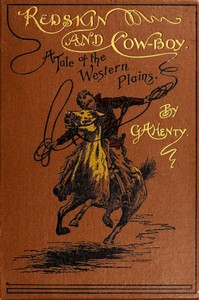
Redskin and Cow-Boy: A Tale of the Western Plains — Themes and Context
(0 User reviews)
181
Project Gutenberg
2014
Not confirmed
Conduct of life -- Juvenile fiction; Indians of North America -- Juvenile fiction; Youth -- Conduct of life -- Juvenile fiction; Outdoor life -- Juvenile fiction; West (U.S.) -- Juvenile fiction; Cowboys -- Juvenile fiction; Shooting -- Juvenile fiction
Readers of public-domain and historical texts
Project Gutenberg digital edition
en
Edition facts
Words
154,174
Reading time
671 min
Text sections
15
This digital edition of Redskin and Cow-Boy: A Tale of the Western Plains — Themes and Context is described by source-level measurements including 154,174 words, 11 hr 11 min estimated reading time, and 15 detected text sections.
The text analysis averages about 18.4 words per sentence, while the detected sections provide another way to judge how the source is divided.
Project Gutenberg metadata also associates the work with “Conduct of life -- Juvenile fiction,” connecting these edition facts with the source record’s subject description.
Source:
Project Gutenberg record #45617
G. A. Henty's 1891 Western adventure follows a young Englishman among New Mexican cow-boys, based on a relative's firsthand accounts. The narrative contrasts frontier hardihood with Indian raids, emphasizing practical skills and tense standoffs.
Read the complete public-domain text at its original source.
Read on Project GutenbergG. A. Henty's Redskin and Cow-Boy opens not with a generic adventure but with a specific claim: the cow-boy life depicted is drawn from the experiences of a near relative who worked in New Mexico. The preface warns that truth here is stranger than fiction, and the excerpts bear this out. The story's texture comes from precise, colloquial dialogue—phrases like "I reckon" and "Jehoshaphat!"—and from careful attention to practical details: how torches are prepared from split pitch-pines, how a party moves cautiously toward a pass, and how a horse's bullet wound signals a fight to waiting Indians.
The narrative voice shifts between Henty's formal framing and the cow-boys' vernacular, creating a tension between the author's didacticism and the raw material of his informant's tales. This editorial note examines three patterns visible in the supplied text: the role of dialogue in building suspense, the recurring motif of constrained movement, and the deliberate understatement of danger.
Dialogue as a Tool of Suspense
The excerpts reveal that Henty often advances action through terse, overlapping speech. When the scout Tom returns from the pass, his report is a cascade of interruptions: "No, it ain't gone off right… When we got to the top of the pass there wur two Red-skins sitting at a fire." The reader learns the outcome—two Indians shot, one horse escaped—through a series of half-finished sentences. This technique mimics the uncertainty of real-time communication; the characters themselves are piecing together events as they speak.
Later, Broncho Harry's analysis of the escaped horse shows how dialogue also serves as tactical reasoning: "If I had missed him it wouldn't have mattered so much… but when the blessed thing turns up with a bullet in his hide, they will know there has been a fight." The cow-boys' speech is never idle; it constantly weighs probabilities, assesses risk, and plans next moves. This gives the prose a lean, functional quality that matches the characters' hardihood.
Constrained Movement and the Landscape
Movement in these excerpts is rarely free. The party advances "slowly and cautiously" toward the pass, then waits for two hours before hearing a footfall. The pass itself is "steep and narrow, and encumbered with boulders." Even after reaching the clump of trees, the group must wait again—this time for Steve to scout ahead. The landscape imposes a rhythm of halts and careful advances, punctuated by moments of sudden action.
This pattern of constrained movement extends to the Indians' response. Broncho Harry predicts they will "throw out scouts all round their village and wait till morning" rather than ride out immediately. The terrain and the threat of ambush force both sides into a cautious, almost chess-like posture. Henty's cow-boys are not reckless; they are men who know that a single loose horse can unravel a plan, and who measure every step against the darkness and the rocks.
Understatement and the Unspoken
Despite the life-or-death stakes, the characters often underplay danger. When Tom reports that the two Indians "jumped on to their feet and wur out of sight like a streak of lightning," the description is matter-of-fact. There is no dwelling on the near-miss. Similarly, Broncho Harry's remark about the escaped horse—"worse luck"—is the only acknowledgment of a potentially disastrous turn. This understatement is a deliberate stylistic choice, reflecting the cow-boys' code of stoicism.
The narrative itself mirrors this restraint. Henty does not embellish the shootout; the Indians are shot, the horse bolts, and the party moves on. The emotional weight is carried by small details: the two-hour wait in darkness, the sound of a footfall, the phrase "the wust of the business." Readers must infer the tension from what is left unsaid, a technique that rewards close attention and mirrors the characters' own vigilance.
Readers approaching Redskin and Cow-Boy will find a story that rewards attention to its vernacular rhythms and tactical details. The excerpts suggest a work less concerned with grand heroics than with the practical decisions of men moving through a dangerous landscape. Pay particular attention to how Henty uses dialogue to convey information and character simultaneously, and to how the physical environment—the pass, the boulders, the darkness—shapes every action. The cow-boys' understatement is not a flaw but a feature; it invites the reader to read between the lines.
There’s a particular quiet in Henty’s New Mexico—that sense of young men learning to stand still and watch. I found myself thinking of that same patient tension while turning through the boating scenes in The Sportsman's Club Afloat — Reading Notes. Different waters, same steady breath before the current pulls. It made me miss the way books used to wait for me.
There are no reviews for this eBook.
There are no comments for this eBook.
Reader reflection
Record your reading impressions
A brief reflection can help important ideas stay with you longer.
Your progress
0
/
10
2
Was reading this book enjoyable?
3
Is this a title you would suggest to others?
4
Did the language feel accessible?
5
Did you gain anything practical from the text?
6
How personally connected did you feel to the book?
7
Did anything about the book feel genuinely new?
8
Did the book give you something worth debating?
9
Which lesson or insight stayed with you?
10