1

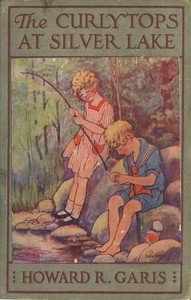
The Curlytops at Silver Lake; Or, On the Water with Uncle Ben — Background and Themes
(0 User reviews)
381
Project Gutenberg
2014
Not confirmed
Dogs -- Juvenile fiction; Vacations -- Juvenile fiction; Camping -- Juvenile fiction; Siblings -- Juvenile fiction; Families -- Juvenile fiction; Summer -- Juvenile fiction; Lakes -- Juvenile fiction
Readers of public-domain and historical texts
Project Gutenberg digital edition
en
Edition facts
Words
52,882
Reading time
230 min
Text sections
21
The source record for The Curlytops at Silver Lake; Or, On the Water with Uncle Ben — Background and Themes measures this digital text at 52,882 words, 3 hr 50 min estimated reading time, and 21 detected text sections.
The text analysis averages about 11.9 words per sentence, while the detected sections provide another way to judge how the source is divided.
Project Gutenberg metadata also associates the work with “Dogs -- Juvenile fiction,” connecting these edition facts with the source record’s subject description.
Source:
Project Gutenberg record #47583
An editorial note examining Howard R. Garis's diction, dialogue, and descriptive choices in The Curlytops at Silver Lake, focusing on how the author builds sibling dynamics, suspense, and setting through specific wordplay and narrative voice.
Read the complete public-domain text at its original source.
Read on Project GutenbergHoward R. Garis opens The Curlytops at Silver Lake with a domestic squabble over red buttons, immediately establishing the Curlytops' family dynamics through dialogue. The nickname "Trouble" for William is not merely a label but a narrative device: Garis uses it to signal the youngest child's disruptive energy, as when Trouble insists "Wed buttons all mine" and triggers a cascade of events. The author's diction leans on colloquial contractions and childlike phrasing ("de wed buttons") to render the children's voices distinct. This attention to speech patterns recurs throughout the excerpts, where even the dog Skyrocket's disappearance is framed through the children's emotional vocabulary—"sorrowed for him very much"—rather than adult sentiment.
Button Games and Verbal Tension
The opening chapter's button game is more than a pastime; it is a microcosm of sibling negotiation. Garis renders the conflict through short, exclamatory lines: "Mother, make Trouble stop!" and "Wed buttons all mine!" The repetition of "wed" for "red" marks Trouble's speech as phonetically immature, a choice that distinguishes him from Ted and Janet's more standard English. The author also uses physical description to amplify the tension: Trouble's hand slips, buttons fall "with a clatter to the floor." This sound detail—the clatter—anchors the scene in sensory reality. Garis avoids moralizing; instead, he lets the children's actions and dialogue carry the conflict. The result is a naturalistic portrayal of family life where minor disagreements escalate through word choice and gesture, not authorial commentary.
Suspense Through Repetition and Variation
Garis builds suspense around Skyrocket's disappearance by repeating the phrase "in such a queer way" across chapters. In Chapter XII, Mrs. Martin reflects that the dog "had vanished in such a queer way from the woodshed." The adjective "queer" recurs in chapter titles ("The Queer Man," "The Queer Box"), creating a lexical thread that links the dog's fate to other mysteries. The author also varies sentence length to control pacing: short, declarative sentences ("Skyrocket was gone.") alternate with longer, explanatory passages. When Mrs. Martin writes a letter to "make up for Skyrocket," Garis withholds the letter's contents, letting the reader infer her plan. This restraint—showing the mother's hope without revealing details—maintains curiosity without relying on cliffhangers.
The Ice-House Scene: Mechanics and Character
Chapter XII's ice-house episode showcases Garis's skill in blending physical detail with character revelation. The description of Trouble dangling "on the end of a rope that ran over a pulley" is precise: the pulley is a "wooden wheel," the rope is "tied about his waist." Garis explains the mechanics—"the rope slipped easily over the wooden wheel"—so readers understand how Ted and Jan can hoist their brother. Yet the scene also reveals character: Uncle Ben's calm instruction ("Lower him easy now!") contrasts with the parents' alarm. The children's ingenuity is presented without judgment; Garis lets the action speak. The phrase "just like a cake of ice" grounds the fantasy in the ice-house's real function, blending the ordinary with the adventurous. This balance between technical clarity and emotional response is a hallmark of Garis's style.
Narrative Voice and the Role of the Narrator
Garis employs a third-person narrator who occasionally interjects with colloquial asides, such as "or bungalow I suppose I had better call it." This parenthetical remark in Chapter XII creates a conversational tone, as if the narrator is thinking aloud. The narrator also uses mild intensifiers ("certainly missed," "certainly a curious sight") that align with a child's perspective without adopting a child's voice. When Mrs. Martin "could not believe that she really saw this," the narrator repeats the phrase "she saw" to emphasize her disbelief. Garis avoids elaborate metaphors; instead, he relies on straightforward comparisons ("just as an elevator goes down and comes up") that a young reader can visualize. This narrative consistency—informal, observant, and slightly playful—unifies the episodic plot and keeps the focus on the children's experiences.
Readers attentive to Garis's craft will notice how he uses repetition, phonetic spelling, and mechanical detail to build a world that feels both familiar and adventurous. The Curlytops' dialogue is not generic; it reflects their ages and relationships. The author's restraint—never explaining a joke or moralizing a mishap—invites readers to interpret the action themselves. For those interested in early twentieth-century children's literature, this book offers a clear example of how domestic realism and mild suspense were woven into a series formula without sacrificing linguistic specificity.
That Garis book left me thinking about how Uncle Ben’s quiet patience shapes the children’s bond—how words like “guess” and “maybe” build suspense without hurry. It reminded me of another old friend, where friendships also begin tentatively at a new school. There’s a gentle warmth in that cautious first meeting of personalities. Ned, Bob and Jerry at Boxwood Hall; Or, The Motor Boys as Freshmen — Themes and Context carries that same unhurried feeling, like watching two people simply become familiar.
There are no reviews for this eBook.
There are no comments for this eBook.
Reader reflection
How will you remember this book?
Save your reaction, strongest insight, and memorable passage.
Your progress
0
/
10
2
Was reading this book enjoyable?
3
Would you pass this book on to a friend?
4
How much effort did this book require?
5
Did anything about the book feel genuinely new?
6
Was the book easy to understand?
7
How valuable was this book for your own interests?
8
Could you see yourself revisiting this book?
9
Which lesson or insight stayed with you?
10