1

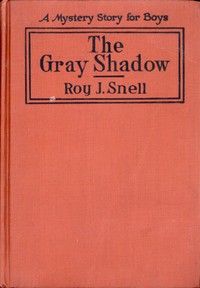
The Gray Shadow A Mystery Story For Boys — Reading Companion
(0 User reviews)
1074
Project Gutenberg
2019
Not confirmed
Detective and mystery stories; Mystery and detective stories; Thieves -- Juvenile fiction; Jewelry -- Juvenile fiction; Air mail service -- Juvenile fiction
Readers of public-domain and historical texts
Project Gutenberg digital edition
en
Edition facts
Words
47,139
Reading time
205 min
Text sections
7
The source record for The Gray Shadow A Mystery Story For Boys — Reading Companion measures this digital text at 47,139 words, 3 hr 25 min estimated reading time, and 7 detected text sections.
The text analysis averages about 11.3 words per sentence, while the detected sections provide another way to judge how the source is divided.
Project Gutenberg metadata also associates the work with “Detective and mystery stories,” connecting these edition facts with the source record’s subject description.
Source:
Project Gutenberg record #60233
Roy J. Snell's 1931 mystery follows Johnny Thompson and Curlie as they track jewel thieves across carnivals, islands, and a domed planetarium. The narrative relies on abrupt scene shifts, recurring images of darkness and pursuit, and a voice-only antagonist.
Read the complete public-domain text at its original source.
Read on Project GutenbergThe Gray Shadow opens not with a crime but with a carnival barker’s chant: “We’re here to-day and away to-morrow.” Johnny Thompson, a youthful world traveler, runs a wheel-of-fortune booth while scanning faces for a purpose he keeps vague. The novel’s structure mirrors this transient setting—scenes shift abruptly from fairgrounds to a man-made island, then to a dark, domed building where a girl’s misstep triggers a chase. Snell builds tension through sensory details: the scrape of sand, a cramp in a foot, a door that locks itself. These early moments establish a pattern of movement and confinement that recurs throughout.
A Structure of Sudden Transitions
The book’s thirty-five chapters move with little connective tissue. One chapter ends with Johnny at a carnival; the next plunges Curlie and Grace into a moonlit island pursuit. Snell favors abrupt location changes over gradual scene-setting. Chapter titles like “Here To-day and Away To-morrow” and “The Doors Close” telegraph this restlessness. The effect is a narrative that feels breathless, as if the reader is always catching up to the action. This structure suits a mystery aimed at young readers, who may prize momentum over plausibility. Yet it also means that character development is sacrificed—Johnny’s motives remain unclear, and Curlie’s thoughts are often reduced to physical reactions like panting or stumbling.
Recurring Images of Darkness and Confinement
Darkness is not merely absence of light in this story; it is a palpable presence. Characters repeatedly find themselves in “utter dark” spaces: a locked building, a tunnel, a stairway climbed on hands and knees. The description of a red light that “casting not the faintest shadow, appeared to make the darkness more intense” is typical. Snell also uses echoes—Grace’s whisper returns as “Ah—ah—ah”—to amplify isolation. These details create a claustrophobic atmosphere that contrasts with the open-air carnival scenes. The recurring image of a door that locks automatically, both within and without, reinforces a sense of inescapable trap. Readers attentive to these patterns will notice how often the characters are caught between pursuit and enclosure.
Movement as a Narrative Engine
From the opening bark to the final chase, the story is propelled by physical motion. Characters run, race, dash, and flit. Johnny declares he will “flit as soon as some big thing breaks.” Curlie and Grace are “dashing away over the sand” with pursuers gaining. Even the celestial dome in the planetarium-like building moves: “the entire firmament, the moon, the planets and the stars began to move.” This constant motion serves as both plot driver and thematic thread—the title’s “shadow” is never still. Yet the excerpts offer little explanation of why characters move where they do. The reader must accept that flight is instinctive. Snell’s prose emphasizes speed over geography; locations blur into generic “buildings” and “islands.”
The Voice and the Unseen Antagonist
Several chapter titles reference “The Voice” (XIV, XVII, XXI, XXXIII), suggesting an antagonist who communicates without being seen. In the excerpts, no such voice appears, but the pattern of unseen threat is established early. The pursuers in the island chase remain faceless—only their “heavy footsteps” and “labored breathing” are described. The door that locks itself implies a hidden mechanism or agent. This technique of withholding the villain’s identity aligns with the mystery genre’s conventions, but Snell extends it to the setting itself: the domed building’s moving stars and locked doors feel like an active, malevolent presence. Readers should watch for how “the voice” functions as both a character and a structural device, uniting the scattered scenes.
Because the excerpts cover only the first quarter of the book, the full shape of the mystery remains unclear. What is evident is Snell’s reliance on swift, sensory-driven scenes and a recurring tension between open spaces and locked rooms. Readers who enjoy puzzles of movement and confinement will find much to track. Pay attention to how each new location echoes earlier ones—the carnival booth, the island, the dome—and how the unseen “voice” may tie them together.
There’s something about the way those old carnival shadows cling in The Gray Shadow—even the voice-only villain feels closer than he should. It reminds me of the quieter ache in Ned, Bob and Jerry at Boxwood Hall; Or, The Motor Boys as Freshmen — Themes and Context, where friendship is the real lighthouse against all that dark. Just a passing thought, really.
There are no reviews for this eBook.
There are no comments for this eBook.
Reader reflection
What was your reading experience?
Capture what you thought, learned, and would like to remember.
Your progress
0
/
10
2
What was your overall reaction to the book?
3
How likely are you to recommend this book?
4
How easy was the book to follow?
5
Which part made the strongest impression?
6
What was its emotional impact?
7
Did it raise ideas you would like to talk about?
8
How clear did the writing feel?
9
What is the main idea you are taking away?
10