1

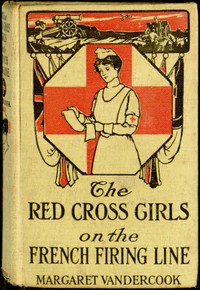
The Red Cross Girls on the French Firing Line — Reading Companion
(0 User reviews)
2617
Project Gutenberg
2019
Not confirmed
War stories; Young women -- Juvenile fiction; Nursing -- Juvenile fiction; Red Cross and Red Crescent -- Juvenile fiction; World War, 1914-1918 -- France -- Juvenile fiction; Participation -- Juvenile fiction
Readers of public-domain and historical texts
Project Gutenberg digital edition
en
Edition facts
Words
48,196
Reading time
210 min
Text sections
24
For The Red Cross Girls on the French Firing Line — Reading Companion, the stored edition analysis reports 48,196 words, 3 hr 30 min estimated reading time, and 24 detected text sections.
The text analysis averages about 18.2 words per sentence, while the detected sections provide another way to judge how the source is divided.
Project Gutenberg metadata also associates the work with “War stories,” connecting these edition facts with the source record’s subject description.
Source:
Project Gutenberg record #60265
This editorial note examines the structure and recurring imagery in Margaret Vandercook's 1916 novel, focusing on how the narrative moves between Parisian settings and the French front, and how the character of Eugenia Peabody embodies a Puritan conscience that shapes key encounters.
Read the complete public-domain text at its original source.
Read on Project GutenbergThe novel opens not on a battlefield but in the Place de l'Opera, establishing a pattern of movement between civilian and military spaces. The four American Red Cross nurses—Eugenia, Mildred, Nona, and Barbara—are introduced as near-strangers, their differences immediately sketched: Eugenia from Massachusetts appears “as stern and forbidding as the rock-bound coasts.” This contrast between New England severity and European theatricality becomes a structural device, recurring in later scenes such as the chateau drawing-room where a great Dane pads among the guests.
Movement Between Settings
The narrative alternates between Parisian interiors—the opera district, a chateau drawing-room—and the field hospitals near the French firing line. Chapter titles like “Place de l’Opera,” “On the Roof,” and “The Chateau” signal these shifts. The journey from city to front is not described in detail; instead, the reader is placed directly into each new location. This abrupt transition mirrors the dislocation experienced by the characters, who move from social encounters to nursing duties without extended travelogue. The chateau scene, for instance, begins with the dog’s entrance, a domestic interruption that contrasts with the war context.
Recurring Images: The Dog and the Uniform
The great Dane appears twice in the excerpts: first padding around the drawing-room, then sinking at Eugenia’s feet “burying his head between his forepaws.” This animal becomes a physical emblem of apology and submission, echoing the human interactions. The Red Cross uniform is another repeated image, described as “the uniform I respect most in a” (the sentence is cut off in the excerpt). The uniform both identifies the women as nurses and, in the dark encounter, obscures Eugenia’s gender, leading to Captain Castaigne’s apology. These images—dog and uniform—anchor the emotional conflicts.
Eugenia’s Puritan Conscience as a Structural Force
Eugenia’s “Puritan conscience” is named twice in the excerpt, and it drives the plot’s central misunderstanding. When Captain Castaigne apologizes dramatically, she refuses to smile, and the narrator notes that “if only Eugenia had been able to smile … how much simpler the future would have been.” This moment of rigidity is presented as a choice that will have consequences. The narrative voice aligns with Eugenia’s perspective, describing her as looking “like all the Pilgrim fathers’ portraits … melted together into one face.” The contrast between her severity and the French officer’s theatricality is a recurring tension.
Incomplete Encounters and Unfinished Sentences
The excerpts contain several interrupted speeches and truncated thoughts. Eugenia begins to say, “I met some one, an officer, I think. It was then too dark … but I have been wondering ever since——” and is cut off by the dog’s entrance. Later, Captain Castaigne’s apology is broken by narrative commentary. These interruptions create a sense of withheld information, typical of serialized fiction. The reader is left to infer the full context of the dark encounter, which is only partially revealed. This technique builds suspense around the characters’ pasts and motives.
Readers attentive to the novel’s structure will notice how Vandercook uses setting shifts and recurring motifs—the dog, the uniform, the interrupted speech—to dramatize cultural and personal conflicts. The excerpts suggest that the story’s emotional core lies not in battle scenes but in the friction between Eugenia’s New England reserve and the more expressive world around her. The incomplete sentences hint at secrets that may unfold later in the narrative.
The rain kept time with Eugenia’s restless conscience in The Red Cross Girls on the French Firing Line, and I found myself pausing over her quiet stubbornness. Later, wandering the shelves, I pulled down The Boy Scouts of the Field Hospital — Background and Themes almost by accident, and felt the same odd peace—young people finding their footing amid chaos, not heroic, just present.
There are no reviews for this eBook.
There are no comments for this eBook.
Reader reflection
Take a moment to reflect on this book
Create a short personal record of your experience with this book.
Your progress
0
/
10
2
What was your overall reaction to the book?
3
Is this a title you would suggest to others?
4
How much effort did this book require?
5
Would you like to discuss this book with someone?
6
How did the pace of the book feel?
7
How would you rate its originality?
8
How clear did the writing feel?
9
Which lesson or insight stayed with you?
10