1

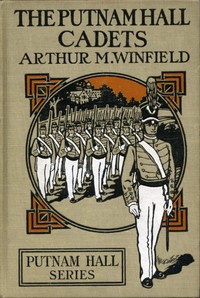
The Putnam Hall Cadets; or, Good Times in School and Out — Background and Themes
(0 User reviews)
960
Project Gutenberg
2014
Not confirmed
Schools -- Juvenile fiction; Boarding schools -- Juvenile fiction; Mystery fiction; Bullying -- Juvenile fiction; Military education -- Juvenile fiction
Readers of public-domain and historical texts
Project Gutenberg digital edition
en
Edition facts
Words
53,822
Reading time
235 min
Text sections
9
The catalog record for The Putnam Hall Cadets; or, Good Times in School and Out — Background and Themes provides practical reading context through 53,822 words, 3 hr 55 min estimated reading time, and 9 detected text sections.
The text analysis averages about 11.4 words per sentence, while the detected sections provide another way to judge how the source is divided.
Project Gutenberg metadata also associates the work with “Schools -- Juvenile fiction,” connecting these edition facts with the source record’s subject description.
Source:
Project Gutenberg record #45517
This editorial note examines specific tensions in the opening chapters of The Putnam Hall Cadets, focusing on the contrast between military discipline and boyish mischief, the recurring motif of food as a source of humor and conflict, and the pattern of authority figures being outmaneuvered by cadets.
Read the complete public-domain text at its original source.
Read on Project GutenbergThe Putnam Hall Cadets opens with a clear tension between the formal military structure of the school and the irrepressible high spirits of its students. The cadets are introduced through a series of incidents that test the boundaries of discipline: a mysterious sloop, a bribery attempt, and an election for major. The narrative voice, attributed to Arthur M. Winfield (a pseudonym for Edward Stratemeyer), maintains a brisk, episodic pace that prioritizes action over introspection. The excerpts reveal a world where authority figures like Captain Putnam and the severe Josiah Crabtree are frequently outwitted or challenged by the cadets, particularly the central trio of Jack, Pepper, and Andy. This dynamic sets up a recurring pattern of rule-breaking followed by inventive punishments, suggesting that the school's true education lies not in textbooks but in navigating the gap between orders and ingenuity.
Discipline and Its Discontents
The military setting of Putnam Hall provides a constant backdrop of commands, uniforms, and drills, yet the cadets rarely follow orders without question. In the opening chapter, the boys are introduced through their nicknames—Stuffer, Mumps, Pepper—which immediately undercut the formality of their military titles. When the battalion marches out, the narrator notes that Major Jack is “proud of his position, and had a right to be,” but the pride is undercut by the chaos that follows: an automobile confrontation, a circus tiger scare, and a snowball fight that escalates into a full-scale battle. The cadets’ relationship with authority is best captured in the episode where Josiah Crabtree, a teacher, is “nonplused” by the boys’ cleverness. The text repeatedly shows that discipline is a negotiation, not a given.
Food as a Source of Conflict and Comedy
Food appears as a recurring motif that reveals character and drives conflict. Stuffer Singleton, whose nickname signals his obsession with eating, is the most obvious example. When the cadets prepare for a march, his enthusiasm collapses upon hearing they will eat “hard-tack” and “pork and beans.” The other boys tease him mercilessly, suggesting he bring “private rations” like bread or dried herrings. This exchange is typical of the book’s humor: it relies on exaggerated reactions and group mockery. Food also appears in the punishment scene where a cadet is forced to eat a raw onion, and in the picnic chapter where the boys compete in boat races. The emphasis on eating—whether in mess halls, on marches, or during outings—grounds the story in the physical realities of boarding school life while providing a steady source of low-stakes conflict.
Patterns of Escalation and Resolution
The excerpts reveal a consistent narrative pattern: a minor incident escalates into a larger confrontation, which is then resolved through a combination of luck, quick thinking, and the intervention of a sympathetic authority figure. For example, the encounter with the automobile begins with a simple road dispute and nearly becomes a physical fight before the lady passenger intervenes. Similarly, the tiger episode starts with a circus visit and ends with the beast being shot and its skin turned into a rug. The football game, the nutting party, and the snowstorm all follow this trajectory. The cadets rarely face lasting consequences; instead, they learn to navigate trouble through camaraderie and wit. This pattern suggests that the book’s primary interest is not in moral lessons but in the entertainment value of controlled chaos.
Readers approaching The Putnam Hall Cadets should pay attention to the way the text balances its military framework with the boys’ persistent mischief. The chapters are short and self-contained, making the book suitable for intermittent reading. The dialogue is lively but formulaic, with characters often speaking in exclamations. The illustrations by A. B. Shute, though not reproduced here, likely reinforce the visual humor of the cadets’ predicaments. This is a story that rewards attention to its recurring patterns rather than its plot mechanics.
It’s funny how some books stay with you quietly, like the lingering taste of a shared meal. The Putnam Hall Cadets made me think of that—the way mischief keeps slipping past the sternest rules. It reminded me, too, of a certain girl pilot, finding her own gentle loopholes in the sky. Linda Carlton, Air Pilot — Background and Themes holds that same soft warmth, somehow.
There are no reviews for this eBook.
There are no comments for this eBook.
Reader reflection
Take a moment to reflect on this book
Create a short personal record of your experience with this book.
Your progress
0
/
10
2
How did the book work for you overall?
3
Is this a title you would suggest to others?
4
How much effort did this book require?
5
How useful did the reading feel?
6
How would you rate its originality?
7
Did any part of the book feel personally relevant?
8
What was the strongest part of the book?
9
In one sentence, what did you learn?
10