1


Dorothy Dixon and the Mystery Plane — Key Ideas to Explore
(0 User reviews)
1074
Project Gutenberg
2014
Not confirmed
Mystery and detective stories; Boats and boating -- Juvenile fiction; Smuggling -- Juvenile fiction; Women detectives -- Juvenile fiction; Gangsters -- Juvenile fiction
Readers of public-domain and historical texts
Project Gutenberg digital edition
en
Edition facts
Words
43,804
Reading time
191 min
Text sections
4
For Dorothy Dixon and the Mystery Plane — Key Ideas to Explore, the stored edition analysis reports 43,804 words, 3 hr 11 min estimated reading time, and 4 detected text sections.
The text analysis averages about 12.9 words per sentence, while the detected sections provide another way to judge how the source is divided.
Project Gutenberg metadata also associates the work with “Mystery and detective stories,” connecting these edition facts with the source record’s subject description.
Source:
Project Gutenberg record #44782
An editorial note on Dorothy Dixon and the Mystery Plane, focusing on the brisk, colloquial dialogue and the alternation between light banter and tense action sequences, as seen in the beach club opening and the storm-driven boat wreck.
Read the complete public-domain text at its original source.
Read on Project GutenbergThe first chapter of Dorothy Dixon and the Mystery Plane opens with a swift exchange of dialogue that establishes both character and setting in a few lines. Terry Walters calls out, “Here he comes again, Dot!” and Dorothy responds with a playful threat: “Here you come into the drink, you mean!” The scene at the beach club float is built through short, punchy lines and physical action—a dive, a lurch, a shriek of approval. The narrative voice is colloquial and brisk, with Dorothy’s “Goodness, Betty, he’s missing!” shifting the tone from banter to alert observation as an airplane engine falters. This opening demonstrates the book’s characteristic blend of lighthearted repartee and sudden tension, a pattern that recurs throughout the excerpts.
Dialogue as Action
The excerpts reveal that dialogue often drives the narrative forward, with minimal descriptive padding. When Dorothy and Bill face the storm at sea, communication is terse and functional: “Stop bailing, Bill! Stand by to swim for it!” Bill replies, “O. K., kid.” The exchange is stripped of ornament, matching the urgency of the situation. Earlier, at the float, Betty’s “Ooh, Dorothy—do you think he’ll hit the roof?” is answered with Dorothy’s calm “Oh, he’s all right—” before Betty dives overboard. The dialogue not only conveys information but also reveals character: Dorothy’s steady, observant tone contrasts with Betty’s panic, and Bill’s laconic “O. K., kid” signals competence under pressure. This technique keeps the pace rapid and the reader focused on immediate events.
Shifts in Narrative Pace
The pacing in the excerpts alternates sharply between leisurely, playful scenes and compressed, high-stakes action. The opening at the beach club moves at a relaxed, bantering tempo: characters balance on floats, dive, and laugh. Then, within a few paragraphs, the tone tightens as Dorothy spots the plane’s engine missing and the craft descends. The later storm sequence is a continuous rush of physical detail: “The next wave flung them forward and crumpled over the gunwale. The Mary Jane’s motor gave a strangled cough and stopped.” Sentences become shorter, verbs more violent (“snatched,” “crashed,” “whirled”). The contrast is deliberate: the author uses slower, dialogue-heavy scenes to establish relationships and normalcy, then accelerates into action where description and dialogue merge into urgent, clipped prose.
Physicality and Sensory Detail
The excerpts are rich in sensory, physical details that ground the action. Dorothy’s “scarlet bathing cap flamed against the ash blue sky” and her wet suit “clung to her slender form like a sheath of black lacquer” create a vivid visual. In the storm, the cold is “paralyzingly,” the water “driving,” and the waves “mount, topple.” The narrative emphasizes bodily experience: Dorothy “blew the water from her nose,” “struck out strongly,” and felt her body “whirled over and over.” These details make the action tangible and immediate. The author also uses specific, concrete objects—the life preserver, the anchor line, the boxes of “government’s precious loot”—to anchor the adventure in a material world. This attention to physicality reinforces the sense of real peril and effort, distinguishing the book from more abstract or dialogue-heavy adventures.
Readers will find that the book’s effectiveness depends on its ability to shift gears quickly, from sunlit banter to life-threatening waves. Pay attention to how the author uses short, action-packed paragraphs during crises and longer, dialogue-filled exchanges in calmer moments. The excerpts suggest a narrative that values efficiency and momentum over introspection, making it a brisk, engaging read for those who enjoy early twentieth-century adventure stories with a capable, quick-thinking heroine.
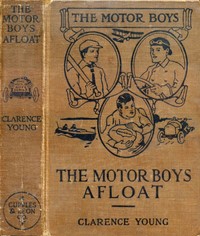
I keep returning to the beach club scene in Dorothy Dixon and the Mystery Plane, where the casual chatter gives way so suddenly, and it stirs a memory of another old favorite, The Motor Boys Afloat; or, The Stirring Cruise of the Dartaway — Reading Companion. There is the same unhurried promise of trouble, with a calm evening turning quietly serious, like weather shifting without warning.
There are no reviews for this eBook.
There are no comments for this eBook.
Reader reflection
What was your reading experience?
Capture what you thought, learned, and would like to remember.
Your progress
0
/
10
2
How did the book work for you overall?
3
Would you encourage someone else to read it?
4
How much effort did this book require?
5
How would you describe its reading pace?
6
Which part made the strongest impression?
7
Did the book give you something worth debating?
8
How would you rate its originality?
9
In one sentence, what did you learn?
10