1

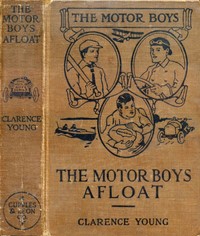
The Motor Boys Afloat; or, The Stirring Cruise of the Dartaway — Reading Companion
(0 User reviews)
339
Project Gutenberg
2014
Not confirmed
Kidnapping -- Juvenile fiction; Caves -- Juvenile fiction; Mystery and detective stories; Motorboats -- Juvenile fiction; Thieves -- Juvenile fiction
Readers of public-domain and historical texts
Project Gutenberg digital edition
en
Edition facts
Words
51,959
Reading time
226 min
Text sections
6
The catalog record for The Motor Boys Afloat; or, The Stirring Cruise of the Dartaway — Reading Companion provides practical reading context through 51,959 words, 3 hr 46 min estimated reading time, and 6 detected text sections.
The text analysis averages about 12.6 words per sentence, while the detected sections provide another way to judge how the source is divided.
Project Gutenberg metadata also associates the work with “Kidnapping -- Juvenile fiction,” connecting these edition facts with the source record’s subject description.
Source:
Project Gutenberg record #44788
This editorial note examines the narrative voice and shifting pace in Clarence Young's 1908 motor-boat adventure, focusing on how telegraphic dialogue, engine sounds, and pursuit sequences create a distinctive rhythm.
Read the complete public-domain text at its original source.
Read on Project GutenbergFrom the opening whistle of the postman to the final chase on the river, The Motor Boys Afloat moves at the speed of its own engine. Clarence Young builds the story around the Dartaway's motor, using its sputtering exhaust and sudden stops to mark changes in tension. The narrative voice is brisk and declarative, favoring short sentences that mirror the boys' excitement and the urgency of their adventures. This note highlights three features of the book's language and pacing, drawn from the available excerpts.
Telegraphic Dialogue and Action
Young's dialogue is clipped and functional, often reduced to exclamations or single sentences. When Bob receives the postal notice, he says simply, “It’s our motor boat! It’s come! Hurrah!” Later, during the pursuit, Jerry identifies the Dartaway by its exhaust: “That’s the Dartaway! I know her exhaust!” These lines do more than advance the plot—they establish a rhythm of quick, breathless exchanges that keep the reader focused on immediate action. The characters rarely reflect or elaborate; they react. This telegraphic style suits the serial adventure format, where momentum matters more than introspection.
Engine Sounds as Narrative Cues
The motor boat's engine becomes an auditory motif. The Dartaway is first announced by its absence (a notice at the freight station), then by its sound. When the boys and Chief Dalton listen for the stolen boat, “the faint puffing of a motor boat could be heard.” Jerry's claim to know the exhaust by ear personalizes the machine, turning a mechanical noise into a signature. The Terror, the police boat, also “leaped ahead under the influence of more gasolene and an advanced spark.” These descriptions tie speed directly to fuel and spark, grounding the adventure in the period's fascination with internal combustion.
Pursuit and Pacing in the River Chase
The chase sequence in chapters 17–18 shows Young's control of pace. The Terror stops at a village to learn the Dartaway passed “not more than an hour before.” Then the chief holds up his hand for silence, and the distant puffing is heard. The paragraph length shortens as the boats near each other: “A minute later they rounded a turn in the river and saw the Dartaway just as her engine came to a stop.” The thieves leap ashore, and the chief prepares to land. Young alternates between bursts of speed and moments of stillness, using the river's geography—turns, shallows, banks—to modulate tension.
Readers will find that the book's energy depends less on character development than on the interplay of sound and motion. Pay attention to how Young uses the motor's rhythm—its starts, stops, and changes in pitch—to signal shifts in the plot. The excerpts suggest a work that values forward momentum over reflection, making it a brisk read best enjoyed for its period detail and chase sequences.
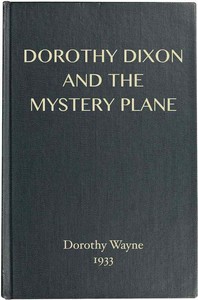
Reading about the Dartaway’s engine choke and splutter, I remembered sitting on my grandfather’s dock, turning pages of an old paperback while my own motorboat coughed to life. That same knot of anticipation, the pause before motion. Dorothy Dixon and the Mystery Plane — Key Ideas to Explore once gave me that identical quiet thrill, a held breath just before the propeller bites.
There are no reviews for this eBook.
There are no comments for this eBook.
Reader reflection
What was your reading experience?
Capture what you thought, learned, and would like to remember.
Your progress
0
/
10
2
Did this book hold your interest?
3
How likely are you to recommend this book?
4
Did the language feel accessible?
5
Was the book easy to understand?
6
What was its emotional impact?
7
Would you like to discuss this book with someone?
8
Did you relate to its people, ideas, or situations?
9
What is the main idea you are taking away?
10