1


The four Corners in Japan — Key Ideas to Explore
(0 User reviews)
719
Project Gutenberg
2014
Not confirmed
Voyages and travels -- Juvenile fiction; Young women -- Juvenile fiction; Sisters -- Juvenile fiction; Aunts -- Juvenile fiction; Japan -- Juvenile fiction
Readers of public-domain and historical texts
Project Gutenberg digital edition
en
Edition facts
Words
71,959
Reading time
313 min
Text sections
8
Before opening The four Corners in Japan — Key Ideas to Explore, the edition data offers a quick orientation: 71,959 words, 5 hr 13 min estimated reading time, and 8 detected text sections.
The text analysis averages about 16.0 words per sentence, while the detected sections provide another way to judge how the source is divided.
Project Gutenberg metadata also associates the work with “Voyages and travels -- Juvenile fiction,” connecting these edition facts with the source record’s subject description.
Source:
Project Gutenberg record #45518
An editorial note examining Amy E. Blanchard's diction, dialogue, and descriptive choices in 'The Four Corners in Japan,' focusing on how the author constructs the sisters' voices and renders Japanese settings through a visitor's perspective.
Read the complete public-domain text at its original source.
Read on Project GutenbergAmy E. Blanchard opens The Four Corners in Japan with a migratory metaphor: Aunt Helen declares she feels “a migratory fever stirring within my veins,” a phrase that immediately establishes the tone of genteel adventure. The dialogue among the Corner sisters—Nan, Mary Lee, and later Jean—is brisk and colloquial, marked by exclamations like “Japan? Oh, Aunt Helen, not really” and the casual “Barkis is willin’.” These speech patterns differentiate the characters while keeping the family dynamic cohesive. Blanchard uses the sisters’ voices to convey enthusiasm and mild mischief, as when Nan recalls “our college days” to justify a scheme. The author’s descriptive choices often filter Japan through the characters’ sensory impressions: “It smells very queer,” Jean remarks, “but then Japan is so full of queer odors.” Such lines reveal a deliberate strategy of presenting the foreign through the familiar reactions of the travelers.
Dialogue as Characterization
Blanchard relies on dialogue to distinguish the four Corner sisters without heavy exposition. Nan is the impulsive one, quick to exclaim and propose adventures; Mary Lee is more measured, responding with “Barkis is willin’” after checking for maternal approval. Aunt Helen speaks in bookish, slightly formal phrases (“I am strongly inclined to make the trip”), while the younger sisters use contractions and interjections. The author also uses dialogue to build tension around the character Mr. Warner, whom the group calls a “marplot” and a “silly monkey-on-a-stick.” Their whispered plans to “outwit” him echo schoolgirl escapades, grounding the Japan journey in familiar sibling dynamics. Notably, the dialogue rarely includes Japanese characters’ speech; the focus stays on the Americans’ reactions.
Descriptive Economy in Setting
Blanchard’s descriptions of Japan are selective and often tied to a character’s immediate perception. Rather than exhaustive catalogues, she offers brief, vivid details: “the mists were rolling up from the mountains and Fujisan’s crest was quite hidden,” or “a foreground of pines and box-trees, and nearer still, growths of snowy flowers.” The author frequently notes smells and sounds—the “queer odors,” a “blithe lark caroled forth his morning song,” the “rush of mountain streams.” These sensory fragments create an impressionistic landscape, one that feels observed rather than invented. The tea-house garden with a “pond of goldfish” and “smiling maids” is rendered in a few strokes, enough to suggest charm without overloading the page. This restraint keeps the narrative pace brisk and the setting subordinate to the characters’ journey.
Structural Patterns: Departure and Obstacle
The excerpts reveal a recurring narrative pattern: a departure is proposed, then complicated by a minor obstacle. In Chapter I, Aunt Helen’s plan to go to Japan is immediately questioned (“You are not going to desert us?”) and requires maternal approval. Later, the expedition to O-Jigoku is threatened by the unwanted Mr. Warner, prompting a secret early-morning rendezvous. Blanchard structures these episodes as small-scale adventures, complete with whispered conspiracies and stealthy movements (“by ones and twos the conspirators crept forth”). The pattern mirrors the larger journey: each new location brings a fresh challenge or annoyance, often personified by a character like Mr. Warner. This repetition gives the travelogue a mild narrative tension, though the obstacles are always resolved without serious consequence.
Voice and Point of View
Blanchard employs a close third-person perspective that stays primarily with the sisters, especially Nan and Mary Lee. The narrator occasionally dips into free indirect discourse, as when Nan thinks of the cherry blossoms: “the lovely flowery Japanese spring and all that.” The tone is light and conversational, matching the dialogue. Exclamations like “Glorious! Splendid!” are rendered as direct speech, keeping the emotional register buoyant. The author avoids interior monologue about Japan’s history or culture; instead, the narrative voice remains that of an educated American visitor, curious but not deeply analytical. This consistent point of view reinforces the book’s genre as a juvenile adventure rather than a travel guide, and it shapes every description through the lens of the Corner sisters’ collective experience.
Readers attentive to authorial craft will notice how Blanchard balances the exotic setting with the familiar rhythms of family banter. The Japan of this book is never allowed to overwhelm the Corner sisters’ voices; it remains a backdrop for their small dramas. The editorial note above highlights only patterns visible in the excerpts—the full novel may develop these tendencies further or introduce new ones. Approach the text as a period piece of juvenile fiction, where the pleasure lies less in ethnographic accuracy than in the interplay of character and place as rendered through a consistent, light-handed narrative voice.
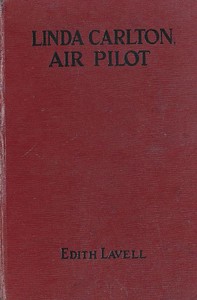
Reading about Amy Blanchard’s careful rendering of the sisters’ voices made me remember a different kind of travel—this time through the open sky in Linda Carlton, Air Pilot — Background and Themes. There’s a similar quiet pleasure in watching a young woman find her bearings, only here the horizon is wider. Both books share that gentle patience with detail, a pause before each step.
There are no reviews for this eBook.
There are no comments for this eBook.
Reader reflection
Take a moment to reflect on this book
Create a short personal record of your experience with this book.
Your progress
0
/
10
2
How did the book work for you overall?
3
Would you encourage someone else to read it?
4
Did the language feel accessible?
5
Did the book offer a fresh perspective?
6
How well did it match your expectations?
7
Did this book create an emotional response?
8
Do you expect to return to this book?
9
What is the main idea you are taking away?
10