1

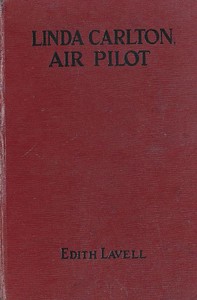
Linda Carlton, Air Pilot — Background and Themes
(0 User reviews)
299
Project Gutenberg
2014
Not confirmed
Adventure stories; Family -- Juvenile fiction; Mystery and detective stories; Best friends -- Juvenile fiction; Young women -- Social life and customs -- Juvenile fiction; Women air pilots -- Juvenile fiction; Carlton, Linda (Fictitious character) -- Juvenile fiction
Readers of public-domain and historical texts
Project Gutenberg digital edition
en
Edition facts
Words
49,499
Reading time
216 min
Text sections
5
Before opening Linda Carlton, Air Pilot — Background and Themes, the edition data offers a quick orientation: 49,499 words, 3 hr 36 min estimated reading time, and 5 detected text sections.
The text analysis averages about 12.6 words per sentence, while the detected sections provide another way to judge how the source is divided.
Project Gutenberg metadata also associates the work with “Adventure stories,” connecting these edition facts with the source record’s subject description.
Source:
Project Gutenberg record #44862
Edith Lavell's 1931 aviation adventure follows Linda Carlton's transition from student to licensed pilot, weaving technical flight details with family dynamics and a mystery. The excerpts reveal a heroine who navigates parental concern, social expectations, and her own ambition, all set against the backdrop of early aviation culture.
Read the complete public-domain text at its original source.
Read on Project GutenbergFrom its opening sentence, Linda Carlton, Air Pilot establishes a heroine whose identity is tightly bound to machinery and motion. Linda drives a blue sports roadster, wears a matching crêpe suit, and pilots her own plane—the Pursuit—yet the narrative repeatedly checks her ambition against the anxieties of her father and aunt. The text balances technical aviation details (parachute jumps, flight licenses, hangar protocol) with domestic scenes of costume fittings and luncheon conversations, creating a persistent tension between Linda's desire for independence and the protective circle of her family.
A Heroine Defined by Contrasts
The excerpts present Linda through a series of deliberate juxtapositions. She is both a competent driver threading through traffic and a girl whose eyes grow moist when denied a flight. She wants to fly like Amelia Earhart and Elinor Smith, yet her father recalls her mother in a fairy-play costume. The narrative voice describes her as “so pretty, so serious, so anxious to go up,” blending admiration with a hint of condescension. Linda herself oscillates between asserting her skill—she telephones the airport, negotiates with Lieutenant Kingsberry—and deferring to male authority: she blushes when mentioning her parachute jump with Ted Mackay. These contrasts are not resolved but held in suspension, suggesting a character caught between the era's expectations for young women and her own driving ambition.
Flight as Both Freedom and Risk
The aviation sequences in the excerpts are marked by a precise, almost technical vocabulary: “Pursuit,” “parachute,” “motor,” “hangar,” “flight license.” Yet the emotional stakes are equally concrete. Linda's first flight is delayed by weather and “orders are orders”; her father insists the mechanics check the motor before she flies again. The parachute jump is described as “delightful” after a moment of queasiness, but her aunt shudders at the thought. Linda herself worries not about injury but about abandoning her plane to crash. The text thus treats flight as both a realm of personal achievement and a source of familial fear, grounding the adventure in the real risks of early aviation without sensationalizing them.
Family Dynamics and the Weight of Legacy
Linda's relationship with her father and aunt shapes her choices more than any external plot. Her father's question about the parachute jump reveals a pattern of testing her courage while also expressing care: “I could buy you another plane. We couldn't buy another daughter.” Her aunt, Miss Carlton, voices the conventional fears Linda must navigate, begging her not to discuss dangerous flights. The costume of Queen Mab—chosen by her aunt to make Linda look “pretty—in fluffy, feminine things”—directly contrasts with her flyer's suit. The father's comment that Linda's mother once wore something similar in a fairy play layers a sense of legacy onto the scene, hinting that Linda's path is both her own and a continuation of a family story. These domestic interludes ground the aerial adventure in a web of obligation and affection.
Readers attentive to the interplay between Linda's technical competence and her social vulnerability will find the excerpts reward close attention to small gestures—a blush, a shudder, a father's careful question. The narrative withholds the resolution of the robbery hinted at in the chapter titles, and the excerpts offer no clue to the outcome of the Midsummer Ball or the fate of the lost necklace. What remains is a portrait of a young woman whose desire to fly is inseparable from the people who both support and constrain her.
There's a particular stillness in a girl first trusting her own wings, much as there was in Hal vanishing into his own unknown. Both books keep that old secret—how solitude sharpens a spine. Hal Kenyon Disappears — A Reader’s Guide sits beside Linda on my shelf, two quiet friends who understood that leaving is its own arrival, though they never once said so aloud.
There are no reviews for this eBook.
There are no comments for this eBook.
Reader reflection
Before you leave, reflect on the book
Use these questions to collect your thoughts before moving on.
Your progress
0
/
10
2
Did this book hold your interest?
3
Would you pass this book on to a friend?
4
How easy was the book to follow?
5
How closely did the book connect with your experience?
6
Was the book moving at the right speed?
7
Which aspect of the book did you value most?
8
Could you apply anything you learned?
9
Which lesson or insight stayed with you?
10