1

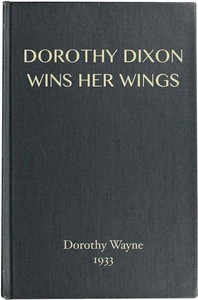
Dorothy Dixon Wins Her Wings — Reading Companion
(0 User reviews)
1162
Project Gutenberg
2014
Not confirmed
Mystery and detective stories; Boats and boating -- Juvenile fiction; Women air pilots -- Juvenile fiction; Women detectives -- Juvenile fiction; Gangsters -- Juvenile fiction; New Canaan (Conn.) -- Juvenile fiction
Readers of public-domain and historical texts
Project Gutenberg digital edition
en
Edition facts
Words
40,030
Reading time
175 min
Text sections
5
The source record for Dorothy Dixon Wins Her Wings — Reading Companion measures this digital text at 40,030 words, 2 hr 55 min estimated reading time, and 5 detected text sections.
The text analysis averages about 12.0 words per sentence, while the detected sections provide another way to judge how the source is divided.
Project Gutenberg metadata also associates the work with “Mystery and detective stories,” connecting these edition facts with the source record’s subject description.
Source:
Project Gutenberg record #45174
In this 1933 aviation adventure, sixteen-year-old Dorothy Dixon meets famed pilot Bill Bolton and gets drawn into a mystery involving a missing diamond necklace, a red-headed gangster, and a boot-wearing motorist. The excerpts reveal a spirited heroine, period slang, and a blend of detection and flying.
Read the complete public-domain text at its original source.
Read on Project GutenbergDorothy Dixon, a sixteen-year-old with snapping grey eyes and a quick tongue, first appears launching a skiff and trading banter with a stranger who turns out to be the celebrated aviator Bill Bolton. The opening chapter establishes her as self-possessed and resourceful, unimpressed by fame yet thrilled by flight. The dialogue moves at a brisk clip, with Dorothy’s slang—'a ripe egg,' 'that’s a hot one'—anchoring the story in its 1933 setting. The excerpts show a narrative that alternates between outdoor action (sailing, driving, flying) and indoor detection, with a mystery centered on a stolen diamond necklace and a gangster called Staten Island Sadie. The prose is efficient, favoring direct speech over description, and the plot advances through chance encounters and sharp observations, such as Dorothy spotting a misshapen boot on a motorist’s left foot.
A Heroine Who Talks Back
Dorothy Dixon does not wait to be rescued. From her first line—'Hi, yourself,—what d’you want?'—she meets strangers with skepticism and trades quips on equal footing. When Bill Bolton warns her against sailing in a reef breeze, she shrugs it off: 'I’ve sailed all over Long I…' The excerpts show her as both impulsive and observant, quick to judge character and to act. She drives her own car, attends a Pen and Pencil Club, and carries a compact in her jodhpurs. Her voice is peppered with period slang—'that’s a hot one,' 'a ripe egg'—and she is unimpressed by wealth, dismissing a diamond necklace owner as 'such a mutt.' This self-reliance is not just attitude; it is the engine of the plot, as she notices details (the boot, the Packard) that drive the investigation forward.
The Mechanics of Detection
The mystery in these excerpts is built on small, concrete clues rather than abstract deduction. Dorothy recalls a police record for 'Staten Island Sadie,' a red-headed gangster whose fingerprints were traced. She mentions missing bonds and a diamond necklace, but the most telling detail is visual: a 'great, misshapen boot' worn by a dapper motorist. This boot becomes a plot point when Bill whispers 'Where are your eyes, girl?' and Dorothy brakes immediately. The detection is grounded in observation—fingerprints, a boot, a parked Packard—and in the characters’ knowledge of local gossip and police reports. The narrative does not explain the boot’s significance; it simply presents it as something the reader should note, trusting the audience to keep pace with Dorothy’s sharp eyes.
Aviation as a Social and Plot Device
Bill Bolton is introduced as 'the famous aviator,' but his fame is treated lightly—'that famous stuff is the bunk,' he says. Aviation here is less a theme than a social credential and a plot convenience. Bill’s flying connects him to Noel Sainsbury, a writer and former naval aviator who advises the Pen and Pencil Club. Dorothy’s own interest in flying is hinted by the title and by her eagerness to discuss Bill’s exploits, but the excerpts show her on the ground: sailing, driving, and detecting. The air is a backdrop, a source of expertise and potential rescue, but not yet a setting. The title 'Wins Her Wings' promises a future transformation, but in these early chapters, Dorothy’s wings are still metaphorical, earned through nerve and wit rather than flight hours.
Readers should pay close attention to physical details—a boot, a Packard, a fingerprint record—as the narrative rewards careful observation. Dorothy’s dialogue is not just character color; it often contains clues or misdirection. The Pen and Pencil Club scenes suggest that storytelling itself is a skill the heroine values, a meta-layer worth noting. Approach the text as a period puzzle, where slang and social codes are part of the mystery.
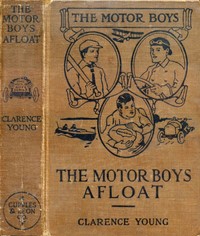
That rainy afternoon, Dorothy’s carefree confidence in the cockpit felt like sunlight breaking through the clouds. Her easy slang and quick thinking lingered with me long after I closed the book. Somewhere between chapters, I found myself wondering about other restless young adventurers in old stories, which is how I ended up with The Motor Boys Afloat; or, The Stirring Cruise of the Dartaway — Reading Companion, its river breeze quieting the same longing.
There are no reviews for this eBook.
There are no comments for this eBook.
Reader reflection
Record your reading impressions
A brief reflection can help important ideas stay with you longer.
Your progress
0
/
10
2
Did this book hold your interest?
3
How likely are you to recommend this book?
4
How demanding did the text feel?
5
Would you read this book again?
6
Did the book deliver what you hoped for?
7
Did the story or argument move comfortably?
8
Could you follow the author’s main argument?
9
What changed or sharpened your thinking?
10