1

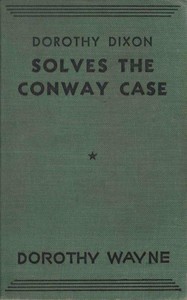
Dorothy Dixon Solves the Conway Case — Reading Companion
(0 User reviews)
62
Project Gutenberg
2014
Not confirmed
Mystery and detective stories; Women air pilots -- Juvenile fiction; Women detectives -- Juvenile fiction; Gangsters -- Juvenile fiction; New Canaan (Conn.) -- Juvenile fiction; Books -- Juvenile fiction
Readers of public-domain and historical texts
Project Gutenberg digital edition
en
Edition facts
Words
44,151
Reading time
192 min
Text sections
18
Dorothy Dixon Solves the Conway Case — Reading Companion can be approached with a clearer sense of reading commitment from its source measurements: 44,151 words, 3 hr 12 min estimated reading time, and 18 detected text sections.
The text analysis averages about 12.2 words per sentence, while the detected sections provide another way to judge how the source is divided.
Project Gutenberg metadata also associates the work with “Mystery and detective stories,” connecting these edition facts with the source record’s subject description.
Source:
Project Gutenberg record #45417
A young woman pilot crash-lands in a storm, then investigates a mystery involving gangsters and a hidden book in Connecticut. The excerpts show aviation action, physical endurance, and a detective plot centered on a missing volume.
Read the complete public-domain text at its original source.
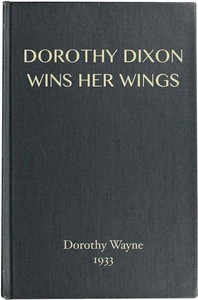
Read on Project GutenbergDorothy Dixon Solves the Conway Case opens with an airborne emergency: the heroine, piloting a small amphibian, faces nightfall, a storm, and a nearly empty fuel tank. The prose emphasizes technical flying maneuvers—sideslips, rudder coordination, aileron control—while the passenger, Betty Mayo, reacts with panic and prayer. This immediate focus on aviation skill, rather than detective work, sets the tone for a story where the protagonist’s competence in the air is as central as her sleuthing.
The catalog subjects list “Women air pilots” and “Women detectives” as separate categories, but the excerpts blend them: Dorothy’s piloting is not a hobby but a tool for survival and investigation. The opening chapter’s tense landing in a woodland meadow establishes a pattern of physical problem-solving that recurs throughout the provided text.
Aviation as Action, Not Atmosphere
The excerpts devote considerable space to the mechanics of flight, treating the airplane as a character in its own right. In Chapter I, Dorothy “ripped off her headphone set” to concentrate, and the narrative describes a sideslip as “the only maneuver by which the amphibian could possibly be piloted into the woodlot.” This is not decorative description; it is functional, plot-driving detail. Later, the plane’s fuel shortage forces the crash landing that strands the characters in the wilderness, directly leading to the mystery of the Conway house.
Compared to many juvenile mysteries of the era, where aviation might appear as a brief thrill, here it is a sustained element. The catalog subject “Women air pilots” is thus not a label but a structural feature: Dorothy’s identity as a pilot determines the story’s geography, pacing, and obstacles. The excerpts do not show her flying again after the crash, but the opening establishes her as someone whose primary skill set is aerial, not investigative.
Physical Strain and Practical Problem-Solving
The second excerpt, from Chapter X, shifts from flight to foot travel. Dorothy, exhausted and missing a shoe, is carried “piggyback” by her companion Bill through rain and mud. The text dwells on bodily sensation: “dead weight,” “heavy going,” “sodden with rain,” “slippery” ground. When Dorothy wakes, she immediately improvises, cutting strips from her slicker to bind her feet. This moment of resourcefulness mirrors the earlier landing: both require quick, material thinking under duress.
The catalog lists “Gangsters” and “Mystery and detective stories,” but the excerpts downplay deduction in favor of endurance. The mystery—the “Conway Case”—is referenced in the title but not yet explained in the provided text. Instead, the reader follows characters who are cold, wet, and physically taxed. The detective work, if it appears later, may be less about clues and more about surviving long enough to confront the gangsters.
The Book as a MacGuffin
The catalog includes “Books -- Juvenile fiction” as a subject, and the title itself names a “Case.” Yet the excerpts only hint at a book’s importance: the table of contents lists chapters like “The Book” and “The Test,” and the opening credits dedicate the volume “To Ruth Kirby she says my books are ‘neat’.” This self-referential framing suggests that the mystery revolves around a physical book—perhaps a rare volume, a coded message, or a piece of evidence.
However, the excerpts do not reveal what the book contains or why it matters. The gangsters’ motive, the “Conway” name, and the resolution are absent. Based solely on the provided text, the book functions as a MacGuffin: an object that drives the plot but whose specifics remain opaque. Readers should expect the story to center on locating or interpreting this book, but the excerpts offer no further details.
The excerpts from Dorothy Dixon Solves the Conway Case present a heroine whose competence in aviation and physical endurance precedes her detective work. The catalog subjects accurately reflect the story’s components—flight, crime, a book—but the text itself emphasizes action over analysis. Readers interested in early juvenile mysteries with strong female protagonists will find a narrative that values practical skill over puzzle-solving. The missing shoe, the piggyback ride, and the crashed plane are not distractions; they are the story.
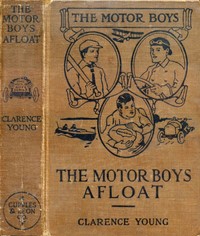
I keep thinking about Dorothy Dixon, grounded by that storm, searching for a hidden book among strangers. There’s something comforting in that quiet endurance. That same feeling came back to me with The Motor Boys Afloat; or, The Stirring Cruise of the Dartaway — Reading Companion — just friends, a boat, and open water ahead, no urgency, only the slow pull of the current. Both stayed with me like that.
There are no reviews for this eBook.
There are no comments for this eBook.
Reader reflection
Record your reading impressions
A brief reflection can help important ideas stay with you longer.
Your progress
0
/
10
2
How did the book work for you overall?
3
How likely are you to recommend this book?
4
How demanding did the text feel?
5
Was the book easy to understand?
6
Did anything about the book feel genuinely new?
7
Did the book give you something worth debating?
8
Would you read this book again?
9
What changed or sharpened your thinking?
10