1

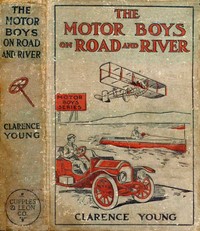
The Motor Boys on Road and River; Or, Racing To Save a Life — Story, Setting & Ideas
(0 User reviews)
2419
Project Gutenberg
2015
Not confirmed
Missing persons -- Juvenile fiction; Mystery and detective stories; Fraud -- Juvenile fiction; Automobiles -- Juvenile fiction; Travel -- Juvenile fiction; Motorboats -- Juvenile fiction
Readers of public-domain and historical texts
Project Gutenberg digital edition
en
Edition facts
Words
58,549
Reading time
255 min
Text sections
32
The catalog record for The Motor Boys on Road and River; Or, Racing To Save a Life — Story, Setting & Ideas provides practical reading context through 58,549 words, 4 hr 15 min estimated reading time, and 32 detected text sections.
The text analysis averages about 12.8 words per sentence, while the detected sections provide another way to judge how the source is divided.
Project Gutenberg metadata also associates the work with “Missing persons -- Juvenile fiction,” connecting these edition facts with the source record’s subject description.
Source:
Project Gutenberg record #50051
This editorial note examines Clarence Young's diction, dialogue, and descriptive choices in the sixteenth Motor Boys volume, focusing on how the author constructs character through speech patterns and physical details in the opening chapters.
Read the complete public-domain text at its original source.
Read on Project GutenbergClarence Young opens The Motor Boys on Road and River with a moment of absent-mindedness from Jerry Hopkins, a small character cue that quickly expands into a plot involving clay-diggers, a mysterious conference, and a race to save a life. The author’s diction in the early chapters reveals a preference for brisk, functional dialogue that distinguishes the three main boys: Jerry’s measured responses, Ned’s bluntness, and Bob’s good-natured complaints. Young also uses physical details—like the car poised on the brink of a cliff—to create tension without over-explaining. This note traces three specific authorial choices visible in the excerpts: the use of dialect in minor characters, the handling of stowaway Andy Rush’s speech, and the recurring motif of hard, sour, or disappointing objects that mirror the boys’ setbacks.
Dialect and the Farmer’s Voice
In the apple-selling episode, Young gives the farmer a distinct colloquial rhythm: “Yep,” he admits coolly, “That’s what the folks around here calls takin’ other people’s things—robbery.” The contraction “takin’” and the folksy self-awareness mark the farmer as a local character, not a mere obstacle. Young does not overdo the dialect—only a few dropped g’s and a flat adverb—but the effect is immediate: the reader hears a voice that contrasts with the boys’ more standard speech. This choice suggests Young uses dialect sparingly to signal regional or social difference, rather than for broad comedy. The farmer’s calm pocketing of the money, followed by his sinking back into the grass, reinforces a static, almost predatory patience. The dialogue does the work of characterization without authorial commentary.
Andy Rush’s Hesitant Pleading
When Andy Rush is discovered as a stowaway, his speech shifts from his usual “rapid style” to a faltering, broken rhythm: “I—er—I, well, I just couldn’t help it.” Young marks the change with dashes and filler words, showing Andy’s fear and desperation. Ned’s harsh reply—“Stowaways can’t be choosers”—is equally telling: Ned’s anger is performative, as the narrator later notes that “this harsh attitude was only assumed.” The author thus uses dialogue to reveal character layers: Ned’s bluster hides gentleness, while Andy’s loss of fluency signals genuine distress. Young also includes Andy’s offer of “’most five dollars,” a precise, childlike sum that grounds the plea in concrete reality. The scene avoids melodrama by letting the boys’ voices carry the conflict.
Hard Apples and Empty Tins: Objects That Disappoint
Young repeatedly uses objects that fail to meet expectations. Bob’s apples are “as hard as rocks, and as sour as lemons,” and the cake tin is empty. These details are not mere comic relief; they establish a pattern of thwarted desire that mirrors the larger plot—the clay that seems valuable but may be worthless, the race that may fail. The author describes the apples with sensory precision: Bob sets his teeth into one “after an effort,” then yells. The physicality of the bite, the sound, and the taste create a small, vivid setback. Similarly, the empty cake tin is discovered through a specific action—reaching under the seat—that makes the absence tangible. Young does not moralize about these disappointments; he lets the objects speak for themselves.
Pacing Through Physical Danger
The illustration caption—“The car poised for an instant, the front wheels on the very brink”—points to a moment of suspended danger that Young handles with restraint. In the excerpts, the author does not linger on the cliff; instead, he builds tension through short, declarative sentences and the characters’ immediate reactions. The phrase “poised for an instant” suggests a freeze-frame, a technique Young uses sparingly to punctuate action. Elsewhere, he accelerates pace with dialogue tags like “cried,” “exclaimed,” and “muttered,” which keep the narrative moving. The balance between descriptive pauses and rapid exchanges suggests Young was conscious of pacing as a tool for maintaining reader engagement across a long series. The physical risks—cliffs, broken springs, races—are presented as concrete challenges, not metaphors.
Readers approaching The Motor Boys on Road and River will find a story that moves quickly on dialogue and small physical details. Young’s authorial choices reward attention to how characters speak and what objects they encounter: a farmer’s drawl, a stowaway’s stammer, a sour apple. These elements build a world where setbacks are tangible and voices distinct. The excerpts suggest a writer more interested in action and character interaction than in description or theme, making this a straightforward but craft-conscious entry in the series.
Reading this opening’s careful speech patterns, I found myself back on a rainy afternoon with a paperback, watching friends argue over a route along a river. This editorial note’s attention to physical detail reminds me of the quiet, deliberate pace in Along the Mohawk Trail; Or, Boy Scouts on Lake Champlain — Background and Themes, where the landscape itself seemed to slow the dialogue down. That same feeling of time holding still.
There are no reviews for this eBook.
There are no comments for this eBook.
Reader reflection
What did you think of this book?
Answer a few questions and save a private reflection on this device.
Your progress
0
/
10
2
Was reading this book enjoyable?
3
Would you recommend this book to another reader?
4
How demanding did the text feel?
5
Do you expect to return to this book?
6
Did the book give you something worth debating?
7
How did the reading compare with what you expected?
8
Could you follow the author’s main argument?
9
What changed or sharpened your thinking?
10