1

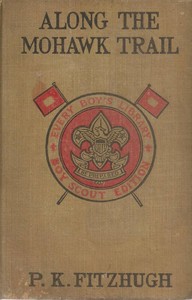
Along the Mohawk Trail; Or, Boy Scouts on Lake Champlain — Background and Themes
(0 User reviews)
668
Project Gutenberg
2019
Not confirmed
Camping -- Juvenile fiction; Boy Scouts of America -- Juvenile fiction; Travel -- Juvenile fiction; Outdoor life -- Juvenile fiction; New York (State) -- Juvenile fiction
Readers of public-domain and historical texts
Project Gutenberg digital edition
en
Edition facts
Words
92,644
Reading time
403 min
Text sections
11
For Along the Mohawk Trail; Or, Boy Scouts on Lake Champlain — Background and Themes, the stored edition analysis reports 92,644 words, 6 hr 43 min estimated reading time, and 11 detected text sections.
The text analysis averages about 15.4 words per sentence, while the detected sections provide another way to judge how the source is divided.
Project Gutenberg metadata also associates the work with “Camping -- Juvenile fiction,” connecting these edition facts with the source record’s subject description.
Source:
Project Gutenberg record #60269
This editorial note examines how Percy Keese Fitzhugh structures the Boy Scouts' journey along the Mohawk Trail and Lake Champlain, focusing on recurring images of deduction, uniform symbolism, and movement between scenes.
Read the complete public-domain text at its original source.
Read on Project GutenbergPercy Keese Fitzhugh’s Along the Mohawk Trail; Or, Boy Scouts on Lake Champlain (1913) moves its characters through a landscape that is as much about social observation as it is about outdoor adventure. The narrative repeatedly pauses for scenes of deduction, where the scout Harry uses small clues—a pale blue bag, the presence of smelling salts—to infer details about strangers. These moments, often played for comedy, also serve as structural hinges: they introduce new characters and shift the group’s trajectory. The uniform itself becomes a recurring image, with Gordon insisting that the scout suit “catches them every time,” linking appearance to access and authority.
Deduction as a Narrative Device
The excerpts show Harry and Gordon using “deduction” not merely as a scout skill but as a way to advance the plot. When Harry opens a stranger’s bag to find a name, he instead deduces the owner’s age and habits from its contents. The young woman’s reaction—calling him a “ghoul”—underscores the intrusive quality of this method. Yet the scene quickly pivots: her astonishment leads to an invitation to rest, and soon the scouts reveal their plan to ascend Bulwagga. Fitzhugh uses these deductive interludes to transition from one setting to another, making the trail itself a series of social encounters rather than a purely physical journey.
The Uniform as a Marker of Identity
Gordon’s whispered remark—“if you only had your uniform on! … The scout suit catches them every time”—highlights how the uniform functions as a social credential. In the excerpts, the scouts are not in uniform, yet the young woman’s interest is piqued by their affiliation. The uniform is absent from the scene but present as a topic of conversation, suggesting that Fitzhugh uses it to signal belonging and trustworthiness. This recurring emphasis on appearance and recognition shapes how the scouts navigate unfamiliar territory, turning their clothing into a tool as important as a compass.
Movement Between Scenes: From Roadside to Lake
The narrative structure relies on rapid shifts in location, often triggered by chance meetings. The excerpt begins at a roadside well-house, where the scouts encounter Miss Antoinette. Within a few exchanges, the scene moves from casual banter to a planned ascent of Bulwagga. This pattern—brief, dialogue-driven encounters that propel the group forward—characterizes the book’s rhythm. The Mohawk Trail and Lake Champlain serve as backdrops for a series of such episodes, each introducing new characters or obstacles. Fitzhugh rarely lingers on description; instead, he uses movement itself to maintain momentum.
Recurring Images: Bows, Locks, and Small Details
Fitzhugh’s prose is attentive to small, visual details that recur across scenes. Miss Antoinette’s “enormous silk bows,” her “rebellious locks,” and the “tiny round mirror” on a cord are described with a precision that borders on the comic. These details are not merely decorative; they mirror the deductive method the scouts employ. Just as Harry reads a bag by its contents, the narrator reads characters by their accessories. The bows and locks become shorthand for personality—a whimsical, emphatic young woman. This attention to physical minutiae gives the text a consistent texture, linking character description to the scouts’ own observational practices.
Readers approaching Along the Mohawk Trail will find a story that moves quickly from one encounter to the next, with deduction and uniform serving as recurring motifs. The excerpts suggest that Fitzhugh is less concerned with wilderness survival than with the social dynamics of travel. Pay attention to how small objects—a bag, a mirror, a bow—carry meaning across scenes, and how the scouts’ methods of observation shape the narrative’s pace.
There’s something about how those scout journeys linger—the quiet way a uniform or a passing scene holds meaning. I found myself thinking of that same slow pull while sitting with The Red Cross Girls in the British Trenches — Reading Companion, where even the smallest gestures of care feel weighty. It reminded me how certain stories stay, almost like a memory of my own.
There are no reviews for this eBook.
There are no comments for this eBook.
Reader reflection
Record your reading impressions
A brief reflection can help important ideas stay with you longer.
Your progress
0
/
10
2
How did the book work for you overall?
3
How likely are you to recommend this book?
4
How easy was the book to follow?
5
How did the reading compare with what you expected?
6
Did you gain anything practical from the text?
7
Which element worked best for you?
8
Would a second reading be valuable?
9
Which lesson or insight stayed with you?
10