1

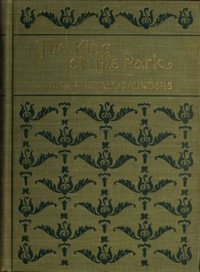
The King of the Park — Key Ideas to Explore
(0 User reviews)
754
Project Gutenberg
2018
Not confirmed
Orphans -- Juvenile fiction; Conduct of life -- Juvenile fiction; Friendship -- Juvenile fiction; Animal welfare -- Juvenile fiction; Cats -- Juvenile fiction; City and town life -- Juvenile fiction; Youth -- Conduct of life -- Juvenile fiction; Police -- Juvenile fiction; Kings and rulers -- Juvenile fiction; Parks -- Juvenile fiction
Readers of public-domain and historical texts
Project Gutenberg digital edition
en
Edition facts
Words
42,597
Reading time
186 min
Text sections
15
This digital edition of The King of the Park — Key Ideas to Explore is described by source-level measurements including 42,597 words, 3 hr 6 min estimated reading time, and 15 detected text sections.
The text analysis averages about 15.2 words per sentence, while the detected sections provide another way to judge how the source is divided.
Project Gutenberg metadata also associates the work with “Orphans -- Juvenile fiction,” connecting these edition facts with the source record’s subject description.
Source:
Project Gutenberg record #56831
In this 1897 children's novel, a Boston park police sergeant and a French orphan boy debate war and animal welfare, while a stray cat named King Boozy presides over the Fens. The excerpts reveal a dialogue-heavy structure and a tension between romanticized and gritty views of conflict.
Read the complete public-domain text at its original source.
Read on Project GutenbergThe opening chapter of The King of the Park introduces Police Sergeant Hardy not through action but through his amused observation of a bicycle lesson—a scene that establishes his patient, watchful demeanor. The narrative voice shifts between wry description and direct dialogue, as when the sergeant scolds a Gordon setter: “What would the ducks and the cats say to you; or rather, what would you say to them?” This early moment signals the book’s concern with animal presence and the rules of urban green space.
Despite catalog subjects like “Orphans” and “Kings and rulers,” the excerpts focus on the sergeant’s interactions with animals and a boy named Eugene. The title character, King Boozy, appears only in the table of contents and the dedication, which thanks police and children who “play about the home of the well-known King of the Park.” The excerpts do not yet reveal who—or what—the King is.
War as a Dirty Thing: Dialogue Over Action
The longest excerpt presents a philosophical argument between Sergeant Hardy and Eugene about war. Hardy rejects Eugene’s romantic view—inherited from paintings of ancestors in “white huzzar uniform”—by calling war “dirty,” “low,” and “needless.” He uses a tabletop diagram of gray and blue men to illustrate his point, then asks Eugene to imagine the “agony of men and horses heaped up.” The sergeant’s language is concrete and sensory: “smell the sickening smells.” Eugene counters with pride: “Arbitration—ah! that is not for gentlemen.”
This exchange is notable for its length and lack of physical action. The book’s catalog subject “Conduct of life” is here embodied in a debate, not a lesson. The sergeant’s anti-war stance is tempered by his admission that “most men want to” run, and his hope that “no woman will ever have to cry because your body has been made a target.” The dialogue does not resolve; the sergeant concludes that Eugene “has got to learn for yourself.”
The Sergeant’s Domain: Parks, Police, and Animal Welfare
The catalog lists “Police” and “Parks” as subjects, and the excerpts show Sergeant Hardy as a guardian of both. He patrols the Fens, a Boston park, and enforces rules against loose dogs. His authority is gentle but firm: he waves the setter home, and the dog responds with a “roguish don’t-care expression.” The dedication explicitly links the book to “Police-Sergeant Charles Wesley Hebard of the Back Bay Fens” and his “humane associates,” suggesting a real-life model.
Animal welfare appears in the sergeant’s concern for “ducks and cats” and in the chapter title “The Rest of the Cats.” However, the excerpts do not show any animal cruelty or rescue; instead, the sergeant’s humane attitude is conveyed through his tone. The cat “King Boozy” is named but not yet described. The book’s treatment of animals seems intertwined with its view of civic order: the park is a space where both humans and animals must behave.
Eugene: Orphan, French Aristocrat, or Both?
The catalog lists “Orphans” as a subject, and Eugene is introduced as a boy who speaks of “our château in France” and his great-grandfather’s portrait. He uses phrases like “what is that for an epithet?” and “I do not understand you,” suggesting a formal, possibly foreign upbringing. Yet the excerpts do not confirm his orphan status or explain why he is in Boston. The sergeant addresses him as “lad” and “boy,” and Eugene’s enthusiasm for military glory contrasts with the sergeant’s pacifism.
Eugene’s role in the plot is unclear from the excerpts. He appears only in the war discussion, and his relationship to the sergeant—whether family friend, stranger, or ward—is not stated. The catalog subject “Friendship” may apply to their bond, but the excerpts show a teacher-student dynamic. The book’s structure, with chapters like “Eugene is arrested” and “A King to the Rescue,” suggests that Eugene’s story involves legal trouble and a rescue, but the excerpts do not reveal the cause.
Readers should note that the excerpts cover only the first two chapters and a later dialogue, leaving the cat King Boozy and the orphan plot largely unexplored. The book’s dedication to a real police sergeant and his humane associates hints at a reformist agenda, but the excerpts show more debate than action. Pay attention to how the sergeant’s voice—colloquial, patient, and morally direct—shapes the novel’s tone, and whether the later chapters fulfill the promise of a cat king.
That rainy Boston afternoon, The King of the Park left me with the sergeant’s gruff tenderness toward the orphan—and a stray cat’s quiet sovereignty over the Fens. It felt like overhearing a debate that never quite ended. Later, almost by accident, I picked up The "B. O. W. C.": A Book For Boys Illustrated — Background and Themes and found the same odd warmth: boys arguing about honor, not war, yet somehow the same lonely questions underneath.
There are no reviews for this eBook.
There are no comments for this eBook.
Reader reflection
What was your reading experience?
Capture what you thought, learned, and would like to remember.
Your progress
0
/
10
2
Was reading this book enjoyable?
3
Would you encourage someone else to read it?
4
How demanding did the text feel?
5
Would this book work well in a reading group?
6
Did the book meet your expectations?
7
How understandable was the text?
8
Did anything about the book feel genuinely new?
9
In one sentence, what did you learn?
10