About 186 minutes
The King of the Park — Key Ideas to Explore
Childrens Adventures
42,597 recorded words. 0 minutes difference from this book's estimate.
View Gutenberg source #56831
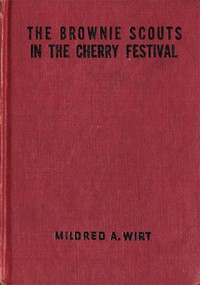
Before opening The Brownie Scouts in the Cherry Festival — Context and Discussion, the edition data offers a quick orientation: 42,646 words, 3 hr 6 min estimated reading time, and 20 detected text sections.
The text analysis averages about 10.2 words per sentence, while the detected sections provide another way to judge how the source is divided.
Project Gutenberg metadata also associates the work with “Migrant agricultural laborers -- United States -- Juvenile fiction,” connecting these edition facts with the source record’s subject description.
Explore this collection
These alternatives are selected using recorded categories and estimated reading time.
About 186 minutes
Childrens Adventures
42,597 recorded words. 0 minutes difference from this book's estimate.
View Gutenberg source #56831About 185 minutes
Childrens Adventures
42,440 recorded words. 1 minutes difference from this book's estimate.
View Gutenberg source #49643About 187 minutes
Childrens Adventures
42,910 recorded words. 1 minutes difference from this book's estimate.
View Gutenberg source #54632Search stored excerpts and compare books → Choose by your preferences →
Choices use stored catalog measurements. Estimates vary with reading speed. A shared category is a catalog label, not a claim that two books have the same argument or literary quality.
Search reads excerpt text stored with this catalog and links to its associated Gutenberg record. The connection is stored in the site database; this tool does not recheck that every excerpt is word-for-word identical to that external record. Excerpt search does not cover every chapter and does not verify historical publication dates.
Catalog snapshot checked: 2026-09-25. Coverage: 91 public books, 91 available source excerpts.
Read the complete public-domain text at its original source.
Read on Project GutenbergThe Brownie Scouts’ opening scene—six needles stitching a crazy quilt—immediately establishes the central tension between cooperative effort and individual frustration. Veve McGuire, who “hated to sew,” voices the group’s restlessness with the slow fundraising project, while Connie Williams, “a leader among the Brownies,” embodies the organizational drive. This contrast between personal reluctance and troop loyalty recurs throughout the excerpts.
The quilt itself becomes a narrative device: its patchwork structure mirrors the story’s juxtaposition of cheerful scout activities with the harsh realities faced by Mexican migrant workers. When the troop visits a cherry orchard, they witness a landowner ordering Juan, a Mexican boy, off a beach, declaring “He’s a Mexican” as sufficient reason. The Brownies’ discomfort with this treatment—Veve insists “Juan is nice”—introduces a moral complexity unusual for a children’s adventure series.
The crazy quilt is more than a craft project; it drives the narrative forward. The girls’ dissatisfaction with sewing—Veve calls it “as silly as the quilt’s name”—leads them to search for alternative fundraising ideas, such as babysitting or running errands. This search eventually brings them to the cherry festival and the migrant labor camp. The quilt also reappears as a plot point: a “Missing Coverlet” (chapter 6) and “Veve’s Autograph Quilt” (chapter 9) suggest the quilt evolves into a symbol of community and conflict. The detailed chapter titles—including “Duck’s Foot in the Mud,” a quilting pattern—indicate that quilt-making vocabulary is woven into the story’s fabric.
The beach confrontation in chapter 10 is the most striking episode in the excerpts. A landowner orders Juan away, stating “Mexicans aren’t allowed to use the beaches hereabouts.” The Brownies are shocked; Veve directly challenges the man, asking “why did you send Juan away?” Miss Gordon, the troop leader, observes that “so many persons seem to have that attitude” and notes the pickers appear “quiet, well-behaved.” Juan’s parting threat—“You’ll be sorry… So will all the orchard people!”—hints at future trouble, though the excerpts do not reveal whether it materializes. The scene is notable for its direct depiction of ethnic discrimination in a children’s book from 1950.
The narrative relies heavily on dialogue to advance both plot and theme. Characters express their views through short, natural exchanges: Veve’s bluntness (“Why not pitch this old thing?”), Connie’s measured leadership, and Juan’s proud self-identification (“I am a Mexican and proud of it”). The author uses repetition of key phrases—such as “He’s a Mexican”—to underscore prejudice. Structurally, the book alternates between lighthearted scout activities (quilting, wading) and serious encounters (the beach incident, the cannery visit). This pattern creates a rhythm that invites young readers to consider fairness and empathy without didacticism.
Readers approaching The Brownie Scouts in the Cherry Festival should note that the excerpts cover only the first half of the book. The later chapters—including “The Mexican Camp,” “A Quilt Show,” and “Racing the Storm”—likely develop the tensions introduced here. Pay attention to how the quilt-making motif recurs and whether the Brownies’ growing awareness of social inequality influences their actions. The story offers a rare mid-century children’s perspective on migrant labor issues, framed within a familiar series structure.
Reading about Veve noticing the quiet tension around the cherry orchards reminded me of old storybooks where the landscape itself holds unspoken rules. That same ache of belonging and exclusion lingers in Redskin and Cow-Boy: A Tale of the Western Plains — Themes and Context, though the plains feel vaster, lonelier somehow. Both left me thinking about the children in the margins, watching the harvest from the fence line.
Build a private reading journal entry for this title.