1

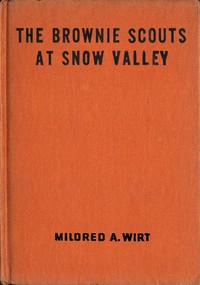
The Brownie Scouts at Snow Valley — Text and Context
(0 User reviews)
252
Project Gutenberg
2016
Not confirmed
Vacations -- Juvenile fiction; Winter -- Juvenile fiction; Mystery fiction; Minnesota -- Juvenile fiction; Brownie Girl Scouts -- Juvenile fiction
Readers of public-domain and historical texts
Project Gutenberg digital edition
en
Edition facts
Words
40,146
Reading time
175 min
Text sections
20
This digital edition of The Brownie Scouts at Snow Valley — Text and Context is described by source-level measurements including 40,146 words, 2 hr 55 min estimated reading time, and 20 detected text sections.
The text analysis averages about 11.3 words per sentence, while the detected sections provide another way to judge how the source is divided.
Project Gutenberg metadata also associates the work with “Vacations -- Juvenile fiction,” connecting these edition facts with the source record’s subject description.
Source:
Project Gutenberg record #51744
Mildred A. Wirt's 1949 children's mystery follows the Rosedale Brownie troop to a snowy Minnesota resort, where a missing locket and a suspected thief test the girls' loyalty and detective skills.
Read the complete public-domain text at its original source.
Read on Project GutenbergFrom its first sentence, The Brownie Scouts at Snow Valley establishes a brisk, action-oriented narrative voice. The opening scene—six girls pasting scrapbooks while a persistent tapping at the window draws their attention—immediately signals the book's blend of cozy domesticity and mild suspense. The tapping belongs to Veve McGuire, a non-member whose freckled nose smudges the frosty pane, a detail that economically conveys both setting and character. Wirt's prose moves quickly, alternating between dialogue and description, and the early chapters rely on short, declarative sentences that mirror the Brownies' own decisive energy. This pace, however, shifts noticeably once the troop arrives at Snow Valley, where longer paragraphs and more atmospheric descriptions of winter landscapes slow the rhythm, reflecting the change from indoor planning to outdoor adventure.
Voice and Dialogue as Characterization
Wirt differentiates the Brownies primarily through their speech patterns. Connie Williams, the de facto leader, speaks in measured, inclusive phrases: “Let’s not pay any attention to her” is a gentle redirect, not a command. Jane Tuttle, by contrast, uses sharper, more dismissive language—“Veve’s just trying to act silly because she isn’t a Brownie”—which establishes her as the troop’s more rigid member. Veve herself is defined by exclamatory, impulsive dialogue: “Come on out and play! I’m going to make a big snowman. I’ll let you all help me!” The adults, too, are distinguished by voice. Miss Gordon speaks with calm authority, while Grandmother Gordon’s dialogue is peppered with emphatic interruptions and defensive repetitions (“I never did accuse her,” “Distinctly”). Grandfather Gordon’s teasing, ironic tone—“If my memory does not fail me, you have made slight errors before”—provides a counterpoint to his wife’s certainty. These vocal contrasts create a layered social world without relying on extensive physical description.
Pacing Shifts: From Indoor Tension to Outdoor Action
The book’s structure alternates between two distinct pacing modes. The first four chapters unfold almost entirely indoors—living rooms, kitchens, schoolrooms—where the narrative moves through dialogue and small, contained conflicts: Veve’s exclusion, the debate over the sled, the locket accusation. Sentences are short, and scenes change rapidly. Beginning with Chapter 6 (“Snowland”), the pace decelerates. Descriptions of the Minnesota winter become more expansive: “Little feathery drifts had blown agai...” (the excerpt cuts off, but the pattern is clear). The blizzard sequence in later chapters introduces longer, more suspenseful paragraphs, with the storm itself becoming a narrative force that slows action to a crawl. This shift from brisk, conversational scenes to drawn-out, sensory description of cold and isolation gives the middle and final sections a different texture—one that emphasizes endurance over quick resolution.
Recurring Details and Their Narrative Function
Wirt uses a handful of concrete objects to anchor the plot and theme. The locket is the most prominent: it appears first as a story within a story, then becomes the central mystery. Its description is minimal—gold, with a broken chain—but it carries emotional weight as a symbol of trust and accusation. The sled, mentioned in chapter titles and early planning, serves as a tangible goal that unites the troop. Mittens appear in Chapter 12’s title (“A Pair of Mittens”) and likely function as both practical winter gear and a clue or token. These objects are not heavily symbolic; rather, they ground the narrative in the physical world of childhood. The repeated mention of “three little stones” (Chapter 8) and “kitten tails” (Chapter 3) suggests that Wirt uses small, quirky details to create memory points for young readers, reinforcing the story’s structure through repetition rather than complex plotting.
Readers should pay attention to how Wirt handles the transition from suspicion to resolution. The locket subplot is introduced through layered testimony—Grandmother Gordon’s version, Grandfather Gordon’s skepticism, Miss Gordon’s measured response—and the excerpts suggest that the truth may hinge on a misplacement rather than a theft. This ambiguity is typical of Wirt’s approach: she invites the reader to weigh evidence alongside the characters, without offering easy certainties until the final chapters. The Brownies’ own investigative methods—asking questions, revisiting scenes, trusting their instincts—model a practical, collaborative approach to problem-solving that is more about fairness than detection.
There’s a particular trust in those Snow Valley pages, that quiet loyalty between girls when the locket goes missing. It reminds me of another kind of steadiness found overseas, courage worn softly under pressure. I sometimes shelve both together, these two old friends. The Red Cross Girls on the French Firing Line — Reading Companion holds a similar warmth, a shared resolve that never raises its voice. A gentle echo, nothing more.
There are no reviews for this eBook.
There are no comments for this eBook.
Reader reflection
How did this book work for you?
Your answers remain private and are stored only in this browser.
Your progress
0
/
10
2
Did this book hold your interest?
3
How likely are you to recommend this book?
4
Did the language feel accessible?
5
Could you see yourself revisiting this book?
6
Did the book offer a fresh perspective?
7
How strong was your personal connection to the text?
8
Could you apply anything you learned?
9
What changed or sharpened your thinking?
10