1

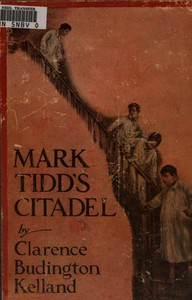
Mark Tidd's Citadel — Story, Setting & Ideas
(0 User reviews)
1110
Project Gutenberg
2018
Not confirmed
Friendship -- Juvenile fiction; Boys -- Juvenile fiction; Vacations -- Juvenile fiction; Vermont -- Juvenile fiction; Hotels -- Juvenile fiction
Readers of public-domain and historical texts
Project Gutenberg digital edition
en
Edition facts
Words
59,652
Reading time
260 min
Text sections
23
Before opening Mark Tidd's Citadel — Story, Setting & Ideas, the edition data offers a quick orientation: 59,652 words, 4 hr 20 min estimated reading time, and 23 detected text sections.
The text analysis averages about 13.6 words per sentence, while the detected sections provide another way to judge how the source is divided.
Project Gutenberg metadata also associates the work with “Friendship -- Juvenile fiction,” connecting these edition facts with the source record’s subject description.
Source:
Project Gutenberg record #57199
Four boys from Michigan arrive at a Vermont summer hotel only to find it abandoned. Using ingenuity and teamwork, they transform the dilapidated building into a defended 'citadel' while contending with mysterious Japanese intruders.
Read the complete public-domain text at its original source.
Read on Project GutenbergThe joke is on Mark Tidd from the first page. He has brought his three friends—Plunk Smalley, Binney Jenks, and Tallow Martin—all the way from Michigan to a Vermont summer hotel that has been closed for years. The hotel is ramshackle, the driver chuckled, and the locals knew something funny. The boys are stranded, hungry, and a long way from home. But Mark Tidd, a stout, resourceful boy, does not stay flabbergasted for long. What follows is a story of improvisation, secret passages, and a makeshift fortress.
A Hotel Becomes a Fortress
The abandoned hotel is not just a setting; it is the central problem and the solution. The boys decide to make it livable, cleaning rooms, scrounging supplies, and eventually fortifying it against intruders. The building’s decay is described in detail: broken windows, dusty furniture, and a kitchen that hasn’t seen use in years. Yet the boys see potential. They designate a secure room as the “citadel,” a stronghold within the larger structure. The hotel’s layout—with its corridors, multiple floors, and connecting bathrooms—becomes a tactical map. Tallow Martin, the narrator, uses these spaces to hide, escape, and outwit the Japanese men who later arrive. The building itself is a character, both obstacle and ally.
Movement and Pursuit Through Corridors
The excerpts show a constant, anxious movement through the hotel. Tallow runs, bolts, scoots, and tiptoes. He hears sounds ahead and behind, and he is trapped between pursuers. The chase is spatial: from the kitchen to the dining-room, up the back stairs, down a long corridor, into a room, through a bathroom, into another room. The key in the door, the banging to mislead, the locked doors—all emphasize a physical, almost architectural game of hide-and-seek. The Japanese men jabber in their “funny language” and rattle doors. Tallow’s scheme—locking doors to suggest he is inside while he slips away—depends entirely on the hotel’s layout. The reader follows every step, feeling the narrow escapes.
Recurring Images of Confinement and Escape
Several images recur: locked doors, keys, windows too high to jump, and the constant threat of being cornered. Tallow compares himself to a “frightened fox” and a “little green worm” curling up. The matches he carries weigh on his mind—they are essential for Mark’s plan, and he must deliver them even if captured. The idea of being “holed up” versus making a run for it drives the tension. The citadel itself is a place of safety, but getting there requires crossing dangerous open spaces. The Japanese are described as “The Man Who Will Come,” a vague but menacing figure. These images of enclosure and breakout give the story a claustrophobic, urgent rhythm.
Narrator’s Voice and Self-Awareness
Tallow Martin tells the story in a colloquial, self-deprecating tone. He admits when he is scared, boasts modestly about his schemes (“if I do say it myself, it was about as good as Mark Tidd could have done”), and directly addresses the reader (“Now, I know why the driver chuckled”). He is not the leader—Mark is the brains—but he is resourceful in a pinch. His narration is full of asides and explanations, making the reader feel like a confidant. The humor comes from his understatement and the boys’ predicament. The voice is consistent: a boy trying to sound brave while clearly terrified. This narrative choice keeps the adventure light even during tense chases.
Readers who enjoy stories of improvised fortresses and clever escapes will find much to like here. The book rewards attention to the physical space of the hotel—its doors, stairs, and hidden rooms become part of the puzzle. The narrator’s voice is engaging, and the action is continuous. Approach it as a boys’ adventure where the setting is as important as the plot, and the humor comes from the characters’ reactions to a series of escalating problems.
I’ve often thought that Mark Tidd’s Citadel, with its boys turning a deserted hotel into a brave stronghold, shares a certain quiet stubbornness with the young nurses in The Red Cross Girls on the French Firing Line — Reading Companion. Both stories hold that hush before trouble—and the warmth of friendship kept close, like a lamp against the dark.
There are no reviews for this eBook.
There are no comments for this eBook.
Reader reflection
Before you leave, reflect on the book
Use these questions to collect your thoughts before moving on.
Your progress
0
/
10
2
How much did you enjoy the reading experience?
3
Would you pass this book on to a friend?
4
Did the language feel accessible?
5
Did you relate to its people, ideas, or situations?
6
Did any part of the book stay with you emotionally?
7
How valuable was this book for your own interests?
8
Did the book offer a fresh perspective?
9
Which lesson or insight stayed with you?
10