1

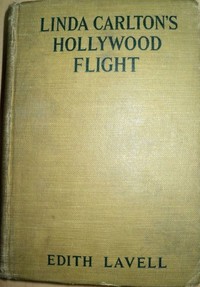
Linda Carlton's Hollywood Flight — Inside the Classic
(0 User reviews)
288
Project Gutenberg
2016
Not confirmed
Adventure stories; Mystery and detective stories; Motion picture industry -- Juvenile fiction; Young women -- Social life and customs -- Juvenile fiction; Women air pilots -- Juvenile fiction; Hollywood (Los Angeles, Calif.) -- Juvenile fiction; Carlton, Linda (Fictitious character) -- Juvenile fiction
Readers of public-domain and historical texts
Project Gutenberg digital edition
en
Edition facts
Words
48,977
Reading time
213 min
Text sections
7
Before opening Linda Carlton's Hollywood Flight — Inside the Classic, the edition data offers a quick orientation: 48,977 words, 3 hr 33 min estimated reading time, and 7 detected text sections.
The text analysis averages about 12.2 words per sentence, while the detected sections provide another way to judge how the source is divided.
Project Gutenberg metadata also associates the work with “Adventure stories,” connecting these edition facts with the source record’s subject description.
Source:
Project Gutenberg record #53337
Edith Lavell's 1933 aviation adventure follows pilot Linda Carlton to Hollywood, where a forged signature and a vanishing double set off a cross-country chase. The narrative shifts between brisk dialogue and suspenseful action, with a voice that balances period slang and earnest heroism.
Read the complete public-domain text at its original source.
Read on Project GutenbergFrom its opening scene—a red sports-roadster full of young people pulling up to the Carlton home—Linda Carlton's Hollywood Flight establishes a brisk, conversational tone that carries through the entire novel. The dialogue is snappy and period-specific: Dorothy Crowley's teasing remarks and Linda's protests create a natural rhythm, while the author uses short paragraphs and frequent line breaks to keep the pace quick. The narrative voice is direct, often relying on exclamations and interjections to convey emotion, as when Dot declares, 'We miss her just fearfully.'
This editorial note examines how Lavell's language, narrative voice, and changes in pace shape the reading experience, drawing on the opening chapters and a later scene in Mexico where the tone shifts markedly.
Conversational Cadence and Period Slang
The novel's language is rooted in 1930s American speech, with characters using phrases like 'all hot and bothered,' 'skinned out of school,' and 'snap out of it.' These expressions give the dialogue a natural, unforced quality. Lavell often uses repetition for emphasis—Dot's 'just fearfully' and 'the very minute'—and relies on dashes and ellipses to mimic hesitation or interruption. The narration itself is lean, rarely lingering on description; instead, it moves from line to line with the speed of a spoken exchange. This conversational cadence makes the characters feel immediate, even if their motivations remain lightly sketched.
Shifts in Pace: From Banter to Peril
Lavell modulates pace by alternating between lighthearted banter and sudden danger. In the opening, the mood is buoyant: Dot jokes about Linda's admirers, and the telegram arrives as a mild plot device. But later, in the Mexican desert, the tone darkens. The scene where Bert Chase nearly crashes the autogiro and the girls face a fire shifts to shorter, more urgent sentences: 'He sat down gloomily beside the girls, but he made no motion to eat.' The author uses physical details—a straw-covered shack, a can of water—to ground the tension. The contrast between Dot's teasing and the real threat of being stranded creates a palpable change in narrative energy.
Voice Through Dialogue: Character and Subtext
Each character's speech reveals their role in the story's dynamic. Linda is earnest and modest, deflecting praise with 'Now, Dot, you're being silly.' Dot is the comic foil, using humor to defuse tension—she hands Bert a pistol and says, 'If you really want to shoot yourself, go off away from us.' Bert's dialogue shifts from apologetic to morose, then to gratitude, showing his arc from antagonist to ally. Lavell also uses dialogue to hint at off-page relationships: Ralph Clavering's unspoken admiration is conveyed entirely through others' remarks. The voice remains consistent even as the setting changes from Spring City to Hollywood to Mexico, anchoring the reader in a familiar, if dated, social world.
Readers attentive to language will notice how Lavell's brisk, dialogue-heavy style serves the adventure genre: it keeps the plot moving and the characters in constant interaction. The shifts in pace—from casual chatter to life-or-death moments—are achieved through sentence length and word choice rather than elaborate description. This edition invites a close reading of how voice and tempo work together to sustain suspense across a long narrative.
There’s something about Linda Carlton’s Hollywood chase that feels like a Sunday afternoon—urgent on the surface, but underneath, just the comfort of a familiar voice. It reminds me of the quieter hours spent inside old adventures, where the world narrows to a single road. That same unhurried feeling lingers in Mark Tidd's Citadel — Story, Setting & Ideas, like finding a forgotten photograph in a drawer. Just a small, pleasant ache.
There are no reviews for this eBook.
There are no comments for this eBook.
Reader reflection
What was your reading experience?
Capture what you thought, learned, and would like to remember.
Your progress
0
/
10
2
Was reading this book enjoyable?
3
Would you pass this book on to a friend?
4
How demanding did the text feel?
5
Could you follow the author’s main argument?
6
Which element worked best for you?
7
Did it raise ideas you would like to talk about?
8
Was the book moving at the right speed?
9
Which lesson or insight stayed with you?
10