1

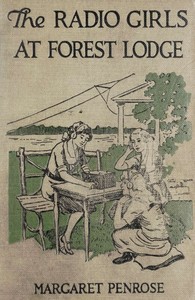
The Radio Girls at Forest Lodge; or, The Strange Hut in the Swamp — Story, Setting & Ideas
(0 User reviews)
113
Project Gutenberg
2020
Not confirmed
Adventure stories; Vacations -- Juvenile fiction; Mystery and detective stories; Radio -- Juvenile fiction; Forest fires -- Juvenile fiction
Readers of public-domain and historical texts
Project Gutenberg digital edition
en
Edition facts
Words
45,272
Reading time
197 min
Text sections
26
This digital edition of The Radio Girls at Forest Lodge; or, The Strange Hut in the Swamp — Story, Setting & Ideas is described by source-level measurements including 45,272 words, 3 hr 17 min estimated reading time, and 26 detected text sections.
The text analysis averages about 15.2 words per sentence, while the detected sections provide another way to judge how the source is divided.
Project Gutenberg metadata also associates the work with “Adventure stories,” connecting these edition facts with the source record’s subject description.
Source:
Project Gutenberg record #61592
This editorial note examines Margaret Penrose's diction, dialogue, and descriptive choices in The Radio Girls at Forest Lodge, focusing on how the author constructs character voice, competitive banter, and atmospheric details from the opening chapters.
Read the complete public-domain text at its original source.
Read on Project GutenbergMargaret Penrose opens The Radio Girls at Forest Lodge with a scene of casual banter at the Dainties Shop, where the characters' voices are immediately distinguished. Burd Alling is described as "pudgy and good-natured," and his speech—"People either hate Aunt Emma or love her"—is delivered with a slow grin, establishing a relaxed, teasing tone. Jessie Norwood, by contrast, speaks in eager, interrupted bursts: "You say this Aunt Emma of yours owns this place called Forest Lodge?" Her enthusiasm is punctuated by Amy Drew's dry interjections, such as "In a forest, I suppose." Penrose uses these quick exchanges to build character dynamics without lengthy exposition.
Character Voice Through Dialogue
Penrose differentiates her characters primarily through speech patterns and reactions. In the canoe race scene, Amy's exclamation—"He has lost his paddle! He has lost his paddle!"—is paired with physical comedy: she "bounced up and down in the canoe and threatening to upset them at every bounce." Jessie's response, "I am not so sure of that," is followed by a giggle, showing her mix of competitiveness and amusement. The boys' dialogue is marked by mock gallantry and teasing: Darry bows and says, "I am at your service, fair ones. Command me!" while Burd retorts, "They may ask you to repair their radio or start a forest fire or something. I know them!" These lines reveal a playful rivalry that drives the narrative forward.
Competitive Banter and Gender Dynamics
The race challenge highlights Penrose's use of competitive dialogue to explore gender roles. Jessie proposes a canoe race with "a girl and a fellow in each boat," then insists on an all-girls team against the boys. The boys respond with laughter and condescension: "How much handicap would you like? A mile?" The girls retort with defiance—"We will race you fair and square from the start, and beat you, too"—and the narrative follows through with the girls winning after Burd loses his paddle. Penrose balances the outcome with humor: the victory is partly due to the boys' mistake, not pure skill, which keeps the tone light and avoids heavy-handed messaging.
Descriptive Economy in Setting
Penrose sketches the setting with minimal but effective details. Lake Towako is introduced through the pier "that received the incoming excursion steamers from points farther down the lake," and the connection to Lake Monenset is noted in a single sentence. The motor trip from New Melford is called "much more thrilling" than the water route, but no further description is given. This economy keeps the focus on character action rather than landscape. The forest and swamp promised in the title are not yet described in the opening chapters; instead, the setting is a backdrop for social interaction, with the radio element mentioned only in passing as a potential source of excitement.
Recurring Motifs: Radio and Fire
Two motifs appear early: radio and forest fire. Burd jokes that the girls might ask Darry to "repair their radio or start a forest fire," and Amy responds, "A little forest fire might furnish some excitement." These lines foreshadow later plot points without revealing them. The radio is treated as a familiar technology—the girls claim they can "take care of our radio by ourselves"—while fire is introduced as a playful threat. Penrose weaves these motifs into dialogue rather than narration, letting characters voice the dangers that will later become central. The chapter titles, such as "The Fire" and "A Terrible Battle," confirm that these early mentions are deliberate setup.
Readers attentive to Penrose's dialogue will notice how quickly she establishes personality through word choice and rhythm. The opening chapters rely on banter to advance character relationships and hint at future conflicts. The radio and fire motifs, introduced casually, gain weight as the story progresses. This edition invites observation of how the author balances lighthearted competition with the suspenseful elements suggested by the subtitle, The Strange Hut in the Swamp.
That rainy afternoon, the swamp’s damp chill from Penrose’s prose lingered as I set the book down. The girls’ fierce loyalty stayed with me, and, without quite deciding to, I reached for the volume beside it. I found myself among dunes instead of pines, yet the same quiet warmth—of friendship tested, then held—hummed beneath the sand. The Girl Scouts at Singing Sands — Reading Notes felt like the same story, told in a softer key.
There are no reviews for this eBook.
There are no comments for this eBook.
Reader reflection
Record your reading impressions
A brief reflection can help important ideas stay with you longer.
Your progress
0
/
10
2
Did this book hold your interest?
3
Is this a title you would suggest to others?
4
How much effort did this book require?
5
Did the book deliver what you hoped for?
6
Would this book work well in a reading group?
7
Did any part of the book stay with you emotionally?
8
Did you gain anything practical from the text?
9
Which lesson or insight stayed with you?
10