1

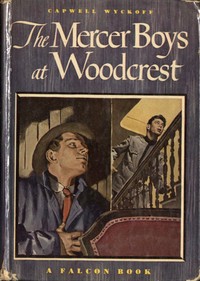
The Mercer Boys at Woodcrest — Themes and Context
(0 User reviews)
1149
Project Gutenberg
2018
Not confirmed
Schools -- Juvenile fiction; Kidnapping -- Juvenile fiction; Brothers -- Juvenile fiction; Mystery and detective stories; Military education -- Juvenile fiction; Art thieves -- Juvenile fiction; Military cadets -- Juvenile fiction; Male friendship -- Juvenile fiction
Readers of public-domain and historical texts
Project Gutenberg digital edition
en
Edition facts
Words
55,196
Reading time
240 min
Text sections
8
The source record for The Mercer Boys at Woodcrest — Themes and Context measures this digital text at 55,196 words, 4 hr estimated reading time, and 8 detected text sections.
The text analysis averages about 14.6 words per sentence, while the detected sections provide another way to judge how the source is divided.
Project Gutenberg metadata also associates the work with “Schools -- Juvenile fiction,” connecting these edition facts with the source record’s subject description.
Source:
Project Gutenberg record #57509
Don and Jim Mercer, along with their friend Terry Mackson, investigate the disappearance of their headmaster, Colonel Morrell, at Woodcrest Military Academy. The catalog subjects list kidnapping, art thieves, and military education, but the excerpts focus on the boys' detective work and a missing person case, with no mention of art theft.
Read the complete public-domain text at its original source.
Read on Project GutenbergThe Mercer Boys at Woodcrest opens with a red-headed boy named Terry Mackson teasing a cadet officer about a battered station wagon, establishing a tone of lighthearted mischief that quickly gives way to a serious mystery. The catalog subjects include art thieves and kidnapping, but the excerpts show no art theft; instead, the central puzzle is the disappearance of Colonel Morrell, the headmaster. The boys, Don and Jim Mercer, are described as having sandy hair, freckles, and lean faces, and they are immediately drawn into detective work, gathering clues from a stationmaster and exploring a deserted house.
Catalog Subjects vs. Excerpt Evidence
The catalog lists seven subjects: schools, kidnapping, brothers, mystery, military education, art thieves, and male friendship. Yet the excerpts contain no reference to art theft. The mystery revolves around a missing person—Colonel Morrell—not stolen paintings. The word “kidnapping” appears in the catalog, and the plot summary mentions Dennings making the colonel a prisoner, but the excerpts show the boys investigating a disappearance, not a kidnapping in progress. The military education setting is clear: Woodcrest Military Institute, with uniforms and a lieutenant. Male friendship is evident in the banter between Don, Jim, and Terry, but the catalog’s emphasis on art thieves is unsupported by the provided text.
Detective Work and Clue-Gathering
The excerpts portray the Mercer brothers as methodical investigators. They obtain a postcard from a stationmaster, promising him a share of a reward if it leads to Colonel Morrell. They then visit Dennings’s deserted house, where a neighbor reports that Dennings left unexpectedly in early October. The boys’ dialogue focuses on “clues” and “information,” and they express concern that others at Woodcrest will worry about their absence. The narrative emphasizes initiative and ingenuity, as the catalog summary notes, but the excerpts show a grounded, step-by-step approach: questioning witnesses, examining a house, and following leads. There is no mention of the “fantastic story of crime” promised in the blurb.
Voice and Structure in the Excerpts
The prose is direct and action-oriented, with short paragraphs and frequent dialogue. The opening chapter uses humor—Terry’s quip about “headlights”—to introduce characters, but the tone shifts to earnest when Don discusses the reward. The excerpts from later chapters (13 and 22) maintain a brisk pace, with the boys moving from the station to the crossroads to the deserted mansion. The narrative voice is third-person limited, focusing on Don and Jim’s perspective. The stationmaster’s internal doubt (“I wonder if I was a fool”) adds a touch of complexity. The structure alternates between dialogue and description, with setting details (rutted roads, boarded-up windows) serving as atmospheric cues rather than elaborate scenery.
Readers approaching The Mercer Boys at Woodcrest should expect a straightforward mystery centered on a missing headmaster, not the art-theft plot suggested by the catalog. The excerpts reveal a story driven by the boys’ persistence and moral code—they promise to reward the stationmaster and worry about their friends’ anxiety. The military academy setting provides a backdrop of discipline, but the focus remains on the investigation. The text is lean, with little interiority; clues are physical objects (a postcard) and witness statements.
It made me think of my own school years, when a trusted teacher vanished mid-term and we turned the campus upside down, feeling both scared and thrillingly important. That same quiet, conspiratorial ache came back reading The Mercer Boys at Woodcrest. Later, The S. P. Mystery — Context and Discussion reminded me how those old stories never rush the unraveling, letting the ordinary afternoon hold its secret like a held breath.
There are no reviews for this eBook.
There are no comments for this eBook.
Reader reflection
What was your reading experience?
Capture what you thought, learned, and would like to remember.
Your progress
0
/
10
2
How did the book work for you overall?
3
Is this a title you would suggest to others?
4
How demanding did the text feel?
5
What was the strongest part of the book?
6
How would you rate its originality?
7
Do you expect to return to this book?
8
Did any part of the book stay with you emotionally?
9
What is the main idea you are taking away?
10