1


Bessie on Her Travels — Story, Setting & Ideas
(0 User reviews)
956
Project Gutenberg
2016
Not confirmed
Christian life -- Juvenile fiction; Vacations -- Juvenile fiction; Family -- Juvenile fiction; Seashore -- Juvenile fiction; Missing children -- Juvenile fiction; Ocean travel -- Juvenile fiction; Nannies -- Juvenile fiction; Railroad travel -- Juvenile fiction
Readers of public-domain and historical texts
Project Gutenberg digital edition
en
Edition facts
Words
68,695
Reading time
299 min
Text sections
9
This digital edition of Bessie on Her Travels — Story, Setting & Ideas is described by source-level measurements including 68,695 words, 4 hr 59 min estimated reading time, and 9 detected text sections.
The text analysis averages about 20.8 words per sentence, while the detected sections provide another way to judge how the source is divided.
Project Gutenberg metadata also associates the work with “Christian life -- Juvenile fiction,” connecting these edition facts with the source record’s subject description.
Source:
Project Gutenberg record #52214
An editorial note examining how Joanna H. Mathews structures Bessie on Her Travels through packing, departures, and arrivals, with recurring images of trains, Testaments, and small kindnesses that link scenes.
Read the complete public-domain text at its original source.
Read on Project GutenbergThe opening chapter, “Packing up,” establishes a pattern that governs the entire narrative: preparation, departure, and reunion. Bessie and Maggie Bradford’s room is described as a “pretty nest” in “twitter and flutter,” a domestic image that recurs whenever the sisters gather. The journey itself is framed by train arrivals and departures—the cars “rushing up the long line of rail,” hailed with “clapping of hands, dancing steps, and glad exclamations.” These scenes are not mere transitions; they are set pieces where characters exchange small tokens: a Testament given to Mr. Travers, a promise of slippers and a watch-case. The structure thus moves from one threshold to the next, each marked by a gift that carries forward the book’s moral economy.
Thresholds and Transitions
The book’s chapters are organized around physical movement—packing, sea voyage, visits to homes, letters, and a “real, real adventure.” Each threshold is a moment of heightened emotion and moral instruction. The train station, for instance, becomes a stage: “the place was alive in a moment,” with women and children emerging, dogs barking, hens cackling. Old Joe, a formerly enslaved man, appears with his wheelbarrow, ready to earn “a few pennies.” His spiritual wealth is noted—“rich in the wealth which should pave with shining gold the path he must tread”—but his worldly needs remain. This juxtaposition of material and spiritual transactions recurs throughout, as when Maggie gives her Testament to Mr. Travers, who values it above a watch that cannot fit in the case she later sews. The narrative structure thus hinges on these exchanges, which are both literal and symbolic.
The Recurring Testament
Twice in the excerpts a small Testament is given away. Bessie thinks “grandmamma wouldn’t mind when she knew the reason,” and Maggie consents “only too happy when she could give or do any thing which brought pleasure to another.” The Testament is not merely a religious object; it is a structural device that links characters across chapters. Mr. Travers asks for it as a token of “very sweet recollections,” and the narrator later reports that Maggie’s “plan” for his birthday—slippers, pin-cushion, watch-case—was carried out. The crooked stitches and the too-small pocket are lovingly noted, underscoring that the gift’s value lies in intention, not perfection. This motif of imperfect but heartfelt giving recurs, tying together the book’s episodes of travel and homecoming.
Movement Between Domestic and Public Spaces
The narrative alternates between the private “nest” of the girls’ room and the public bustle of stations, trains, and seaside cottages. The packing chapter is all interior detail—Maggie’s “excitement and impatience” overflowing at dawn—while later scenes explode into exterior noise: “Half a dozen men, white and colored, seemed to spring out of the ground.” The train itself is a liminal space where strangers become friends, as when Mr. Travers interrupts his own journey for the children. The station at —— becomes a meeting point for two groups: the travelers returning and the family waiting. This choreography of arrivals and departures gives the book its rhythm, each reunion a small climax. The narrator’s aside about Maggie’s successful birthday plan, revealed after the fact, shows how the structure loops back to earlier promises, creating a sense of continuity across the journey.
Small Acts as Structural Pillars
The chapter titles themselves—“Packing up,” “At Sea,” “Lucy,” “An Old Enemy, but New Friend,” “Belle’s Home,” “Letters,” “A ‘Real, Real Adventure’,” “Old Joe,” “Kate,” “Maggie’s Poem,” “Good Seed,” “Happy Delights,” “Little Acts of Kindness,” “Water-Lilies,” “Of Such is the Kingdom of Heaven”—reveal a pattern: each chapter focuses on a person, a place, or a deed. The “little acts of kindness” are not incidental; they are the narrative’s building blocks. Maggie’s plan, Bessie’s gift, Old Joe’s gratitude, the crooked stitches—these are the events that move the story forward. The book’s moral vision is embedded in its structure: every journey leads to an opportunity for generosity, and every generosity is recorded and remembered. Readers attuned to these small exchanges will find the book’s architecture in its gifts.
Readers will benefit from paying attention to the book’s recurring images—trains, Testaments, and the phrase “glad hearts”—as they signal shifts in setting and moral tone. The narrative does not rush; it dwells on preparations and reunions, making each departure a lesson in readiness and each return a reward. The crooked stitches and too-small pockets are not flaws but features of a world where intention outweighs execution. Approach the book as a series of threshold moments, each one a chance to give or receive.
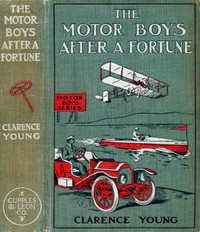
There’s something about watching a character pack a trunk—the careful folding of small kindnesses, the weight of a Testament tucked beside a train ticket—that lingers. The Motor Boys, hauling their own gear out to a ranch, felt like the same quiet ritual, just with different scenery. Old friends, new departures; you miss them before they’re even gone. The Motor Boys on a Ranch; or, Ned, Bob and Jerry Among the Cowboys — A Closer Reading brought that ache back, gently. I kept thinking of Bessie’s first train whistle, and how travel always promised more than it delivered, yet somehow delivered more anyway.
There are no reviews for this eBook.
There are no comments for this eBook.
Reader reflection
Record your reading impressions
A brief reflection can help important ideas stay with you longer.
Your progress
0
/
10
2
Was reading this book enjoyable?
3
Would you encourage someone else to read it?
4
Did the language feel accessible?
5
How useful did the reading feel?
6
Did any part of the book feel personally relevant?
7
Was the book what you thought it would be?
8
Would a second reading be valuable?
9
Which lesson or insight stayed with you?
10