1

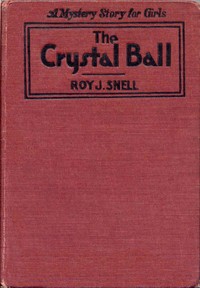
The Crystal Ball A Mystery Story for Girls — Inside the Classic
(0 User reviews)
887
Project Gutenberg
2013
Not confirmed
Mystery and detective stories; Artists -- Juvenile fiction; Romanies -- Juvenile fiction; Chicago (Ill.) -- Description and travel -- Juvenile fiction; Crystal gazing -- Juvenile fiction
Readers of public-domain and historical texts
Project Gutenberg digital edition
en
Edition facts
Words
52,659
Reading time
229 min
Text sections
8
The source record for The Crystal Ball A Mystery Story for Girls — Inside the Classic measures this digital text at 52,659 words, 3 hr 49 min estimated reading time, and 8 detected text sections.
The text analysis averages about 11.0 words per sentence, while the detected sections provide another way to judge how the source is divided.
Project Gutenberg metadata also associates the work with “Mystery and detective stories,” connecting these edition facts with the source record’s subject description.
Source:
Project Gutenberg record #44062
In this 1936 mystery, reporter Florence Huyler investigates fortune tellers in Chicago, uncovering fraud and danger among gypsies, a voodoo priestess, and a crystal gazer, while searching for a missing father.
Read the complete public-domain text at its original source.
Read on Project GutenbergThe opening chapter, 'Midnight Blue Velvet,' introduces Florence Huyler as she silently enters a darkened office building, drawn by a slit of eerie blue light. Her cautious movements—turning the knob 'slowly, silently'—set a tone of deliberate investigation. The building's rickety elevator and the unexpected luxury of an Oriental rug and velvet curtain establish a contrast between shabbiness and mystery that recurs throughout the excerpts.
Florence is a newspaper reporter assigned to expose fraudulent fortune tellers, but the story quickly complicates this mission. She finds herself protecting a young woman named June Travis, whose lost father is being exploited by a voodoo priestess. The excerpts show Florence's dual role: uncovering deception while genuinely seeking to help those harmed by it.
A Reporter's Uneasy Investigation
The excerpts reveal Florence's method: she observes, takes notes, and writes stories, but she also becomes personally entangled. After her friend Jeanne leaves for Isle Royale, Florence feels 'a great wave of loneliness' and dread, realizing she has 'dug deeper into the lives and ways of some fortune tellers than they could have wished.' She lists her adversaries: 'the dark-faced gypsy woman,' Madame Zaran, and Marianna Cristophe, the voodoo priestess. This enumeration suggests a network of antagonists, though the excerpts do not clarify how they connect.
Florence's investigative tools are modest. When writer's block strikes, older friend Frances Ward advises using a pencil instead of a typewriter, calling it 'almost human.' Florence follows this advice to write June Travis's story, hoping to attract help from someone who knows the missing father. The scene grounds the mystery in practical, everyday details rather than sensationalism.
Fortune Tellers and Their Methods
The catalog subjects list 'Crystal gazing' and 'Romanies,' but the excerpts focus on how fortune tellers gather information. Florence wonders: 'Were all fortune tellers like Myrtle Rand? Did they secure their facts in an underhanded manner, then pass them on to you as great surprises?' This question hints at a key theme—the mechanics of deception—but the excerpts do not answer it. The gypsy woman who 'stole from a poor widow' and the voodoo priestess demanding a 'large fee' for finding a lost father illustrate financial exploitation.
Notably, the crystal ball itself appears only in the title and chapter list. The excerpts show Florence gazing into one (Chapter V), but the text provided does not describe the experience. Readers must infer its role from the title and the investigative context.
Chicago as a Setting for Suspense
The catalog includes 'Chicago (Ill.) -- Description and travel,' and the excerpts use the city sparingly but effectively. The office building is 'old, might at any time be wrecked to make parking space for cars.' The elevator 'swayed and teetered like a canary bird’s cage on a coiled spring.' These details create a sense of instability and decay, mirroring the uncertain world Florence navigates.
Later, Florence dreams of 'rushing waters, leaf-brown trails and sighing spruce trees,' contrasting the urban setting with natural imagery. This brief escape suggests a longing for simplicity amid the complexities of her investigation. The city itself becomes a character—a place where secrets hide behind ordinary doors.
Readers should note that the excerpts cover only the first fourteen chapters and a later section, leaving the resolution of June Travis's father, the fate of the fortune tellers, and the meaning of the crystal ball unknown. The story balances a reporter's skepticism with genuine empathy for victims, and its Chicago setting provides a gritty backdrop. Approach the book as a period mystery that raises questions about belief, fraud, and the cost of seeking truth.
Florence Huyler chased her story through foggy parlors and painted lies, always hunting one true face. I recall a quieter kind of seeking in Peter Parley's Visit to London, During the Coronation of Queen Victoria — Context and Discussion—a child’s wonder at crowds and crowns, yet both books hold that same patient faith: somewhere behind the spectacle, a hand is waiting to be found.
There are no reviews for this eBook.
There are no comments for this eBook.
Reader reflection
How did this book work for you?
Your answers remain private and are stored only in this browser.
Your progress
0
/
10
2
Did this book hold your interest?
3
How likely are you to recommend this book?
4
What was the reading difficulty like?
5
Would a second reading be valuable?
6
What did you think about the pace?
7
Would you like to discuss this book with someone?
8
How clear did the writing feel?
9
What changed or sharpened your thinking?
10