1

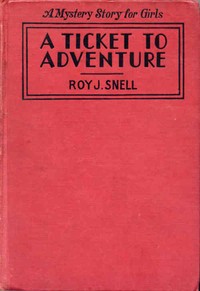
A Ticket to Adventure A Mystery Story for Girls — A Reader’s Guide
(0 User reviews)
658
Project Gutenberg
2013
Not confirmed
Missing persons -- Juvenile fiction; Young women -- Juvenile fiction; Mystery and detective stories; Alaska -- Juvenile fiction; Grandfathers -- Juvenile fiction
Readers of public-domain and historical texts
Project Gutenberg digital edition
en
Edition facts
Words
46,090
Reading time
201 min
Text sections
7
A Ticket to Adventure A Mystery Story for Girls — A Reader’s Guide can be approached with a clearer sense of reading commitment from its source measurements: 46,090 words, 3 hr 21 min estimated reading time, and 7 detected text sections.
The text analysis averages about 10.9 words per sentence, while the detected sections provide another way to judge how the source is divided.
Project Gutenberg metadata also associates the work with “Missing persons -- Juvenile fiction,” connecting these edition facts with the source record’s subject description.
Source:
Project Gutenberg record #44353
Roy J. Snell's 1937 mystery follows Mary Hughes and her cousin Florence in Alaska, where a chance encounter with a peculiar little man and a warning from an Indian girl set off a search for a missing grandfather. The narrative contrasts Mary's curiosity with Florence's physical endurance, using brisk dialogue and stark Arctic details.
Read the complete public-domain text at its original source.
Read on Project GutenbergRoy J. Snell opens A Ticket to Adventure with a precise, almost theatrical introduction: Mary Hughes, having walked the full length of a dock in Anchorage, rounds a pile of merchandise and finds “the oddest little man she had ever seen.” The description is economical—tight black suit, stiff collar, bright tie—and the stranger’s self-introduction, “I am Mister Il-ay-ok,” is immediately undercut by a “loud, harsh-sounding voice” from a hidden eavesdropper. Snell establishes tension through physical detail: the man’s “horse-like nose” and unnaturally straight back, and Mary’s impulse to slap him. The scene signals a mystery built on withheld information and visible oddities.
Diction and the Unfamiliar
Snell’s word choices often highlight the foreignness of the Alaskan setting. The little man’s name, “Il-ay-ok,” is spelled out phonetically, and Mary’s internal guess—“A Japanese”—is immediately corrected. The narrator uses “home-seekers” in quotation marks, signaling Mary’s ironic self-awareness. Later, the command “Mush!” is delivered without explanation, assuming reader familiarity with dog-team lingo. Snell also deploys colloquial interjections: “Har! Har! Har!” from the hidden man, and Jodie’s admiring quote, “You’re a better man than I am, Gungadin!”—a reference to Kipling that adds a literary layer. These choices root the dialogue in a specific time and place, making the unfamiliar feel immediate.
Voice and Physicality in Dialogue
Dialogue in the excerpts reveals character through rhythm and interruption. Mary’s speech is tentative, often trailing off—“Then you—” she begins, before being cut off by laughter. Florence, by contrast, speaks in direct, almost competitive exchanges. When Jodie says her cheek is frozen, she replies, “Yours too are frozen. If you don’t mind, I’ll do yours first.” The back-and-forth is brisk, with short lines and physical actions (mittens off, hand on cheek) doing much of the emotional work. Snell avoids lengthy introspection; instead, characters reveal themselves through what they say and how they respond to strain. The storm scene’s dialogue is minimal—a few words, then silent action—underscoring the harsh environment.
Structure of Suspense and Delay
Snell parcels out information in small, tantalizing doses. The little man appears, speaks, and is immediately interrupted; Mary learns his name but little else. Chapter titles like “The Indian Girl’s Warning” and “Seven Golden Candlesticks” promise revelations, but the excerpts show Snell delaying payoff. The mystery of the missing grandfather is introduced early but not resolved in the provided text. Instead, the narrative shifts to Florence’s dog-sledding exploits, building character before advancing the plot. This structural choice—alternating between Mary’s investigation and Florence’s physical trials—creates a dual focus, with each thread feeding the other. The reader must piece together clues from both perspectives.
Setting as Active Participant
The Alaskan landscape is not merely a backdrop; it drives action and tests characters. Snell describes the “bleak Arctic morning,” the “mad whirl of snow,” and the “glare-ice” that blows the dog team sideways. The storm is a force that Jodie and Florence battle for “two full hours,” and its sudden cessation when the dogs “took a sharp turn, climbed a ridge, dropped down into a valley” feels earned. Details like “long-haired deer skin sleeping-bag” and “skin boots” ground the story in material reality. Snell uses setting to create stakes: the cold is a tangible antagonist, and survival depends on knowledge of the terrain. The Fresh-Dough Club and the annual dog race add social texture, but the wilderness remains the ultimate arbiter.
Readers should attend to how Snell balances two distinct heroines: Mary, the observer who collects clues, and Florence, the doer who earns respect through endurance. The excerpts suggest that the mystery will be solved not through deduction alone but through physical competence and local knowledge. Pay attention to the small details—the little man’s precise speech, the hidden listener’s laughter, the frozen cheeks—as they accumulate into a portrait of a world where survival and secrecy are intertwined.
There’s something about that Alaskan mystery that stayed with me—that quiet thrill of two girls piecing together a stranger’s past. It reminded me of another old story, Jungle and Stream; Or, The Adventures of Two Boys in Siam — Reading Companion, where the wilderness feels just as close and just as telling. Both left me with a warm, lingering ache for far-off places.
There are no reviews for this eBook.
There are no comments for this eBook.
Reader reflection
How will you remember this book?
Save your reaction, strongest insight, and memorable passage.
Your progress
0
/
10
2
Was reading this book enjoyable?
3
Would you recommend this book to another reader?
4
How much effort did this book require?
5
What did you appreciate most?
6
How distinctive were its ideas or approach?
7
Would you like to discuss this book with someone?
8
How understandable was the text?
9
Which lesson or insight stayed with you?
10