1

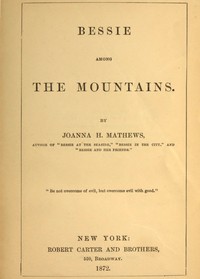
Bessie among the Mountains — Reading Companion
(0 User reviews)
878
Project Gutenberg
2013
Not confirmed
Christian life -- Juvenile fiction; Vacations -- Juvenile fiction; Family -- Juvenile fiction; Siblings -- Juvenile fiction; Country life -- Juvenile fiction; Natural history -- Juvenile fiction; Mountains -- Juvenile fiction
Readers of public-domain and historical texts
Project Gutenberg digital edition
en
Edition facts
Words
63,771
Reading time
278 min
Text sections
8
This digital edition of Bessie among the Mountains — Reading Companion is described by source-level measurements including 63,771 words, 4 hr 38 min estimated reading time, and 8 detected text sections.
The text analysis averages about 21.1 words per sentence, while the detected sections provide another way to judge how the source is divided.
Project Gutenberg metadata also associates the work with “Christian life -- Juvenile fiction,” connecting these edition facts with the source record’s subject description.
Source:
Project Gutenberg record #44445
In this fourth Bessie book, the family vacations at Chalecoo, where Bessie's kindness toward a hungry, neglected girl named Dolly Owen illustrates the motto 'overcome evil with good.' The excerpts show mountain travel, a tense encounter over bananas, and a child in distress.
Read the complete public-domain text at its original source.
Read on Project GutenbergThe fourth of Joanna H. Mathews's Bessie books opens with a laborious ascent: wagons toiling up a mountain, gentlemen and boys jumping out to lighten the load, and Maggie insisting she too must be 'a relief to the horses.' The setting is Chalecoo, a mountain retreat where the family will spend the summer. The catalog subjects list Christian life, family, siblings, country life, natural history, and mountains—but the excerpts reveal a sharper focus on social encounter across class lines. Bessie's sweet voice and snug corner contrast sharply with the later appearance of Dolly Owen, a ragged, hungry girl who has 'not eat nothin' to-day nor yesterday.' The story's moral framework is announced by the epigraph: 'Be not overcome of evil, but overcome evil with good.'
A Mountain Ascent and a Divided Party
The opening chapter, 'Up the Mountain,' establishes a pattern of group movement and individual observation. The party includes multiple adults—Colonel Rush, Uncle Ruthven, Aunt Annie, Aunt Bessie—and children: Bessie, Maggie, and the boys. The horses toil; the gentlemen walk to lighten the load; Maggie tries to help but finds the climb harder than expected. Bessie remains nestled between Colonel Rush, a position that signals her protected status. The landscape is steep and rugged, and the journey itself becomes a test of endurance. This physical division—some walking, some riding—foreshadows later social divisions between the vacationing family and the local mountain people. The excerpt gives no indication of the full party's size or the exact destination, but the repeated emphasis on effort and relief suggests that the mountain is both a literal and symbolic obstacle.
Bessie, Starr, and the Bananas
A later scene condenses the book's central moral problem into a single encounter. Starr, a servant, carries Bessie by a shortcut over rocks. Bessie offers him a piece of her banana; he declines, saying he 'never eat them.' She admits she likes bananas 'better than any thing else to eat' and has had none since arriving at Chalecoo. Suddenly they come upon Dolly Owen, half-lying against a tree, her face drawn in pain. Starr speaks sternly, accusing her of wickedness. Dolly ignores him and fixes her eyes on the bananas, demanding, 'Gi' me one.' Starr is outraged; Bessie hesitates. The scene is tense and specific: the bananas are a luxury, a gift from Colonel Rush, and Dolly's hunger is desperate. Bessie's response—she gently puts aside Starr's hand—suggests she is about to act against his disapproval. The excerpt cuts off before her decision, leaving the outcome uncertain but the moral dilemma clear.
Dolly Owen: A Portrait of Neglect
Dolly Owen appears as a figure of extreme deprivation. She is 'half lying, half sitting,' her head against a tree trunk, her face drawn as if in great pain. She has crept into a hiding place, surrounded by underbrush, while nearby 'gay voices and merry laughter' ring out from the rest of the party. The contrast is deliberate: Dolly is isolated, wretched, and hungry, while the vacationers are happy and well-fed. She tells Bessie she has 'not eat nothin' to-day nor yesterday' and that 'Lem's gone away.' Starr calls her 'the most graceless creature' and threatens punishment, but Dolly does not cower—she remains fixed on the bananas. The catalog subject 'Christian life' is here tested not by doctrine but by a child's response to another child's need. The excerpts do not reveal Dolly's backstory or Lem's identity, but her condition is described with enough physical detail to make her suffering tangible.
Readers approaching Bessie among the Mountains should attend to the interplay between the family's comfortable routines and the harsh realities of the mountain community. The excerpts offer no resolution to Dolly's plight, and the full book may develop or complicate Bessie's response. The epigraph—'overcome evil with good'—hints at a moral arc, but the evidence shows only the setup. Pay particular attention to how Mathews uses small objects—bananas, a silver cup, a ride on sheaves—to carry ethical weight.
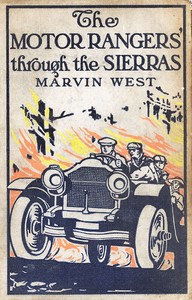
That rainy afternoon, Bessie’s quiet kindness toward Dolly lingered with me long after I closed the book—how a bit of fruit and patience could soften a harsh mountain world. Then, almost by accident, I found The Motor Rangers Through the Sierras — Background and Themes on the shelf, and the same wild expanse seemed to echo with a different sort of courage, one shaped by adventure rather than tenderness.
There are no reviews for this eBook.
There are no comments for this eBook.
Reader reflection
Take a moment to reflect on this book
Create a short personal record of your experience with this book.
Your progress
0
/
10
2
Did this book hold your interest?
3
How likely are you to recommend this book?
4
How much effort did this book require?
5
How would you describe its reading pace?
6
Was the book easy to understand?
7
How strongly did the book affect you emotionally?
8
Did the book give you something worth debating?
9
What is the main idea you are taking away?
10