1

Peter Parley's Visit to London, During the Coronation of Queen Victoria — Context and Discussion
(0 User reviews)
792
Project Gutenberg
2013
Not confirmed
Adventure stories; Voyages and travels -- Juvenile fiction; Queens -- Juvenile fiction; Wealth -- Juvenile fiction; Storytelling -- Juvenile fiction; Coronations -- Juvenile fiction; Statesmen -- Juvenile fiction; Victoria, Queen of Great Britain, 1819-1901 -- Juvenile fiction
Readers of public-domain and historical texts
Project Gutenberg digital edition
en
Edition facts
Words
16,200
Reading time
71 min
Text sections
3
Peter Parley's Visit to London, During the Coronation of Queen Victoria — Context and Discussion can be approached with a clearer sense of reading commitment from its source measurements: 16,200 words, 1 hr 11 min estimated reading time, and 3 detected text sections.
The text analysis averages about 25.1 words per sentence, while the detected sections provide another way to judge how the source is divided.
Project Gutenberg metadata also associates the work with “Adventure stories,” connecting these edition facts with the source record’s subject description.
Source:
Project Gutenberg record #43995
An American narrator, Peter Parley, travels to London for Queen Victoria's 1838 coronation, blending firsthand spectacle with historical anecdotes and moral commentary. The text contrasts American republican curiosity with British monarchical pageantry, while Parley's avuncular voice guides young readers through processions, ceremonies, and city sights.
Read the complete public-domain text at its original source.
Read on Project GutenbergPeter Parley, the fictional American storyteller, opens his account by framing the coronation as a spectacle unavailable in the United States, which has 'neither King nor Queen.' This transatlantic perspective shapes the entire narrative: Parley is both an awed spectator and a detached observer, noting details that a British writer might take for granted. His decision to cross the Atlantic by steamship—the 'Great Western'—anchors the tale in the technological marvels of 1838, while his declared motive—to gather 'lots of new stories for my young friends'—reveals the book's dual purpose as entertainment and informal education.
An American Eye on British Ceremony
Parley repeatedly positions himself as an outsider, a role that allows him to explain British customs to his young American readers. When the Westminster scholars chant 'Vivat Victoria Regina!' he notes that the sound, 'though not the most harmonious,' was 'certainly not the least interesting part of the greeting.' This qualifying remark is typical: Parley registers the strangeness of the ritual without dismissing it. He also records the exact wording of the Recognition—'Sirs, we here present unto you Queen Victoria, the undoubted Queen of this realm'—and the crowd's response, 'God save Queen Victoria!' By transcribing these formal phrases, he turns the ceremony into a kind of civics lesson, yet he also admits that he himself 'shouted forth his acclamations, in as heartfelt a manner as the most devoted of her Majesty's subjects.' The line between instruction and participation blurs.
The Mechanics of Majesty
The coronation sequence in Westminster Abbey is described with almost procedural precision. Parley itemizes the offerings: 'a pall or altar-cloth of gold,' then 'an ingot of gold, a pound in weight.' He traces the chain of custody—from officer to Lord Chamberlain to Lord Great Chamberlain to the Queen to the Archbishop—as if mapping a bureaucratic flowchart. The prayer he quotes, which asks God to 'look down mercifully upon this thy servant Victoria our Queen, here humbling herself before Thee at thy footstool,' emphasizes the queen's submission within the very ritual that exalts her. Parley does not comment on this paradox; he simply lets the juxtaposition of regalia and humility stand. His method is accumulation: the Litany, the Sanctus, the sermon from 2 Chronicles—each layer adds weight to the event, but the narrator never steps back to summarize its meaning.
Narrative Gaps and Editorial Choices
The excerpts break off during the sermon, leaving the coronation incomplete. What remains is a fragment that nevertheless reveals Parley's structuring habits. He alternates between panoramic description (the Abbey 'rang with the joyful response') and close-up detail (the cushion 'for her Majesty to kneel upon'). He inserts historical digressions—the legends of St. Edward's Chair are promised in the table of contents—and personal anecdotes about the queen. The table of contents also lists chapters on illuminations, fireworks, and a review in Hyde Park featuring Marshal Soult, suggesting that the book broadens into a general London travelogue after the central ceremony. Readers should note that the surviving text is only a portion; the full work likely balances coronation reportage with the kind of moralizing tales for which Parley was known.
This edition preserves the original 1839 London printing by Charles Tilt, complete with its dedication 'To the Good Little Boys and Girls of Great Britain.' The American narrator addressing British children adds another layer of cross-cultural play. Readers interested in Victorian pageantry will find the coronation chapters a valuable primary source, while those studying children's literature can observe how Goodrich adapts his Parley persona—part pedagogue, part tourist—to a royal subject. The abrupt ending at the sermon is a reminder that digital texts, like their print ancestors, sometimes survive only in part.
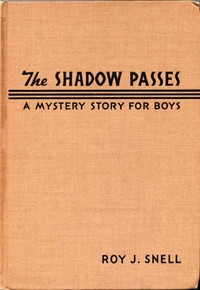
I remember sitting with that old Parley book, imagining the coronation crowds, and later finding myself in The Shadow Passes A Mystery Story for Boys — Context and Discussion, where a different kind of watching happens—not ceremony, but quiet pursuit. Both left me with that same hush, the sense of being a visitor inside another time’s attentiveness. It’s a particular warmth, like a hand resting on a familiar spine.
There are no reviews for this eBook.
There are no comments for this eBook.
Reader reflection
How did this book work for you?
Your answers remain private and are stored only in this browser.
Your progress
0
/
10
2
Was reading this book enjoyable?
3
How likely are you to recommend this book?
4
How demanding did the text feel?
5
Would a second reading be valuable?
6
What was its emotional impact?
7
Would you start a conversation about this book?
8
What was the strongest part of the book?
9
Which lesson or insight stayed with you?
10