1

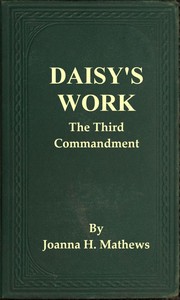
Daisy's Work: The Third Commandment — Background and Themes
(0 User reviews)
1219
Project Gutenberg
2014
Not confirmed
Christian life -- Juvenile fiction; Friendship -- Juvenile fiction; Missing children -- Juvenile fiction; Benevolence -- Juvenile fiction; Swearing -- Juvenile fiction; Ten commandments -- Juvenile fiction; Ten commandments -- Name of God -- Juvenile fiction
Readers of public-domain and historical texts
Project Gutenberg digital edition
en
Edition facts
Words
25,746
Reading time
112 min
Text sections
4
The source record for Daisy's Work: The Third Commandment — Background and Themes measures this digital text at 25,746 words, 1 hr 52 min estimated reading time, and 4 detected text sections.
The text analysis averages about 21.6 words per sentence, while the detected sections provide another way to judge how the source is divided.
Project Gutenberg metadata also associates the work with “Christian life -- Juvenile fiction,” connecting these edition facts with the source record’s subject description.
Source:
Project Gutenberg record #44770
In this third volume of Joanna H. Mathews' Flowerets series, young Daisy confronts casual swearing and irreverent speech among her peers, guided by the Third Commandment. The story contrasts the purity of a flower-girl with the harsh street language around her, and explores how children negotiate moral lessons in everyday interactions.
Read the complete public-domain text at its original source.
Read on Project GutenbergThe novel opens with a striking tableau: Daisy, a little flower-girl, stands as "a little spot of brightness and beauty amidst all the dust and heat and turmoil of the noisy street" beside a railroad depot. The contrast between her innocent appearance and the surrounding "calling, shouting, and swearing" immediately establishes the central tension of the book—how to maintain purity of speech in a world where profanity is commonplace. This scene, drawn from the first chapter, sets up Daisy as a moral touchstone whose very name echoes the flowers she sells.
The Weight of Words: Swearing as a Social Habit
Mathews portrays swearing not as isolated outbursts but as a pervasive social habit, especially among adults and older children. In the excerpt, porters and hackmen are described as "calling, shouting, and swearing," while later a schoolgirl, Cora, casually says "The Lord knows; I don't" in response to a question about a cushion. This offhand use of religious language is immediately challenged by Lily and Daisy, who insist it is wrong. The author uses these small moments to show how irreverent speech can become ingrained, even among those who attend Sunday school. The children's debate—whether quoting Scripture carelessly is the same as swearing—reveals the nuanced line between sacred and profane language that the book seeks to draw.
Children as Moral Arbiters
Throughout the excerpts, children take on the role of correcting adults and older peers. When Cora laughs off Lily's objection, Lily retorts, "Your papa's saying so does not make a thing right or wrong," asserting a moral standard independent of parental authority. Daisy, though quieter, supports Lily with a bold "No" when asked if quoting Scripture carelessly is acceptable. This dynamic reverses the typical adult-child hierarchy, placing moral authority in the hands of the young protagonists. The children's earnestness is contrasted with Cora's amusement, highlighting the tension between genuine conviction and social ease. Mathews seems to suggest that children, precisely because of their simplicity, can perceive ethical breaches that adults overlook.
Setting as Moral Landscape
The physical settings in the excerpts are carefully chosen to mirror the moral conflicts. The opening street scene is noisy, dusty, and filled with profanity—a world of commerce and hurry where Daisy's flower basket is an oasis. In contrast, the school piazza where the cushion incident occurs is a place of leisure and play, yet even there, careless speech intrudes. The piazza's rustic chair, which scratches Lily's shoulders, becomes a minor physical discomfort that parallels the moral discomfort caused by Cora's words. Mathews uses these details to suggest that the struggle for pure speech is not confined to the street but follows the children into their most pleasant environments. The recurring motif of flowers—Daisy's namesakes, the roses for Lily's hair—serves as a visual reminder of the beauty and fragility of innocent language.
The Third Commandment in Practice
The book's subtitle, "The Third Commandment," is not merely a label but a lens through which every conversation is examined. The children's debate over "The Lord knows" versus "I don't know" illustrates the commandment's application to everyday speech. Lily's objection that "you're talking Bible; and that is not right" shows how the commandment is interpreted to forbid even casual use of sacred language. Mathews does not present a dry catechism but dramatizes the commandment through social interactions, making it a living rule that children must navigate. The excerpt suggests that the commandment is not just about avoiding profanity but about cultivating a general reverence in speech, a theme that likely runs throughout the novel.
Readers approaching Daisy's Work should attend to the way Mathews uses dialogue to dramatize moral distinctions. The children's voices are distinct and their arguments earnest, often revealing more about their characters than direct narration does. The book rewards careful attention to the social contexts of speech—who says what, when, and with what reaction. As a volume in the Flowerets series, it stands alone but gains depth when read alongside its companions, which explore other commandments through different child protagonists.
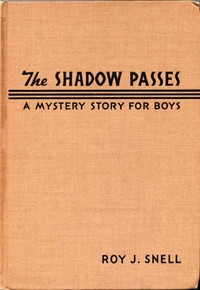
I finished that Daisy story and kept thinking about how quietly she wrestled with words, the weight they carry without anyone noticing. It reminded me of another book, The Shadow Passes A Mystery Story for Boys — Context and Discussion, where the same hush hangs over what boys overhear and misunderstand. Both left me with that tender ache, watching children feel more than they can say.
There are no reviews for this eBook.
There are no comments for this eBook.
Reader reflection
Before you leave, reflect on the book
Use these questions to collect your thoughts before moving on.
Your progress
0
/
10
2
How did the book work for you overall?
3
Is this a title you would suggest to others?
4
What was the reading difficulty like?
5
Was the book what you thought it would be?
6
Was the book easy to understand?
7
How useful did the reading feel?
8
Could you see yourself revisiting this book?
9
What is the main idea you are taking away?
10