1

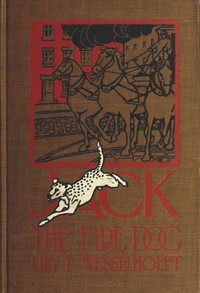
Jack, the Fire Dog — A Reader’s Guide
(0 User reviews)
1664
Project Gutenberg
2015
Not confirmed
Dogs -- Juvenile fiction; Conduct of life -- Juvenile fiction; Children -- Conduct of life -- Juvenile fiction; Friendship -- Juvenile fiction; Fire fighters -- Juvenile fiction; Parent and child -- Juvenile fiction; Human-animal relationships -- Juvenile fiction; Fires -- Juvenile fiction; Sick -- Juvenile fiction; Blind children -- Juvenile fiction
Readers of public-domain and historical texts
Project Gutenberg digital edition
en
Edition facts
Words
52,949
Reading time
231 min
Text sections
7
The catalog record for Jack, the Fire Dog — A Reader’s Guide provides practical reading context through 52,949 words, 3 hr 51 min estimated reading time, and 7 detected text sections.
The text analysis averages about 19.6 words per sentence, while the detected sections provide another way to judge how the source is divided.
Project Gutenberg metadata also associates the work with “Dogs -- Juvenile fiction,” connecting these edition facts with the source record’s subject description.
Source:
Project Gutenberg record #48861
This editorial note examines how Lily F. Wesselhoeft's 1903 children's novel uses the firehouse setting, the dog Jack's perspective, and alternating scenes of urban and rural life to structure a story about loyalty and independence.
Read the complete public-domain text at its original source.
Read on Project GutenbergLily F. Wesselhoeft's Jack, the Fire Dog opens not with its canine protagonist but with the gleaming brass and spotless floor of Engine 33's firehouse. The building itself is described with a meticulousness that suggests pride of place: the harnesses hang directly over the shafts, ready to drop onto the horses in an instant, and the three gray horses stand in well-kept stalls, poised to dart out at the gong. This initial focus on the engine house establishes a world of order, speed, and communal admiration—a world that Jack, a spotted dog of no particular breed, inhabits as a beloved member. The narrative voice, which occasionally slips into a childlike verse praising Engine 33, signals that the story will move between the concrete details of firefighting and the emotional life of its animal and human characters.
The Firehouse as a Fixed Center
The opening chapter establishes the firehouse as a stable, almost ritualistic space. The engine is kept in a “substantial brick building” on a little hill, and every surface shines. The harnesses are lowered “in an instant,” and the horses stand ready. This precision is not merely descriptive; it creates a baseline of order against which later disruptions will be measured. Jack himself is defined by his attachment to this place: he never ventures far, keeps within hearing of the gong, and once even crashes through a screen door to avoid being left behind. The firehouse functions as a fixed point of reference, a home that Jack is reluctant to leave. The narrative’s attention to the physical layout—the stalls, the harnesses, the brass—anchors the reader in a tangible environment before the story moves outward into the city and beyond.
Jack’s Perspective and the Limits of Animal Knowledge
Wesselhoeft frequently adopts Jack’s point of view, but she does not pretend to grant him full human understanding. When Toby, a stray dog, encounters a boy with a leash, he misinterprets the boy’s intentions. The boy is actually a rescuer who takes stray dogs to a home, but Toby, remembering the poorhouse in his native town, imagines a dreadful institution and flees. The narrative explicitly notes that “all that Toby knew about these public homes was what he had seen and heard of the poorhouse.” This limitation is crucial: the reader knows more than the dog, creating dramatic irony. Toby’s flight into the woods, where he observes sparrows, blue jays, and squirrels, is rendered with sensory detail—the caw of crows, the chatter of squirrels—but his interpretation of their behavior as “expecting something pleasant” remains naive. The author uses the animal’s restricted knowledge to generate suspense and sympathy.
Movement Between Urban and Rural Scenes
The excerpts show a clear structural pattern: the story alternates between the ordered, human-dominated spaces of the city and the freer, more natural settings of the countryside. The firehouse is urban, mechanical, and communal. In contrast, Toby’s flight takes him to woods where he hides behind barberry bushes and watches birds. The arrival of a sleigh with two boys and a gentleman introduces a rural or suburban interlude. One boy is lifted carefully out, suggesting he may be blind—a detail that aligns with the catalog subject “Blind children.” The sparrows’ excited twittering (“Coming! Coming!”) and the appearance of a flock of pigeons create a pastoral scene that feels almost staged, as if the animals are participants in a ritual. This movement between settings allows the narrative to explore different kinds of community: the firehouse crew, the stray dog’s solitary survival, and the woodland gathering of animals and humans.
Recurring Images of Readiness and Rescue
Throughout the excerpts, images of preparedness recur. The engine is “ready for use at a moment’s notice.” The horses are poised to dart out. Jack races back at the sound of the gong. Even the boy with the leash carries it “always” in his pocket, ready to rescue stray dogs. This motif of readiness is tied to the idea of rescue—from fires, from the streets, from loneliness. The firehouse itself is a place of constant vigilance. But the narrative also complicates this image: Toby’s fear of the “poorhouse for dogs” suggests that not all forms of assistance are welcome. The boy’s intention to help is misunderstood, and the dog’s instinct for self-preservation leads him away from safety. The tension between being ready to help and being ready to flee gives the story a dynamic quality, as characters (both human and animal) must decide whom to trust.
Readers attentive to structure will notice how Wesselhoeft uses the firehouse as a hub from which characters depart and to which they may or may not return. The alternating scenes of city and country, and the careful management of Jack’s and Toby’s limited perspectives, create a narrative that is both episodic and cohesive. Pay particular attention to the moments when the narrative voice shifts from objective description to a more intimate, almost folkloric tone—as in the children’s verse about Engine 33—for these shifts reveal the story’s emotional center.
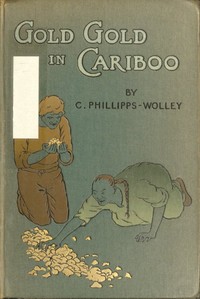
Reading Jack, the Fire Dog again, I kept thinking about how loyalty often asks for independence in return — how the bravest companions are the ones who let you go find your own way. That same quiet tug runs through Gold, Gold, in Cariboo! A Story of Adventure in British Columbia — Text and Context, though the landscape there is wider, wilder, and the heart of it feels older somehow.
There are no reviews for this eBook.
There are no comments for this eBook.
Reader reflection
How did this book work for you?
Your answers remain private and are stored only in this browser.
Your progress
0
/
10
2
How did the book work for you overall?
3
Would you pass this book on to a friend?
4
How demanding did the text feel?
5
How would you describe its reading pace?
6
Did any part of the book feel personally relevant?
7
How clear did the writing feel?
8
Could you apply anything you learned?
9
What changed or sharpened your thinking?
10