1

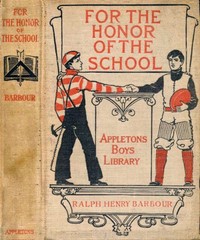
For the Honor of the School: A Story of School Life and Interscholastic Sport — Key Ideas to Explore
(0 User reviews)
417
Project Gutenberg
2015
Not confirmed
Boys -- Conduct of life -- Juvenile fiction; Schools -- Juvenile fiction; Sports -- Juvenile fiction; Football -- Juvenile fiction; Friendship -- Juvenile fiction; Students -- Juvenile fiction; Honor -- Juvenile fiction; Sports stories; Awards -- Juvenile fiction
Readers of public-domain and historical texts
Project Gutenberg digital edition
en
Edition facts
Words
63,928
Reading time
278 min
Text sections
26
The source record for For the Honor of the School: A Story of School Life and Interscholastic Sport — Key Ideas to Explore measures this digital text at 63,928 words, 4 hr 38 min estimated reading time, and 26 detected text sections.
The text analysis averages about 16.0 words per sentence, while the detected sections provide another way to judge how the source is divided.
Project Gutenberg metadata also associates the work with “Boys -- Conduct of life -- Juvenile fiction,” connecting these edition facts with the source record’s subject description.
Source:
Project Gutenberg record #47974
This editorial note examines the structure and recurring imagery in Ralph Henry Barbour's school sports novel, focusing on how cross-country races, football games, and seasonal shifts organize the narrative and reflect the boys' athletic and moral training.
Read the complete public-domain text at its original source.
Read on Project GutenbergThe novel opens not with a classroom scene but with a cross-country race, its first sentence a command: “This way, Hillton!” The captain’s low-voiced instructions—to save strength, avoid style over obstacles, and let others set the pace—establish a pattern of tactical restraint that runs through the book. Barbour uses athletic events as structural anchors: each chapter title that names a race or game ("The cross-country race," "The football game," "The interscholastic meet") signals a set piece where the school’s honor is tested. Between these contests, the narrative moves through dormitory debates, faculty confrontations, and the rhythms of training, creating a world where moral and physical discipline are constantly intertwined.
Race as Organizing Principle
The cross-country race that opens the book is not merely a scene but a template for how the novel structures tension. Barbour gives the captain’s pre-race speech in full, detailing specific obstacles—the “combination jump,” the “Liverpool,” the water jump—and naming rival runners (House and Beaming of St. Eustace). This specificity grounds the action in a recognizable athletic reality. The race itself becomes a microcosm of the larger story: a contest where individual effort must serve the team, where strategy matters as much as speed, and where the outcome is uncertain until the final yards. Later chapters mirror this pattern: the football game in Chapter VIII, the faculty race in Chapter XII, and the interscholastic meet in Chapter XXIII all follow a similar arc of preparation, tension, and resolution. Barbour uses the race structure to give each athletic event its own dramatic shape, while the spaces between—the revolt, the flag-raising, the pledge—provide the moral and social context that gives the contests meaning.
Seasonal Movement and Athletic Enthusiasm
Barbour marks the passage of time not by calendar dates but by shifts in athletic activity. The excerpt describing the arrival of spring at the Academy is a catalogue of sports: “the call for track team candidates” triggers an “epidemic of athletic enthusiasm” that sweeps through the school. Crew candidates who had been quietly exercising now work on rowing machines before a throng; baseball players gather in the cage; golfers practice putting in dormitory halls; a few lads talk of cricket. This seasonal rhythm—winter sports giving way to spring training—structures the narrative as much as any plot event. The gymnasium becomes a central setting, its “chest weights,” “rings,” “ladders,” and “dumb-bells” described with the same attention as the playing fields. Barbour’s prose lingers on the physical details of training: the “wooden track in the hour when twilight filled the gymnasium with strange and grotesque shadows,” the “leather-covered sphere” of the shot put. This emphasis on the material world of athletic preparation grounds the story in a specific, sensory reality.
Voice and Authority in the Dressing Room
The captain’s voice in the opening scene—low, earnest, full of tactical specifics—establishes a model of leadership that recurs throughout the book. He addresses his teammates as “fellows,” gives orders without arrogance, and ends with a practical reminder about shoelaces. This is not the voice of a drill sergeant but of a peer who has earned authority through competence. The novel contrasts this with other forms of authority: the faculty, represented by Professor Beck, who “from a quiet, even-voiced, little gentleman, suddenly became a commanding figure” during track practice. Barbour shows how the boys respond to different kinds of command—the captain’s earned respect versus the professor’s institutional authority. The dressing-room and gymnasium become spaces where hierarchies are negotiated: boys who are not candidates for teams gather at the “little walled-off inclosure by the entrance” to scoff or praise, creating a social map of the school. These scenes of collective observation and judgment are as important to the novel’s structure as the races themselves.
The Body as Evidence
Barbour uses physical description to convey character and status. In the gymnasium, he notes that “it was not difficult to distinguish the new candidates from the experienced, even when they were in gymnasium attire; the matter of chest development alone afforded unmistakable proof.” This attention to the body as a text—chest muscles indicating training, slender builds marking sprinters—extends to the way boys are judged by their peers. The novel’s moral framework is often expressed through physical terms: the captain’s advice to “save yourselves for the last three quarters of a mile” is both a racing tactic and a lesson in prudence. When Barbour describes the crew candidates “quietly exercising with chest weights and dumb-bells and running around the track without occasioning any particular notice,” he suggests that true athletic virtue is unshowy. The body, in this world, is a record of discipline and effort, and the novel’s structure—alternating between public contests and private training—allows readers to see how that record is built.
Readers attentive to the novel’s architecture will notice how Barbour uses the athletic calendar—cross-country in fall, football in late autumn, indoor training in winter, track in spring—to give the school year a natural dramatic arc. The contests are not isolated episodes but stages in a continuous process of training and testing. Pay attention to the moments between events: the debates in studies, the confrontations with faculty, the quiet acts of loyalty or rebellion. These scenes, often brief, are where the novel’s real work of character and theme is done.
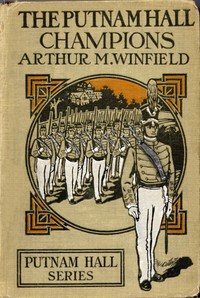
That rainy afternoon, I kept returning to how the cross-country course in For the Honor of the School seemed to mirror the boys’ quiet stubbornness—each hill a small reckoning. The same weather-soaked patience drifted through another volume I found nearby, The Putnam Hall Champions; or, Bound to Win Out — Reading Companion, where loyalty felt less like shouting and more like steady breathing in the mud.
There are no reviews for this eBook.
There are no comments for this eBook.
Reader reflection
Your personal reading reflection
Build a private reading journal entry for this title.
Your progress
0
/
10
2
Was reading this book enjoyable?
3
Would you recommend this book to another reader?
4
What was the reading difficulty like?
5
Which aspect of the book did you value most?
6
Would this book work well in a reading group?
7
Could you see yourself revisiting this book?
8
How well did it match your expectations?
9
What did this book teach you most?
10