1

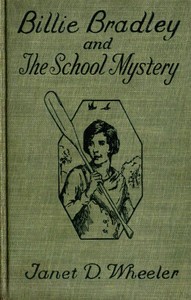
Billie Bradley and the School Mystery; Or, The Girl From Oklahoma — Text and Context
(0 User reviews)
440
Project Gutenberg
2015
Not confirmed
Detective and mystery stories; Friendship -- Juvenile fiction; Boarding schools -- Juvenile fiction; Teenage girls -- Juvenile fiction; Boarding school students -- Juvenile fiction
Readers of public-domain and historical texts
Project Gutenberg digital edition
en
Edition facts
Words
47,957
Reading time
209 min
Text sections
39
Billie Bradley and the School Mystery; Or, The Girl From Oklahoma — Text and Context can be approached with a clearer sense of reading commitment from its source measurements: 47,957 words, 3 hr 29 min estimated reading time, and 39 detected text sections.
The text analysis averages about 13.4 words per sentence, while the detected sections provide another way to judge how the source is divided.
Project Gutenberg metadata also associates the work with “Detective and mystery stories,” connecting these edition facts with the source record’s subject description.
Source:
Project Gutenberg record #50157
This editorial note examines Janet D. Wheeler's diction, dialogue, and descriptive choices in Billie Bradley and the School Mystery, focusing on how the author characterizes Edina Tooker's Oklahoma dialect, the contrast between outdoor action and school settings, and the use of physical description to signal social transformation.
Read the complete public-domain text at its original source.
Read on Project GutenbergJanet D. Wheeler opens Billie Bradley and the School Mystery with a direct, declarative sentence: “My, but it’s good to get back!” The line belongs to Billie Bradley, and its colloquial warmth immediately establishes a tone of friendly enthusiasm. Wheeler’s descriptive prose is equally straightforward, noting the “ivy-covered towers” of Three Towers Hall and its setting on “one of the prettiest and most picturesque lakes.” The author favors concrete details over abstraction, grounding the reader in a specific time and place—the beginning of the fall semester. This preference for the tangible extends to dialogue, where characters speak in distinct registers: Billie’s easy confidence contrasts sharply with Edina Tooker’s frontier-inflected speech, which Wheeler renders with deliberate phonetic spelling and rural idioms.
Dialect as Characterization
Wheeler marks Edina Tooker as an outsider through her dialogue. The girl from Oklahoma uses constructions such as “We git along together like rattlesnakes and coyotes” and “I’m plumb scared to death.” The author does not merely report that Edina speaks differently; she embeds the difference in grammar, vocabulary, and rhythm. Edina self-corrects from “no” to “any” in one breath, showing an awareness of standard speech that she does not yet control. Wheeler also gives Edina a distinctive simile drawn from the natural world of the plains—“rattlesnakes and coyotes”—a choice that ties her language to her origin. Other characters, by contrast, speak in a polished, colloquial American English typical of school stories of the period. The contrast is not merely decorative; it signals the central tension of the plot: Edina’s integration into the social world of Three Towers Hall.
Physical Description and Social Transformation
Wheeler uses clothing and posture to chart Edina’s changing status. When Edina appears in a “white sport coat,” “white, fuzzy skirt,” and “immaculate, unwrinkled white silk stockings,” the narrator notes that the improvement is “more than ‘clothes deep.’” The description is precise: the white outfit, the approved style of the shoes, the absence of wrinkles. Wheeler pairs this with a shift in Edina’s demeanor: “a new poise, a dignity which was very attractive.” The author does not tell the reader that Edina has been transformed; she shows it through observable details. The reaction of Chet Bradley—who “stopped short at his first sight of Edina Tooker”—confirms the change. Wheeler’s reliance on visual cues to convey character development is consistent throughout the excerpt, making the physical world a reliable index of interior change.
The Rhythm of Action and Dialogue
Wheeler alternates between brisk narrative action and extended dialogue, creating a rhythm that propels the story forward. The picnic planning sequence moves quickly: a telephone call, a kitchen arrangement, a prayer for good weather. The narrator then shifts to a description of the day itself—“one of those lovely early fall days when the sun warms the blood”—before returning to dialogue. The boys arrive “with whoops as of Comanche Indians,” a simile that echoes Edina’s earlier reference to rattlesnakes and coyotes, subtly linking the two groups of outsiders. Wheeler’s dialogue often carries the burden of exposition: Billie’s line about “meeting and beating Amanda Peabody” introduces a rival without narrative interruption. The author trusts her characters to convey information through conversation, a technique that keeps the prose lively and the reader engaged.
Setting as a Character
Three Towers Hall is more than a backdrop; Wheeler invests it with emotional weight. Billie gazes upon the “ivy-covered towers” with “genuine affection,” and the building is described as “impressive” and set amidst “gracious, well-tended lawns.” The lake is “pretty” and “picturesque.” These adjectives are conventional, but Wheeler uses them consistently to establish a stable, idyllic world against which the mystery will unfold. The setting also serves a practical function: the lake provides a location for the picnic, the boathouse for a meeting point, and the school itself for the central conflict. Wheeler’s descriptions are functional rather than lyrical; they orient the reader without slowing the narrative. The contrast between the orderly school grounds and Edina’s wilder origins is implicit but clear, reinforcing the theme of civilization versus the frontier.
Wheeler’s authorial choices in Billie Bradley and the School Mystery reward attention to detail. Her use of dialect, physical description, and setting all serve to advance character and plot without drawing attention to themselves. Readers who focus on how Wheeler constructs Edina’s voice—its rhythms, its self-corrections, its regional markers—will find a consistent and deliberate craft. The mystery itself, while central to the plot, is introduced gradually; the excerpts suggest that Wheeler is equally interested in the social dynamics of the school. This note encourages a reading that attends to the texture of the prose as much as to the unfolding of events.
Reading how Edina’s Oklahoma speech gets smoothed over in Billie Bradley reminds me of my own first day at a new school, hiding my accent. A teacher once handed me For the Honor of the School: A Story of School Life and Interscholastic Sport — Key Ideas to Explore; it held the same quiet ache of wanting to belong without erasing who you are.
There are no reviews for this eBook.
There are no comments for this eBook.
Reader reflection
How will you remember this book?
Save your reaction, strongest insight, and memorable passage.
Your progress
0
/
10
2
Did this book hold your interest?
3
How likely are you to recommend this book?
4
Did the language feel accessible?
5
How useful did the reading feel?
6
Did any part of the book stay with you emotionally?
7
Was the book what you thought it would be?
8
How strong was your personal connection to the text?
9
What did this book teach you most?
10