1

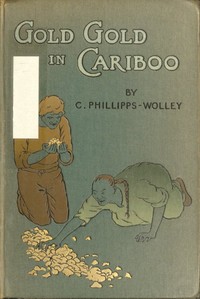
Gold, Gold, in Cariboo! A Story of Adventure in British Columbia — Text and Context
(0 User reviews)
1060
Project Gutenberg
2014
Not confirmed
Adventure stories; Friendship -- Juvenile fiction; Gold mines and mining -- Juvenile fiction; Household employees -- Juvenile fiction; Artists -- Juvenile fiction; Gold miners -- Juvenile fiction; Swindlers and swindling -- Juvenile fiction; British Columbia -- History -- Juvenile fiction; Cariboo (B.C. : Regional district) -- Gold discoveries -- Juvenile fiction; Gold dredging -- Juvenile fiction
Readers of public-domain and historical texts
Project Gutenberg digital edition
en
Edition facts
Words
87,334
Reading time
380 min
Text sections
9
This digital edition of Gold, Gold, in Cariboo! A Story of Adventure in British Columbia — Text and Context is described by source-level measurements including 87,334 words, 6 hr 20 min estimated reading time, and 9 detected text sections.
The text analysis averages about 21.1 words per sentence, while the detected sections provide another way to judge how the source is divided.
Project Gutenberg metadata also associates the work with “Adventure stories,” connecting these edition facts with the source record’s subject description.
Source:
Project Gutenberg record #45870
Clive Phillipps-Wolley's 1903 adventure novel follows Ned Corbett and companions through British Columbia's Cariboo gold rush, contrasting the fever for gold with quieter bonds of friendship and loyalty. The narrative juxtaposes raw frontier violence with domestic order, as seen in Lilla's cabin, and uses poker games, dance-houses, and treacherous landscapes to test its characters.
Read the complete public-domain text at its original source.
Read on Project GutenbergThe opening chapter of Gold, Gold, in Cariboo! situates the reader in Victoria, British Columbia, in April 1862, a town still reeling from the collapse of the Fraser River gold rush. Phillipps-Wolley's narrator describes the boom-and-bust cycle with a dry, almost statistical precision: from a Hudson Bay station to a city of 17,000 in 1858, then down to 5,000 by 1861. This historical grounding quickly gives way to the personal scale of the story, as the narrative zeroes in on a single lamplit room where a young man named Ned Corbett lies recovering from a fever, watched over by a woman named Lilla. The contrast between the vast, chaotic gold fields and this intimate, orderly space—a miner's shack with a red Hudson Bay blanket curtain and the only pair of sheets in Cariboo—establishes a central tension between the lure of wealth and the pull of human connection.
The Gold Fever and Its Human Cost
The novel's title, repeated like a cry, captures the infectious nature of gold fever. Phillipps-Wolley traces the contagion from California in 1848 to British Columbia a decade later, noting how “50,000 adventurers of every hue, language, and clime” drifted across the Sierra. Yet the excerpts show that the fever is not merely a historical force but a personal affliction. The chapter titles themselves chart a moral trajectory: “The Gold Fever,” “A 'Gilt-edged' Speculation,” “A Little Game of Poker,” and “The Mother of Gold” suggest a descent from hope into swindling and risk. The narrator’s voice is often wry, as when he observes that honest gentlemen were “persuaded to pass their nights beside the gutter” by rye whisky and ditches. The fever is a disease that leaves its victims—like Corbett, laid low by an unnamed illness—vulnerable to both physical collapse and the schemes of men like the Colonel, who watches from the shadows, calculating how to profit from others’ weakness.
Interiors and the Gaze of the Watcher
One of the most striking passages in the excerpts is a scene of surveillance. A man—the Colonel—emerges from the gloom, stumbles over wooden boxes, and then crouches by a window to peer into Lilla’s room. The description is meticulous: the bare wooden walls, a little mirror, a man’s coat and broad-brimmed hat, a rifle in the corner, and a red Hudson Bay blanket serving as a curtain. The narrator notes that “an expert would have decided at once that the room was a woman’s room” because of its “trimness” and “cleanliness not Indian.” This interior, with its mingled masculine and feminine details, becomes a stage for the Colonel’s predatory assessment. He reads Lilla’s care for Corbett as romantic attachment, muttering “The little fool!” and recognizing a sentiment he has “often turned to his own advantage.” The scene is a study in power: the watcher believes he sees through others, but the reader is left to wonder whether his cynicism is accurate or a projection of his own greed.
Landscape as Adversary and Mirror
The excerpts offer only glimpses of the British Columbia wilderness, but those glimpses are charged with danger. The chapter titles—“Facing Death on the Stone-slide,” “The Accursed River,” “Drowning in the Forest”—promise a landscape that is actively hostile. The setting is not a picturesque backdrop but a force that tests character. In the dance-house scene, the external darkness mirrors the moral murk: “Out in the main street there was no light, no light either of sun or moon; no light at all except one feeble ray which flickered from Lilla’s window.” The black water hurrying through wooden boxes laid across the highway suggests a current of greed and violence running beneath the surface of frontier life. The novel’s geography—from Victoria to the Cariboo region—maps a journey into ever more isolated and treacherous territory, where the line between survival and ruin is as thin as a miner’s claim.
Readers approaching Gold, Gold, in Cariboo! should attend to the way Phillipps-Wolley uses small, telling details—a pair of sheets, a Hudson Bay blanket, a rifle hung beside a mirror—to build a world where material desire and human loyalty are in constant tension. The novel’s episodic structure, signaled by its thirty chapter titles, rewards attention to recurring motifs: gambling, surveillance, and the contrast between indoor order and outdoor chaos. The excerpts suggest that the story’s true gold may lie not in the mines but in the quiet moments of care and risk that define its characters.
The rain drummed on the window that afternoon, and I lost myself in the Cariboo’s muddy, gold-hungry trails, winding down with Ned’s quiet loyalty to his friends. What stays with me isn’t the strikes, but the cricket fields and dormitory codes of For the Honor of the School: A Story of School Life and Interscholastic Sport — Key Ideas to Explore. Different frontiers, same steady pulse of honor.
There are no reviews for this eBook.
There are no comments for this eBook.
Reader reflection
Record your reading impressions
A brief reflection can help important ideas stay with you longer.
Your progress
0
/
10
2
How did the book work for you overall?
3
How likely are you to recommend this book?
4
How demanding did the text feel?
5
How well did it match your expectations?
6
Did the book give you something worth debating?
7
How would you describe its reading pace?
8
Did you gain anything practical from the text?
9
In one sentence, what did you learn?
10