1

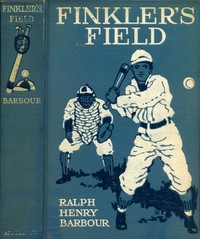
Finkler's Field: A Story of School and Baseball — Edition Insights
(0 User reviews)
1167
Project Gutenberg
2019
Not confirmed
Boarding schools -- Juvenile fiction; Youth -- Conduct of life -- Juvenile fiction; Diligence -- Juvenile fiction; Success -- Juvenile fiction; Education -- Juvenile fiction; Teacher-student relationships -- Juvenile fiction; Baseball stories
Readers of public-domain and historical texts
Project Gutenberg digital edition
en
Edition facts
Words
45,434
Reading time
198 min
Text sections
15
This digital edition of Finkler's Field: A Story of School and Baseball — Edition Insights is described by source-level measurements including 45,434 words, 3 hr 18 min estimated reading time, and 15 detected text sections.
The text analysis averages about 14.2 words per sentence, while the detected sections provide another way to judge how the source is divided.
Project Gutenberg metadata also associates the work with “Boarding schools -- Juvenile fiction,” connecting these edition facts with the source record’s subject description.
Source:
Project Gutenberg record #59136
In this early 20th-century school story, tensions between boarding students and town residents surface in baseball tryouts and a campaign to acquire a new athletic field from a reluctant local landowner, Mr. Finkler. The narrative balances on-field action with negotiations among students, faculty, and a stubborn neighbor.
Read the complete public-domain text at its original source.
Read on Project GutenbergThe opening chapter of Finkler's Field drops the reader into a baseball tryout at Maple Ridge School, where the coach's grounder to second base is handled with snappy precision. The bench talk immediately reveals a social fault line: Sam Phillips jokingly calls Steve Grady a “Towner,” and manager Chesty Harris retorts, “You wait until next Saturday and see what the Towners will do to you chaps!” This banter, laced with mock indignation, establishes a rivalry between boarding students and town residents that runs beneath the athletic competition. The excerpts show that the school's need for a better field becomes a plot driver, with students taking the lead to approach the elusive Mr. Finkler about his land.
Rivalry on the Diamond and Off
The excerpts present a school community divided not by class or age but by residence. The term “Towner” is used as a mild slur by boarders, while town students like Chesty Harris and Steve Grady push back with pride. This tension surfaces in casual dialogue—Sam Phillips feigns surprise that a Towner could be “smart” and “decent”—and in the competitive stakes of the upcoming game. The baseball tryouts are not just about skill; they are a proxy for a larger social contest. The coach’s approval of “snappy work” suggests that athletic merit can momentarily bridge the divide, but the banter on the bench reminds readers that the rift is never far below the surface. The excerpts do not reveal whether this rivalry escalates or resolves, but it clearly colors every interaction.
Negotiating for Finkler's Field
The central conflict in the excerpts is the students' campaign to secure a new athletic field from Mr. Finkler, a landowner described as having “an unreasoning prejudice against the school.” The three captains—Dolph Jones (baseball), Prentiss (track), and presumably a third—call on Dr. Benedict, who listens with “the tips of his fingers together” and looks out the window before responding. His measured speech reveals a history of failed offers: the school has tried to buy or lease the land, offering “more money than it is really worth,” but Finkler has always refused. The Doctor gives permission but warns of difficulty, leaving the boys to try persuasion where adults have failed. The excerpts show the students weighing costs—two thousand dollars for the land outright—and planning to involve graduates, but the outcome of their visit to Finkler is not included in the provided text.
Voice and Structure in Barbour's Prose
Ralph Henry Barbour's prose is brisk and dialogue-driven, with a light, humorous tone that undercuts tension. The bench conversation uses colloquialisms like “My word” and “degradation” in jest, and the narrative often slips into the characters' perspectives without formal markers. Physical details—the stone wall behind the bench, the “snapping elastic” of the score-book, the Doctor's “perched” glasses—anchor the scenes in a tangible school setting. The structure alternates between practice-field banter and more formal meetings, as when the captains present their case in the Principal's “book-lined room.” The excerpts do not include the resolution of the field quest or the big game, but they establish a pattern of problem-solving through dialogue and negotiation rather than action alone.
Readers should pay attention to how Barbour uses the baseball setting to explore loyalty, prejudice, and resourcefulness. The rivalry between boarders and Towners is not merely background noise; it shapes character interactions and the stakes of the field campaign. The excerpts leave the outcome of both the game and the land negotiation unknown, inviting attention to how the boys navigate adult resistance and their own divisions. The story rewards close reading of its dialogue, where insults and alliances shift with each inning.
I often find myself drifting from Finkler's Field—that tangle of town pride and schoolyard loyalty—over to the quieter halls of The Boys of Grand Pré School Illustrated — Background and Themes, where boys learn their allegiances not through clenched negotiations, but through shared frost and lantern light. Both seem to whisper that belonging is never simply granted; it is earned, patient as a well-worn glove. One feels the echo there, faint but certain.
There are no reviews for this eBook.
There are no comments for this eBook.
Reader reflection
Record your reading impressions
A brief reflection can help important ideas stay with you longer.
Your progress
0
/
10
2
Was reading this book enjoyable?
3
Would you recommend this book to another reader?
4
How much effort did this book require?
5
Did you relate to its people, ideas, or situations?
6
How useful were the ideas in this book?
7
How well did it match your expectations?
8
How did the pace of the book feel?
9
In one sentence, what did you learn?
10