
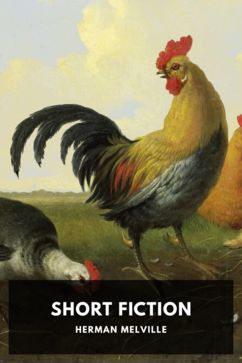
Short Fiction - Herman Melville
Most of us know Herman Melville as the guy who wrote the big whale book. Short Fiction shows you he was also a master of the smaller, sharper story. This collection gathers some of his best, written after the commercial failure of Moby-Dick. They're experiments in form and mood, ranging from office satire to haunting allegory.
The Story
There isn't one story, but a bunch of brilliant, varied ones. In 'Bartleby, the Scrivener,' a quiet copyist in a Wall Street law office begins politely refusing to do his tasks with the now-famous phrase, 'I would prefer not to.' His baffled employer's attempts to understand or remove him form a darkly comic and tragic puzzle. 'The Paradise of Bachelors and the Tartarus of Maids' contrasts two worlds: a lavish dinner for comfortable London lawyers and the bleak, dehumanizing reality of a New England paper mill where young women work in freezing conditions. Other stories, like 'Benito Cereno,' present a tense, mysterious encounter at sea where nothing is as it seems.
Why You Should Read It
I love this book because it feels so modern. Melville's frustration with the soul-crushing nature of office work in 'Bartleby' is something anyone who's ever had a desk job will feel in their bones. His anger at injustice in 'The Tartarus of Maids' is raw and powerful. He gets inside the heads of people who are stuck, confused, or quietly rebelling against systems too big to fight. The writing is precise and loaded with meaning, but it never loses its grip on real human emotion. You're not just reading 'classic literature'; you're reading about loneliness, resistance, and the search for meaning—themes that haven't aged a day.
Final Verdict
Perfect for readers who think they don't like 'the classics,' or for anyone who enjoys sharp, philosophical fiction that makes you think. If you like the eerie vibes of Shirley Jackson or the office absurdity of someone like Kafka (who Melville predates!), you'll find a kindred spirit here. It's also great for busy people—you can read a stunning, complete story in one sitting. This collection proves Melville wasn't just a one-book wonder; he was a restless, brilliant explorer of the human condition, in all its weird and wonderful forms.
This book is widely considered to be in the public domain. It is now common property for all to enjoy.
Mary Wilson
3 weeks agoInitially, I was looking for a specific answer, but the practical checklists included are a great touch for real-world use. The insights gained here are worth every minute of reading.
James Martinez
8 months agoI started reading this with a critical mind, the author doesn't just scratch the surface but goes into meaningful detail. This is a solid reference for both beginners and experts.
Susan Moore
3 months agoA brilliant read that I finished in one sitting.





John Brown
2 months agoI've been looking for a reliable source on this topic, and the cross-referencing of different chapters makes it a great study tool. The price-to-value ratio here is simply unbeatable.