
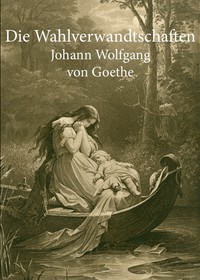
Die Wahlverwandtschaften by Johann Wolfgang von Goethe
If you think 19th-century novels are all about manners and long descriptions, this one might surprise you. 'Elective Affinities' has the manners, sure, but it uses them like a cage. The plot is deceptively simple, but it packs a huge emotional punch.
The Story
Eduard and Charlotte, a middle-aged aristocratic couple, are enjoying a quiet life on their estate. To liven things up, they invite two guests: the Captain, Eduard's friend, and Ottilie, Charlotte's young niece. The plan backfires. Eduard finds himself powerfully attracted to the gentle Ottilie, while Charlotte and the Captain develop a deep, intellectual bond. The title comes from a chemistry metaphor they discuss—how elements break and form new bonds. They watch this theory play out in their own lives. As the attractions grow, the characters are trapped by their own decency and social duty. They try to do the 'right' thing, but their feelings have a logic of their own. The story builds toward consequences that are both tragic and, in a strange way, inevitable.
Why You Should Read It
What grabbed me was how modern the conflict feels. Goethe isn't judging his characters as 'good' or 'bad.' He shows how good people, with the best intentions, can create a disaster. The tension isn't in shouting matches; it's in a loaded glance across the dinner table, or a conversation that means more than it says. You feel the weight of every unspoken word. Ottilie, in particular, is a fascinating character. She’s often seen as passive, but I read her as someone so overwhelmed by pure, intense feeling that she sees no way out. It’s a brutal look at how society's expectations can leave no room for the human heart.
Final Verdict
This isn't a breezy beach read. It's a deep, slow, and psychologically intense novel. Perfect for readers who love character studies and don't mind a story that simmers rather than boils. If you enjoyed the emotional precision of Jane Austen but wished it had a darker, more philosophical edge, this is your book. It’s for anyone who’s ever wondered about the messy line between love, obligation, and fate.
This content is free to share and distribute. Share knowledge freely with the world.
Nancy Hill
9 months agoTo be perfectly clear, the character development leaves a lasting impact. A valuable addition to my collection.
Jessica Anderson
1 year agoFrom the very first page, the plot twists are genuinely surprising. Exceeded all my expectations.
Mary Lee
1 year agoPerfect.
Thomas Rodriguez
1 year agoI was skeptical at first, but the emotional weight of the story is balanced perfectly. A valuable addition to my collection.
Jennifer Moore
1 year agoFast paced, good book.