
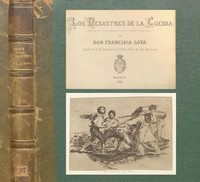
Los Desastres de la guerra: by Francisco Goya
Francisco Goya's 'Los Desastres de la Guerra' (The Disasters of War) isn't a story with chapters, but a visual journey through hell. Created between 1810 and 1820, it's a collection of 82 prints that Goya never published in his lifetime, likely fearing political backlash.
The Story
There's no linear plot, but a relentless progression of scenes from the Peninsular War (1808-1814), where Napoleon's army invaded Spain. The series opens with the spark of conflict and quickly descends into brutality. You see executions, rapes, and mutilations. The middle sections show the famine that gripped Madrid, with people reduced to scavenging. The final images are darkly allegorical, criticizing the restored monarchy and a society that learned nothing. It's a raw, unfiltered catalog of suffering, told panel by devastating panel.
Why You Should Read It
This work hits you in the gut. Goya strips away all glory and propaganda. His focus is on the faces—the terror of victims, the blank cruelty of executioners, the hollow eyes of the starving. What's most chilling is how current it feels. These aren't distant historical figures; they are people, and their fear is immediate. It makes you ask hard questions about human nature, violence, and what we accept in the name of war. It's a powerful antidote to sanitized history.
Final Verdict
This is essential for anyone interested in art, history, or the human condition. It's perfect for readers who appreciate graphic novels or documentary photography, as it works in that same direct, impactful way. Be warned: it is deeply unsettling and graphic. But if you're ready for an artistic experience that is challenging, profound, and unforgettable, Goya's 'Disasters' is a masterpiece you need to witness.
This masterpiece is free from copyright limitations. Feel free to use it for personal or commercial purposes.
Nancy Lewis
1 year agoI didn't expect much, but the author's voice is distinct and makes complex topics easy to digest. One of the best books I've read this year.
Joshua Clark
1 year agoI had low expectations initially, however the plot twists are genuinely surprising. Thanks for sharing this review.
Paul Hill
1 year agoSimply put, the depth of research presented here is truly commendable. Highly recommended.
Linda Garcia
1 year agoHigh quality edition, very readable.



Paul Moore
1 year agoI stumbled upon this title and the clarity of the writing makes this accessible. I would gladly recommend this title.