
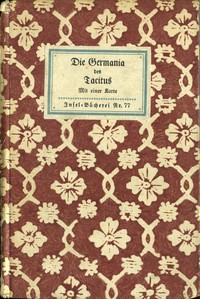
Die Germania by Cornelius Tacitus
Let's be clear: 'Germania' isn't a novel. There's no main character or plot in the traditional sense. Think of it as a detailed field report from the edge of the known world. Tacitus systematically describes the lands, customs, and social structures of the various Germanic tribes. He talks about their politics (fiercely democratic in war councils), their religion (gods of the forest and sky), their family life (shockingly equal partnerships by Roman standards), and their terrifying battle fervor.
The Story
There isn't a linear story, but there is a powerful narrative thread. Tacitus paints a picture of a people defined by freedom, simplicity, and raw courage. He describes their communal decision-making, their harsh environment, and their unshakable warrior ethos. He's fascinated by their contradictions—they are both lazy in peace and unstoppable in war, deeply hospitable yet brutally unforgiving to enemies. The 'conflict' is the constant, unstated comparison happening between the lines: the free, vigorous Germans versus the sophisticated, possibly decaying Romans.
Why You Should Read It
This book gripped me because it's so sly. Tacitus is a master of the backhanded compliment. When he writes, 'No one in Germany finds vice amusing,' you can almost hear his sigh about the scandal-ridden Roman court. His portrayal isn't necessarily accurate—it's an idealized type, used as a tool. Reading it today, you get a double history lesson: one about ancient Germanic societies (as filtered through a Roman lens), and one about Roman political anxieties. It makes you question every travelogue or political commentary you've ever read. How much is observation, and how much is agenda?
Final Verdict
Perfect for anyone curious about the roots of European identity, or for readers who love seeing how history is written by the winners (and sometimes weaponized by them). It's essential for understanding the myth of the 'noble barbarian' that has popped up throughout Western thought. If you enjoy political satire, anthropology, or just a really smart, concise piece of writing that packs a punch, give this ancient bestseller a few hours of your time. You won't look at Rome—or the idea of 'civilization'—the same way again.
There are no legal restrictions on this material. Knowledge should be free and accessible.
Andrew Thomas
1 year agoGreat read!
Donald Smith
2 months agoAfter hearing about this author multiple times, it creates a vivid world that you simply do not want to leave. A valuable addition to my collection.
Noah Thomas
3 months agoEssential reading for students of this field.
Anthony Flores
1 year agoI have to admit, the arguments are well-supported by credible references. I learned so much from this.



Kenneth Anderson
5 months agoEnjoyed every page.