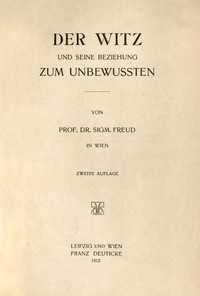
Der Witz und seine Beziehung zum Unbewußten by Sigmund Freud
Okay, let's be clear: this isn't a storybook with a plot. There's no hero's journey. Instead, Freud treats the joke itself as the main character. He collects hundreds of examples (many of them surprisingly racy for 1905) and puts them on the therapist's couch.
The Story
The 'story' is Freud's investigation. He starts by breaking down how jokes work technically, looking at wordplay and absurdity. But then he asks the big question: What's the point? Why do we bother making jokes? That's when he brings in his famous ideas about the unconscious mind. He argues that jokes are a release valve. They allow thoughts and feelings that are normally repressed—like hostility, desire, or pessimism—to sneak past our internal censor and society's rules. A well-crafted joke saves us psychic energy. It lets us insult a rival, express a taboo thought, or mock authority, all while everyone is laughing along. The punchline is the payoff for successfully smuggling a forbidden idea into the open.
Why You Should Read It
I picked this up thinking it would be dry, but it's genuinely entertaining. Freud's examples are often hilarious, and there's something fascinating about watching the founder of psychoanalysis geek out over puns and anecdote structure. It makes you think about your own sense of humor in a new way. You start to notice the little edge of aggression in friendly teasing or the subversive thrill of a perfectly timed cynical quip. It's not a perfect theory—it can feel like he's trying to fit every joke into his psychoanalytic box—but it's incredibly insightful. It connects the silly, social act of laughing with the deep, often dark, workings of our minds.
Final Verdict
This book is perfect for anyone curious about psychology, writers or comedians interested in the mechanics of humor, or just readers who enjoy smart, idea-driven nonfiction. You don't need to be a Freud expert. If you're the kind of person who wonders why we find things funny, not just what is funny, you'll get a lot out of it. It's a classic that will change how you listen to laughter.
This historical work is free of copyright protections. Knowledge should be free and accessible.
Joseph Garcia
5 months agoCompatible with my e-reader, thanks.
John Brown
1 year agoThe index links actually work, which is rare!
Anthony Scott
1 year agoEssential reading for students of this field.