
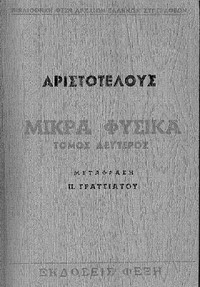
Μικρά Φυσικά, Τόμος Δεύτερος by Aristotle
Okay, let’s be real: when was the last time you sat down to read Aristotle for fun? Probably never. But trust me, Μικρά Φυσικά, Τόμος Δεύτερος (the tiny newish volume of his lesser-known *Physics* odds and ends) isn’t the dry thought-monster you imagine. It’s a fast, vivid ride through the ideas that built half of Western science — and it’s wilder than you’d expect.
The Story
No, there’s no plot with characters fighting — unless you count the fight between matter and reason. This is Aristotle picking up leftovers from his earlier big *Physics* book. He asks: What is memory? Where do dreams come from? Why do breathing and thinking feel connected? Each short section tackles one tricky thing: why youth and aging happen, why we get sleepy, even why you blink when someone suddenly jumps at you. Spoiler: he doesn’t have all the answers. But guess what? The questions — just asking them — make you feel smarter and freshly weirded out about your own body and the sky.
Why You Should Read It
I came for the curiosity and stayed for the messy surprises. Aristotle has this thing about saying, “We just don’t know yet, but here’s my guess.” I mean, how often do we admit that today? He unpacks how the brain stores memories like a tattooist with a time machine. He argues dreams help your digestion (yes, really). His reasoning can feel hilariously simple — but every so often, you catch a spark nearly 2,500 years old that still glows. Also, reading it silently feels like whispering secrets with a ghost. There’s something sweet about how seriously he takes everyday things: a sneeze, a yawn, a weird gut feeling. I honestly started paying more attention to *my own* body after just a few pages.
Final Verdict
Is it for everyone? No — but I’d hand it to anyone who gets quiet obsessions: philosophers-in-training, retro science nerds, people who like rethinking ordinary life. It’s also perfect for history buffs who want to see humanity before microscopes and MRI machines trying to explain *everything* with chunks of breath and moving soul-puffs. If you can handle metaphors instead of formulas — and enjoy a smart ancient dude somehow feeling like your cool older cousin — grab a copy. Who knows, you might end up remembering yourself being alive a little differently.
No rights are reserved for this publication. You do not need permission to reproduce this work.
Paul Garcia
7 months agoComparing this to other titles in the same genre, the author’s unique perspective adds a fresh layer to the discussion. A solid investment for anyone's personal development.

Margaret Anderson
1 year agoAfter spending a few days with this digital edition, the insights into future trends are particularly thought-provoking. I'm glad I chose this over the other alternatives.