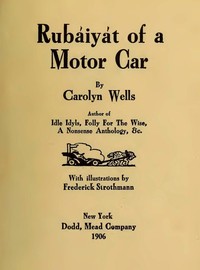
Rubáiyát of a Motor Car by Carolyn Wells
The Story
The heroine, a lively detective type, gets tangled in a disappear-act at an countryside estate. Our clue? A spanking-new motor car goes missing — along with its owner, a sweet sheltered gal named Hazel. In that featherweight style of early cozy mysteries, our narrator sips tea and peeps over keyholes rather than charge toward head-scratching criminals (heh). Still, the real riddle sits: Why was Hazel running silent as midnight? And does the gleaming new automobile hold a clue — of course, yes — but how? Wells weaves faint words poems literally titled “Rubáiyáts” into the text like a puzzle within chatty paragraphs. Bottom line — play detective! Lines hint the car holds faint tracks of yesterday's mud ... maybe a kidnapped pose? Everybody's so proper!
Our chain-smart gal follows tiny, teasing slippers — and maybe a sniff of French perfume? Right into the Big Tease promised via poetry. If you skip the verse, you miss fun details; that puts this ahead from simpler stories.
Why You Should Read It
Sorry whodunit diehards, she’s not taking spoilers. What sings here is the voice—jabbering personality straight out of an old scrapbook. The narrator stays your snarky BFF who borrows talk from 'back in the day' but refuses stiff blaring. The character (Haz D’you...no huge clues here) might match more goofy-guts longing innocence? Yet Hazely triggers layers the whole time: spoiling silly family dynamics. Halfway, you fall with their sneers about how houses clang. Foxy? Yes ma’am. Believe the tease over actual grief? Honestly, i-bethcha. The poems — then read daily them cheekily and then smile-sigh because they solved or not?
Final Verdict
Highway fantastic for fans of modern cozies that want fast gimmickry — lines low on gore! Thumping plus poems tick someone familiar with cars missing her hood prop. Those from classic Belloc? Could smile wink through here! Mild dread creeps ever so late — more suitable for bright mood but keeps snoop brains? You bet! All show.
This masterpiece is free from copyright limitations. It serves as a testament to our shared literary heritage.